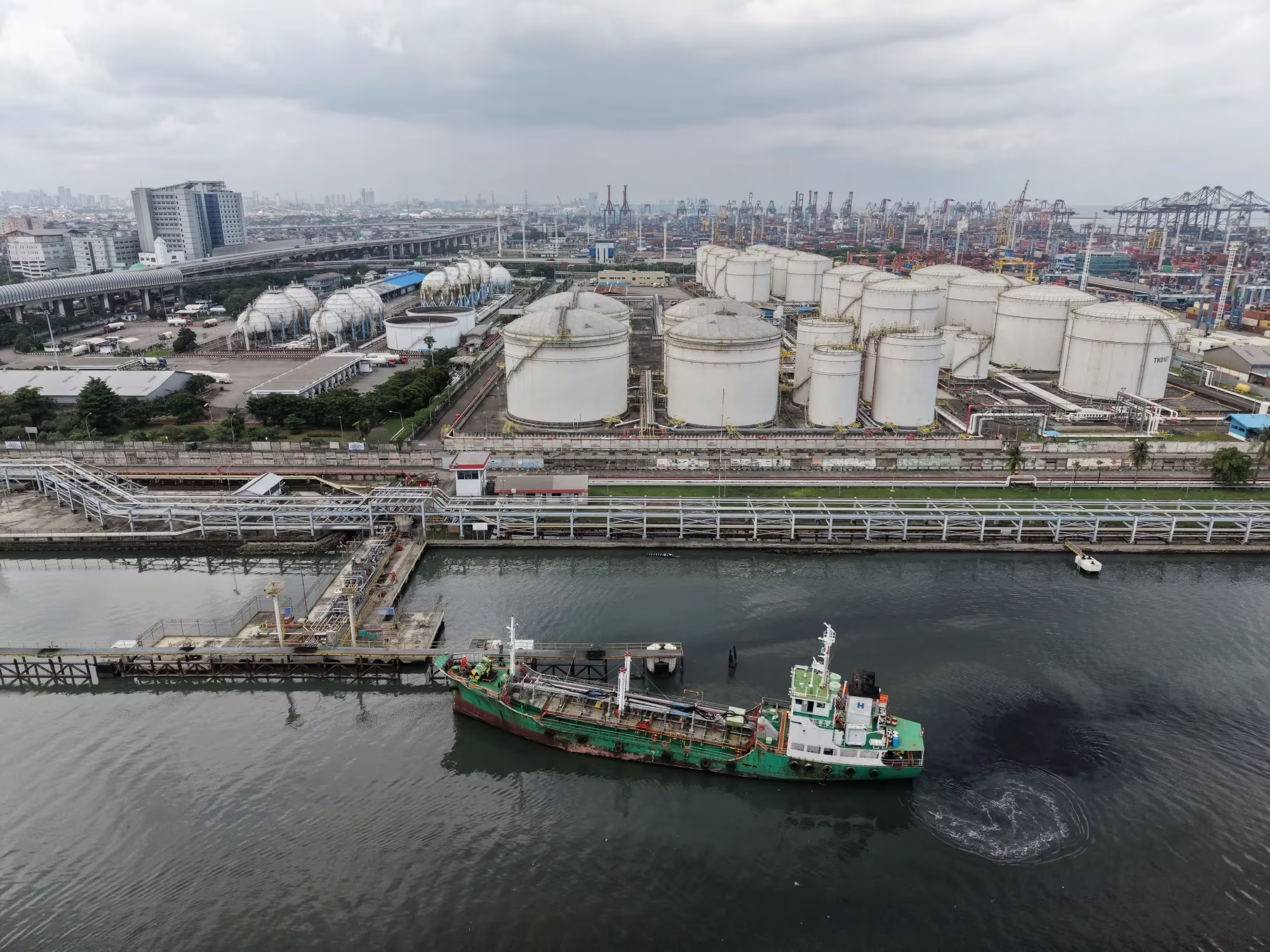
Global oil reserves are shrinking at a record pace amid the war surrounding Iran and the near-total disruption of shipments through the Strait of Hormuz. Bloomberg reports this citing estimates from major banks and commodity traders.
According to Morgan Stanley calculations, global oil inventories declined by roughly 4.8 million barrels per day between early March and late April. It marked the largest stockpile drawdown since the International Energy Agency began keeping records. More than half of the losses came from crude oil, with the remainder consisting of fuels and refined petroleum products.
JPMorgan warns that as early as June the global energy system could face an “operational stress level,” and by September approach the minimum stock levels required for the stable functioning of pipelines, refineries, and export infrastructure.
Bloomberg identifies heavily fuel-import-dependent Asian countries—including Indonesia, Vietnam, Pakistan, and the Philippines—as the most vulnerable. According to traders, some of them could begin facing serious fuel shortages within a month.
In Europe, aviation fuel reserves are rapidly declining ahead of the summer travel season.
The publication also notes that the United States has been drawing down both strategic and commercial oil reserves for several consecutive weeks. U.S. diesel inventories have fallen to their lowest level since 2005.
Even if the Strait of Hormuz reopens, pressure on the market is expected to persist for a prolonged period because governments and energy companies will need to rebuild depleted stockpiles. Bloomberg estimates that this could create an additional wave of demand and keep oil prices elevated even after the conflict surrounding Iran ends.