In late 2025, Australia accepted the world’s first officially recognized climate migrants—citizens of Tuvalu relocated under a special interstate agreement. The case highlighted a legal vacuum: international law still does not define the status of a climate refugee, and climate-driven migration itself lacks formalized rules. Yet movements caused by climate change have already reached a mass scale. According to estimates by the International Organization for Migration, 218 million people have changed their place of residence for climate-related reasons over the past decade. Looking ahead, this figure could rise significantly, underscoring the need for states to prepare in advance for new waves of migration.
First in the world
In early December 2025, a passenger plane landed at Brisbane Airport on Australia’s east coast. Among those arriving were a pastor, a woman truck driver, and a dentist from the neighboring Pacific state of Tuvalu. They became the first people in history to receive official status as climate migrants.
The Australian government granted them special visas under an interstate agreement with Tuvalu. This was not an emergency evacuation or a humanitarian corridor, but a relocation planned in advance. Participants in the program received Pacific Engagement Visas—a long-term status that provides the right to work, study, and access the social protection system.
Tuvalu ranks among the smallest and, at the same time, the most vulnerable states in the world. The country consists of several low-lying coral atolls, home to about 11,000 people. More than a third of the population has applied for visas to relocate to Australia—and the reasons are substantial. The average elevation of the land is only a few meters above sea level. Even now, Tuvalu is confronting the effects of climate change—regular flooding, salinization of soil and freshwater, and the erosion of coastlines and infrastructure.
Estimates suggest that by mid-century, between 60–80% of the country’s residents will be living in areas at risk of inundation. Projections for the end of the century depend on the trajectory of global emissions, but the worst-case scenario assumes a two-meter rise in sea levels. In that case, most of the islands would be submerged, and the remaining land would face flooding for roughly 100 days a year.
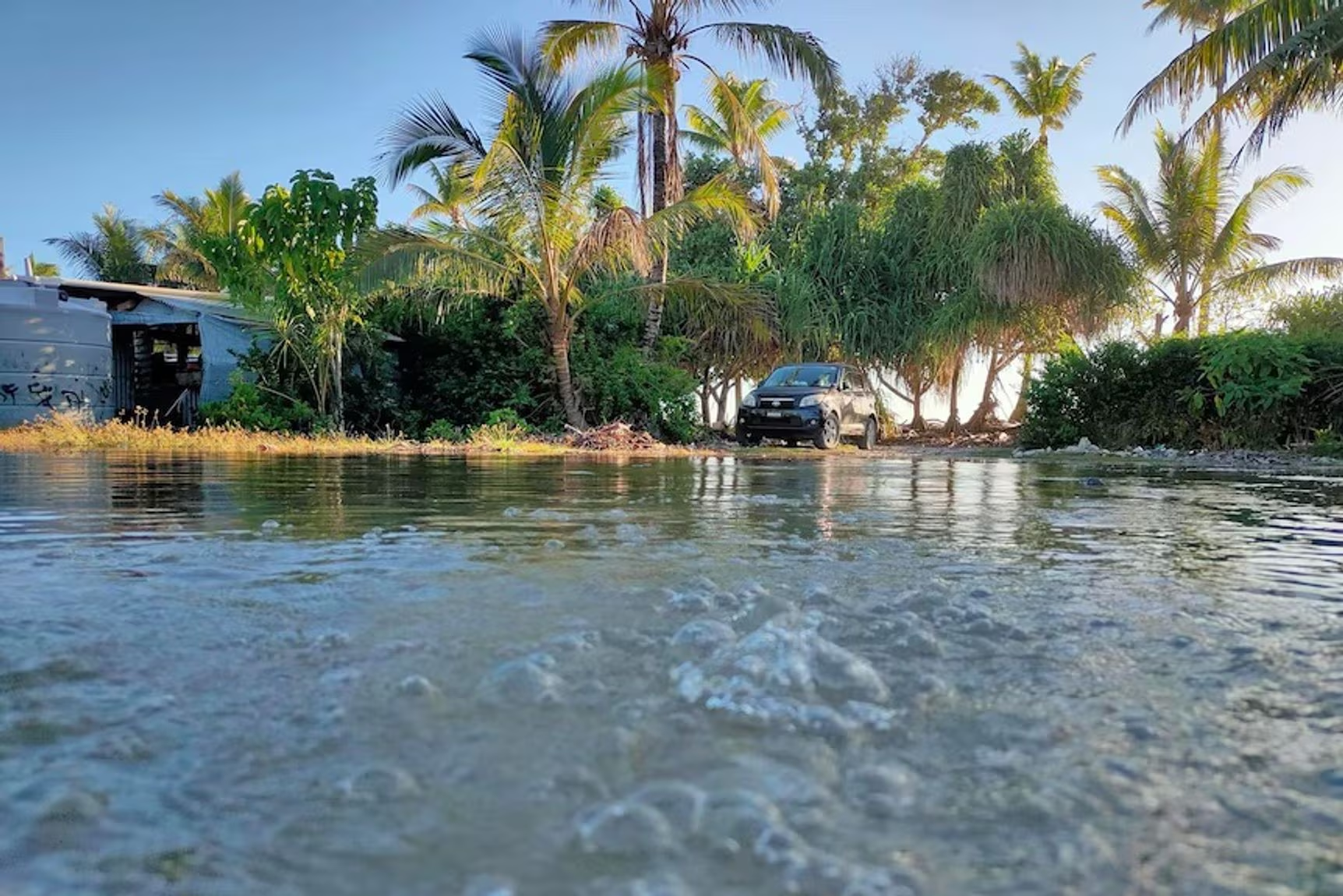
Tuvalu is disappearing beneath the water.
In November 2023, Australia and Tuvalu signed the bilateral Falepili Union treaty—the first international agreement to explicitly recognize climate change as sufficient grounds for migration and to establish a formal mechanism for it. At its core is the concept of Falepili—a traditional Pacific notion of good neighborliness, care, and mutual respect.
At the same time, the scale of relocation is deliberately limited. The agreement provides for no more than 280 visas per year for Tuvaluan citizens, who will be able to move to Australia through a competitive selection process. The island state’s authorities are keen to avoid a sharp population decline and a drain of skilled workers. Officials emphasize that this is about “mobility with dignity,” not flight—Tuvalu aims to preserve its culture and political agency even as the climate threat intensifies.
What Climate Migration Is—and Why It Remains Confusing
The story of the first migrants from Tuvalu is often seen as a signal that a new approach to climate migration is taking shape. In reality, it reflects only a specific bilateral arrangement. International law still lacks a widely recognized status for people forced to leave their homes because of climate change, and existing frameworks for the protection of migrants and refugees were designed for fundamentally different circumstances.
A full-fledged international debate on the issue began with the case of Ioane Teitiota, a citizen of Kiribati. In 2010, he applied for asylum in New Zealand, seeking recognition as a climate refugee and citing rising sea levels and deteriorating living conditions on the islands. The court rejected the claim, noting that international law does not treat climate as an independent ground for protection. The 1951 UN Convention is designed to assist people fleeing armed conflict and persecution.
In 2020, the UN Human Rights Committee ruled that the refusal did not violate international law, as Teitiota’s life was not facing an imminent threat at the time. At the same time, an important principle was articulated—returning people to countries where climate change poses a real threat to their lives may be considered a violation of human rights. Climate was thus впервые identified as a factor requiring independent political and legal consideration.
The difficulty of discussing climate migration is largely rooted in its nature. Droughts, floods, crop failures, and the destruction of housing influenced human movement long before the era of global warming, which is why the term “environmental migrants” has long been used in academic literature.
It refers to people who leave their place of residence because of environmental degradation. Under contemporary conditions, however, the scale, speed, and often the irreversibility of these processes have increased sharply, while existing analytical and legal frameworks have proved unprepared for them.
An additional layer of complexity stems from the difficulty of clearly separating “ordinary” natural disasters from phenomena directly linked to climate change. Determining the causes of extreme events is scientifically demanding and often costly—and even states do not always have the resources to do so. The issue is not the emergence of new threats, but the intensification of familiar risks—their frequency and severity are rising, while their combinations and consequences vary markedly from one region to another.
A key problem is also that climate is almost never the sole driver of relocation. Research by the International Organization for Migration shows that climate change more often degrades living conditions, nudging people toward migration. Any move, however, requires money, information, and institutional support—precisely the resources that those most affected by global warming typically lack.
Against this backdrop, the issue of climate inequality is being raised with increasing frequency. The ability to adapt—to reinforce infrastructure, insure housing, or relocate—is far from universal. It is no coincidence that Australian officials, presenting the agreement with Tuvalu, emphasized the particular responsibility of developed countries to support those facing the consequences of global warming. This inequality is now emerging as one of the central challenges for the international system.
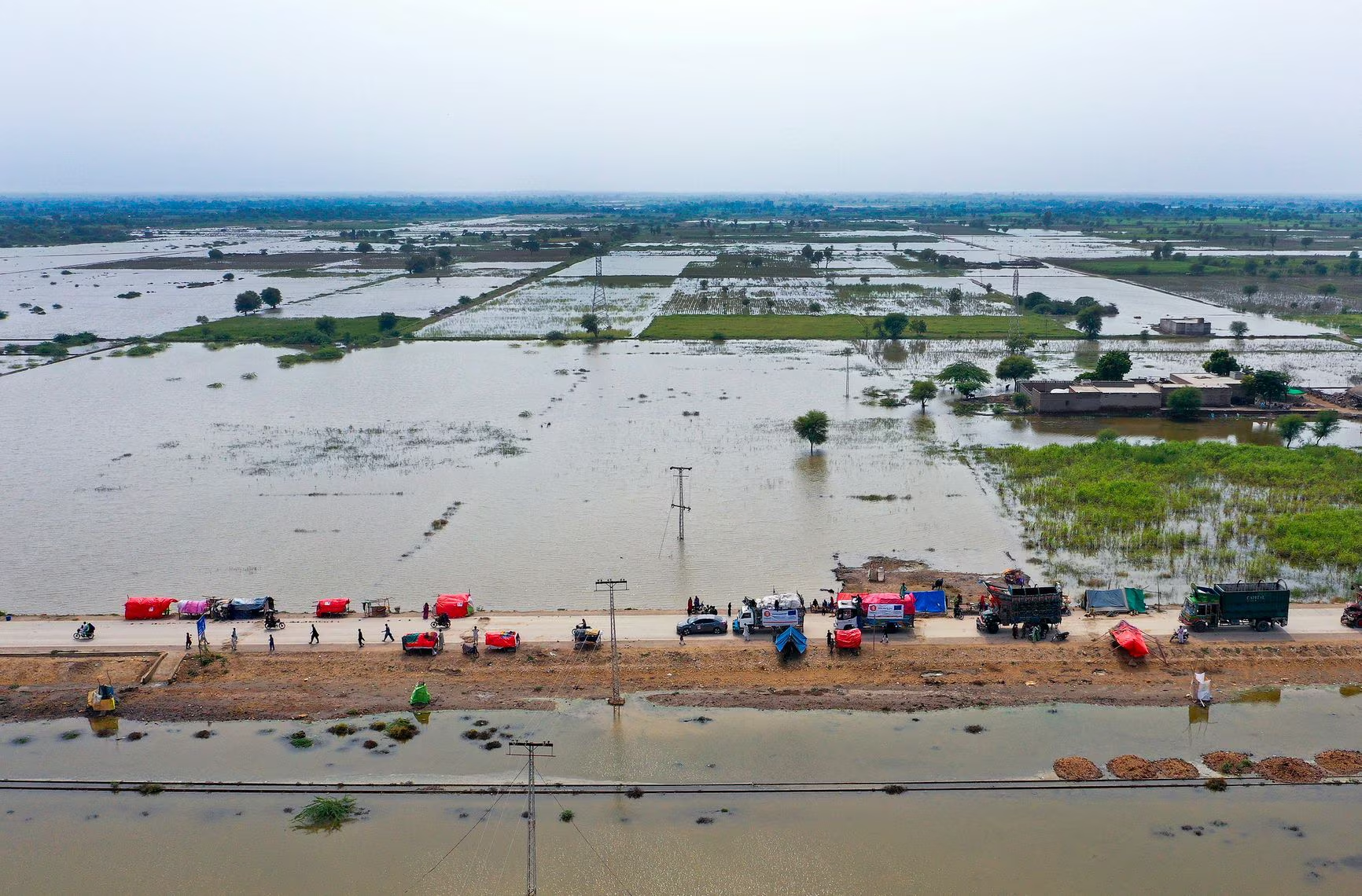
Flooding in Pakistan.
At this stage, international disputes largely revolve around terminology—who should be considered climate migrants, by what criteria they should be identified, and whether a separate “climate refugee” status is needed at all, given that climatic factors are almost never the sole reason for relocation. International organizations, including the Intergovernmental Panel on Climate Change (IPCC), the International Organization for Migration, and the United Nations, primarily view such movements as a form of forced mobility—temporary or permanent, internal or cross-border.
No single definition has yet emerged, but analytical work increasingly relies on a simplified framework: environmental degradation undermines established ways of life, deprives people of income, and ultimately pushes them toward relocation. The agreement between Australia and Tuvalu does not resolve all contradictions, but it is the first to offer an institutional mechanism where universal rules are still absent.
The most vulnerable are climate migrants who attempt to cross state borders, which is why the overwhelming majority of such movements take place within countries. This reflects not only legal barriers—difficulties with visas, legal status, and access to rights—but also social and cultural factors. People tend to choose destinations where language, social ties, and at least a minimal sense of belonging can be preserved.
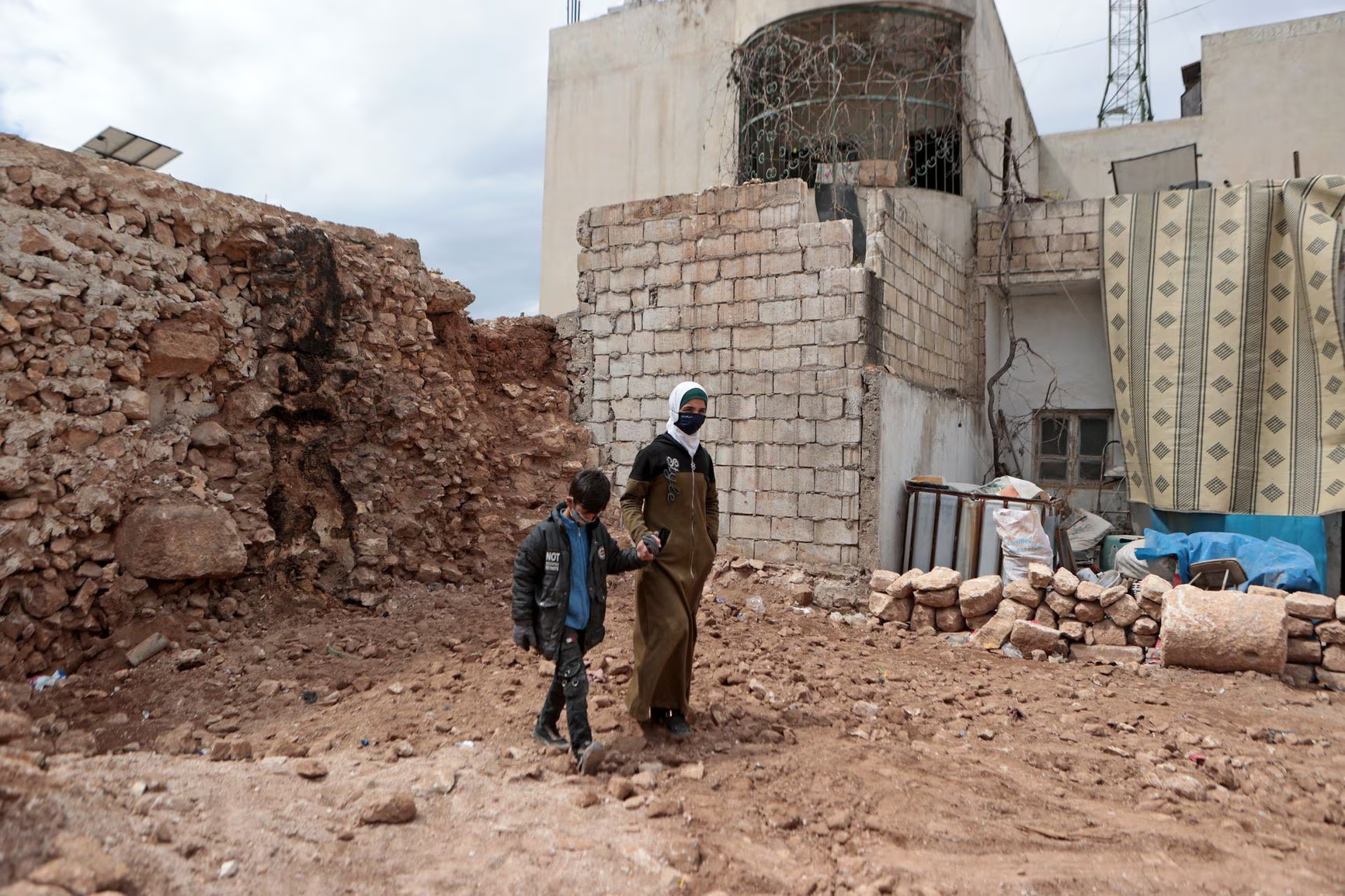
A camp for displaced persons in northern Syria.
When climate change overlaps with political instability and economic crisis, the combination can intensify existing conflicts. Syria is often cited in this context: a prolonged drought between 2007–2010 triggered large-scale internal displacement from rural areas to cities, leaving about 1.5 million people as climate migrants.
Although the drought was not the direct cause of the civil war, it intensified social tensions and heightened vulnerability, becoming part of a more complex chain of factors. Ultimately, more than 6 million people were displaced within the country, while another 5.5 million had left Syria by 2020, seeking refuge abroad.
This case clearly illustrates that the scale and consequences of climate migration depend to a large extent on political context, the quality of governance, and a society’s capacity to adapt to accelerating change.
The Most Vulnerable
Researchers generally identify several types of territories that are most vulnerable to climate change at the most basic—physical—level. This group includes low-lying islands, coastal zones, arid regions, mountainous areas, as well as the Arctic and regions underlain by permafrost.
For low-lying islands—primarily in the Pacific and Indian Oceans, such as Tuvalu, Kiribati, the Marshall Islands, and the Maldives—the key threat is rising sea levels. Their land surface often stands only a few meters above the ocean, meaning that even a modest increase in water levels leads to regular flooding and storm surges, accelerated coastal erosion, salinization of soils and groundwater, the loss of freshwater sources, and, in some cases, an already noticeable reduction in habitable land.
Coastal regions are no less vulnerable, including densely populated deltas of major rivers—the Ganges and Brahmaputra in Bangladesh, the Nile in Egypt, the Mekong in Vietnam, and the Mississippi in the United States. These areas face recurring floods and the salinization of soils and water resources. In Bangladesh, for example, sea-level advance by 2050 could result in the loss of more than one-seventh of the country’s territory, even as millions of people are already forced each year to leave their homes because of natural disasters.
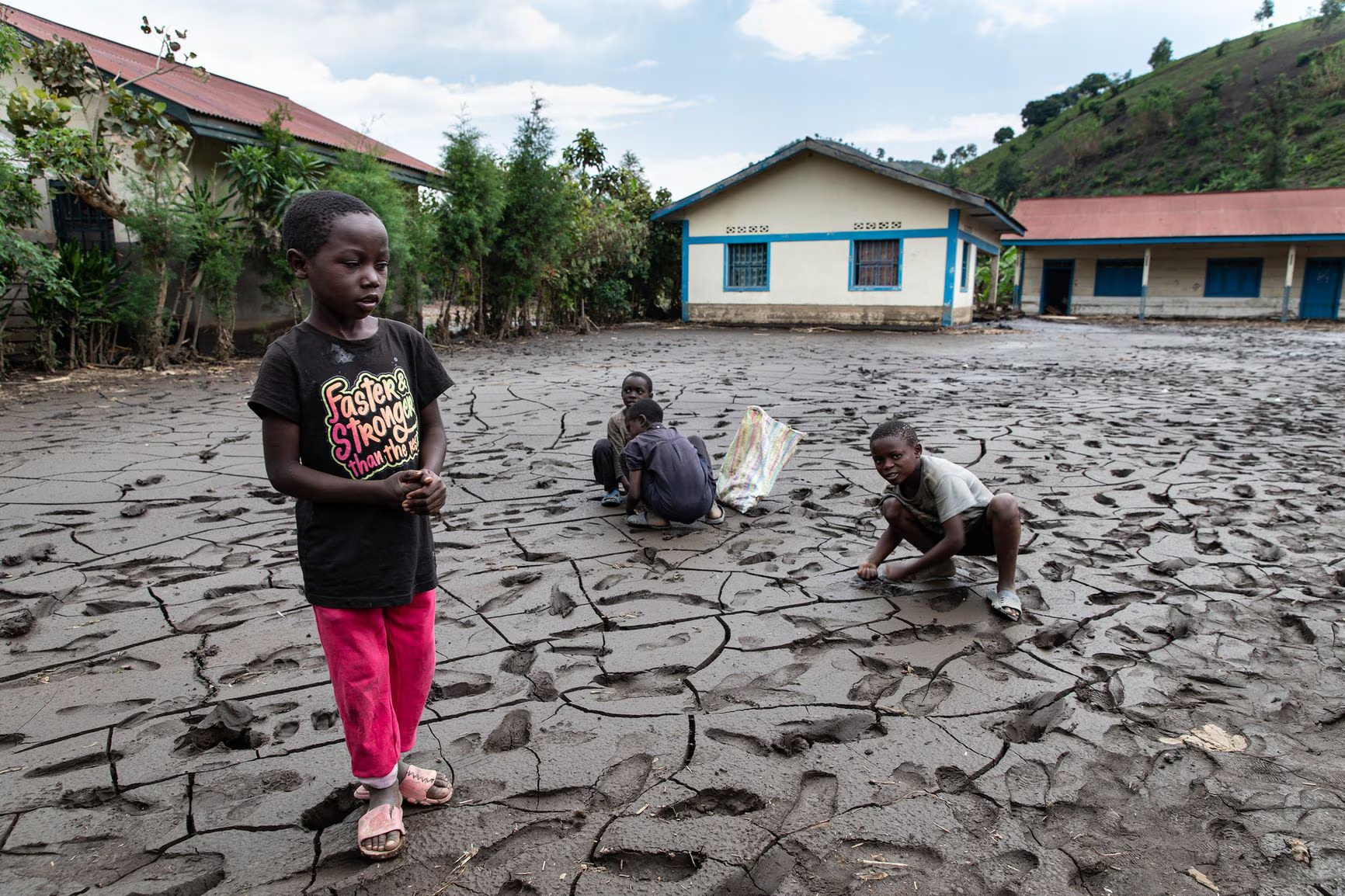
The aftermath of flooding in the Congo.
Arid regions are increasingly exposed to prolonged droughts and processes of desertification. This includes, above all, the semi-deserts and dry steppes of the Sahel in North Africa, as well as regions of Central and South Asia, the Middle East, and southern Australia. Shortages of freshwater and declining agricultural yields undermine the foundations of rural life, forcing people to move to cities or seek opportunities beyond their national borders.
The Horn of Africa offers a telling example—the northeastern part of the continent where climate change has increased the likelihood of extreme droughts by roughly a hundredfold. Over the past fifteen years, Somalia has experienced a series of climate crises of record scale, leading not only to mass migration involving millions of people but also to loss of life.
In 2010–2011, the death toll from these disasters reached 258,000 people, with more than half of them children under the age of five. A state of emergency has since been reintroduced in the country—the United Nations is warning of a high likelihood of a new humanitarian catastrophe. Overall, between 20 million and 25 million people across the region, including Somalia, Ethiopia, and Kenya, are facing the risk of acute shortages of water and food.
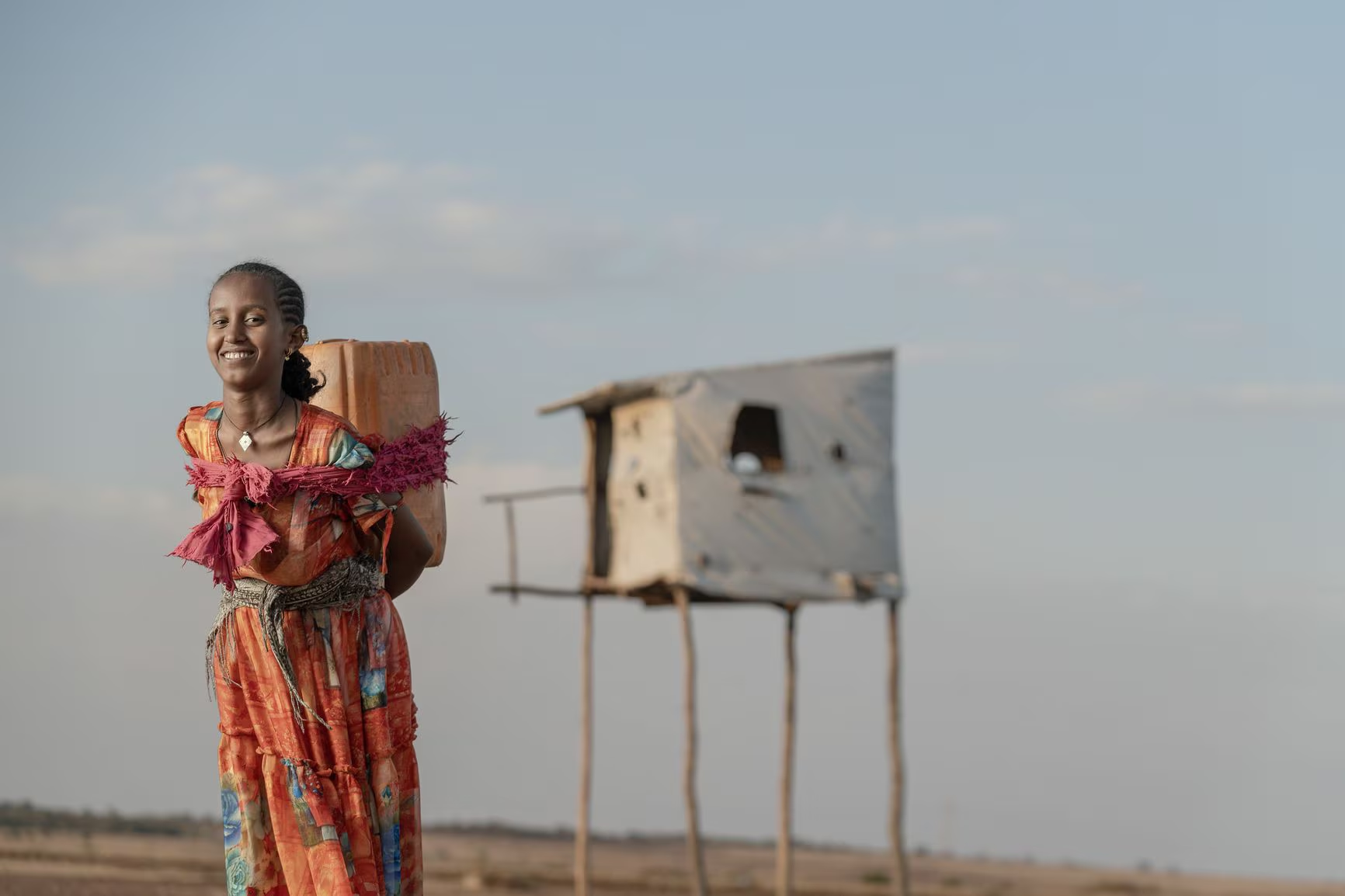
A girl carrying a jerrycan of clean water. Northern Ethiopia, 2025.
Mountain regions are increasingly feeling the effects of glacier melt and shifting precipitation patterns. In some cases, this results in water shortages, the loss of pastures, and rising risks of mudflows and landslides. Central Asia is considered one of the most vulnerable regions in this respect. Already today, between 200 and 300 glaciers disappear each year in its mountain areas, local residents report the drying up of water sources, and experts warn of an inevitable rise in forced migration—primarily to cities and beyond the region. According to World Bank estimates, by 2050 the number of climate migrants here could range from 2.4 million to 3.4 million people, depending on the trajectory of global warming.
The Arctic as a whole is warming three—four times faster than the planet on average, but the consequences extend far beyond temperature alone. The region is facing changes in ice conditions and the degradation of permafrost. This undermines traditional forms of winter subsistence and travel over ice, while the ground beneath homes and infrastructure is losing stability. At the same time, other dangerous processes are also intensifying.
More than 140 Indigenous communities in Alaska are under threat, and some settlements have already begun the process of relocation. In the Russian Arctic, the population has declined by roughly 20% over the past 25 years. Researchers note that climate has become one of the significant drivers of this outflow—and its influence continues to grow.
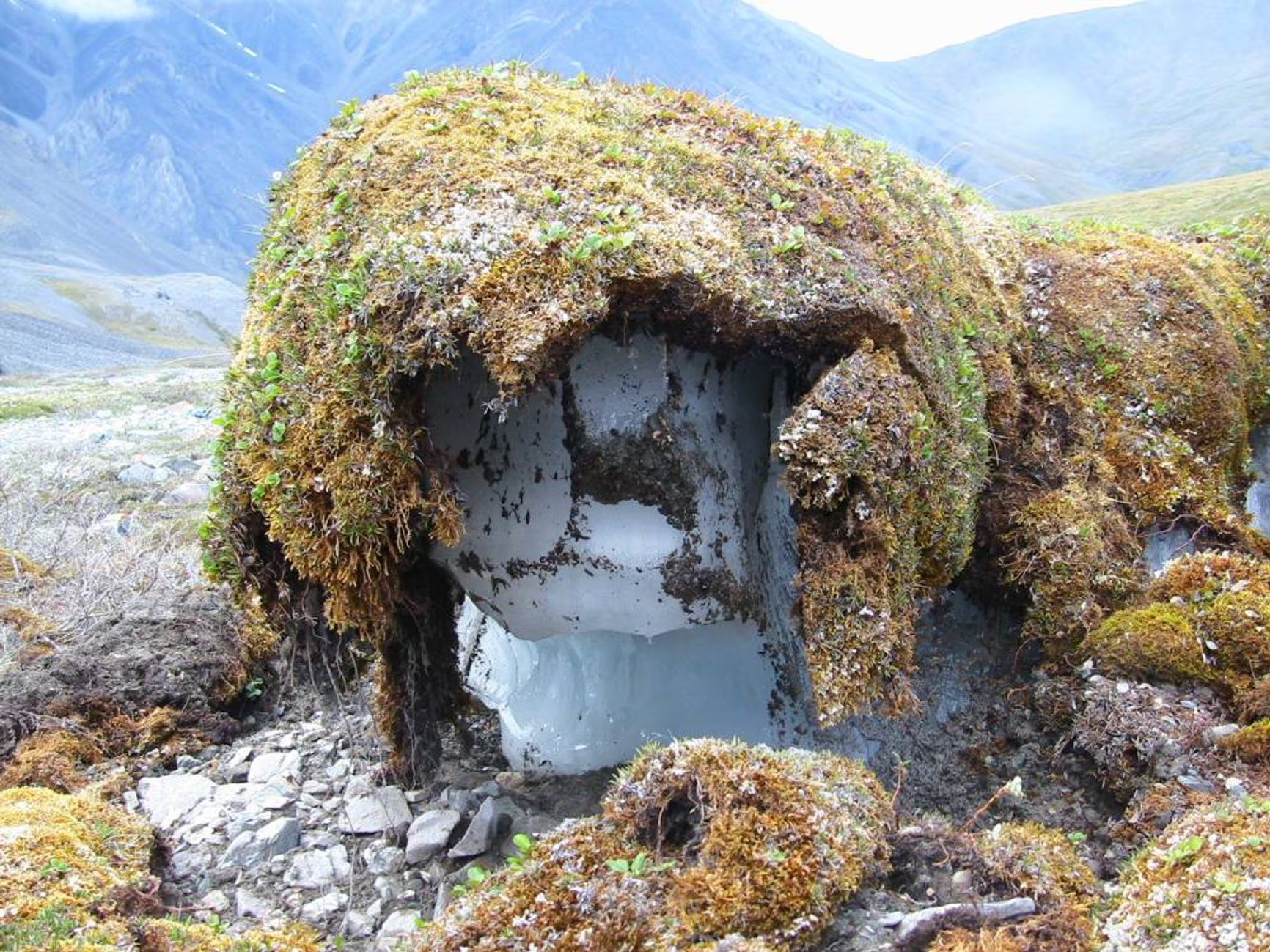
Thawing permafrost.
Yet even beyond these climatic “hot spots,” the world is seeing a rise in both the frequency and intensity of extreme natural events. The nature of the threats, however, varies sharply from region to region. Some areas are increasingly exposed to floods, tropical cyclones, and hurricanes, while others face prolonged droughts and ever more intense heat waves.
Climate Migration From the “Rich World”
Even in economically developed countries, fewer people now believe they are insulated from climate risks. California—one of the wealthiest states in the United States—offers a telling example. Wildfires and prolonged droughts are increasingly forcing residents to leave the region. After the Camp Fire in 2018, around 50,000 people who lost their homes left the state. In 2025, more than 150,000 residents were evacuated because of the most destructive fires. A significant share of them is unlikely to return and will likely join the ranks of climate migrants. There is, however, no official statistics yet—such assessments typically require at least a year of observation.
Similar processes are being observed in Australia as well. After catastrophic floods and the so-called “Black Summer” fires of 2019–2020, many families began moving away from the most vulnerable areas. A demographic study published in 2024 found that, on average, around 22,000 people a year relocate within the country after major natural disasters—fires, floods, and cyclones.
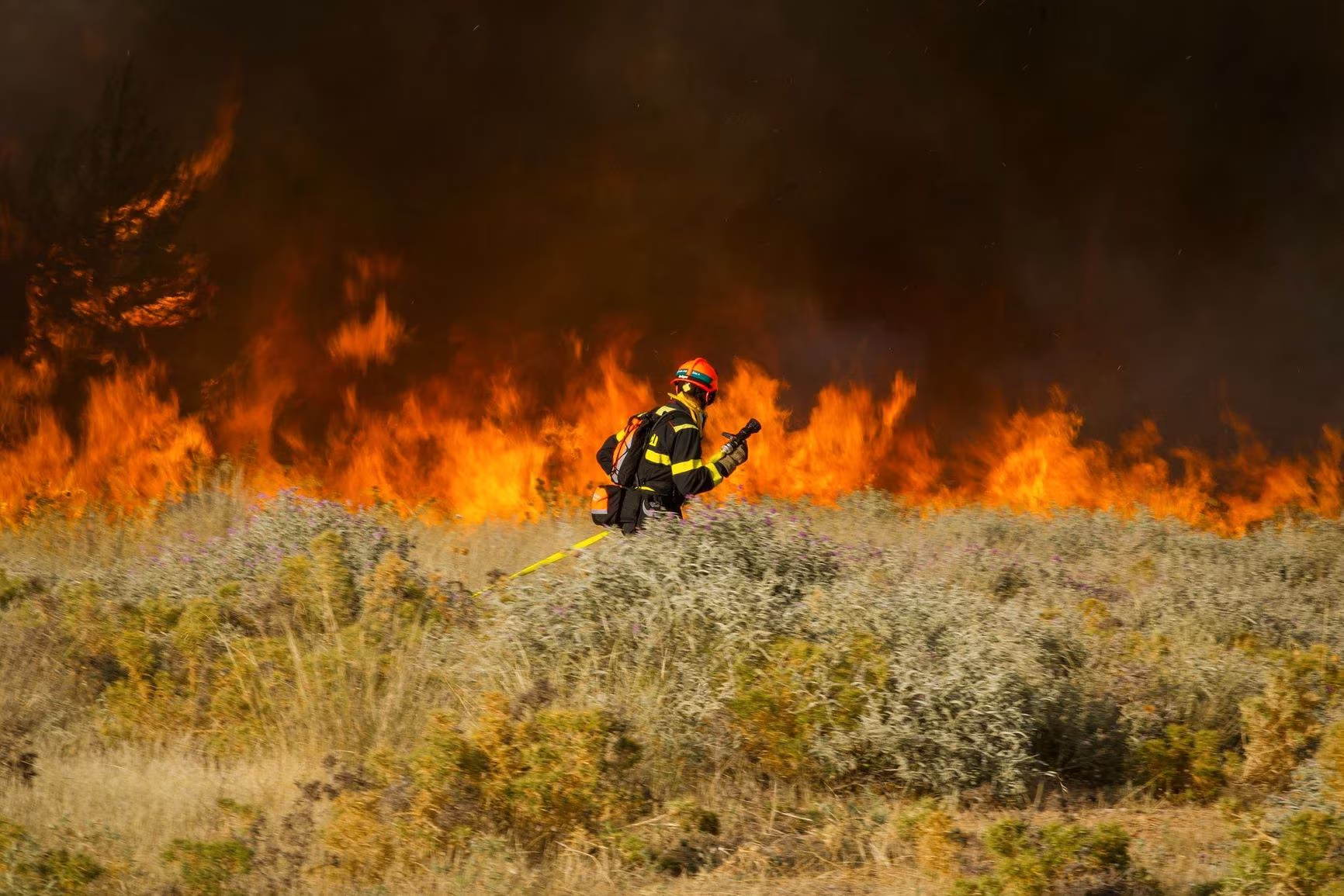
Wildfires in the Czech Republic. 2025.
For now, Europe has not seen large-scale waves of climate migration. However, in a number of southern European countries—most notably Italy, Spain, and Greece—fires, droughts, and floods are becoming more frequent, and troubling local cases of forced population outflows are appearing with growing regularity.
Experience shows that even prosperous economies are not immune to the consequences of climate change. High income levels do not provide long-term protection against the loss of housing, infrastructure, and established ways of life. The loss of a home can be driven not only by war or poverty, but also by the disappearance of reliable water sources, a rising number of days with extreme heat, or recurrent flooding. In some cases, housing effectively becomes illiquid—insurance companies refuse to renew policies, depriving owners of basic financial protection.
Main Directions and Scale
In the vast majority of cases, people facing climate threats move within their own countries. According to estimates by the International Organization for Migration, more than 218 million people worldwide have changed their place of residence for climate-related reasons over the past decade. The primary direction of such movements is from rural and coastal areas to cities and industrial centers.
The IOM and the World Bank note that in countries of the so-called Global South, climate migration most often follows the familiar “rural-to-urban” pattern. People continue to be drawn to areas with higher incomes, better-developed infrastructure, and improved access to education and healthcare. The immediate triggers for relocation are typically crop losses, the destruction of housing, or the increasing frequency of extreme natural events.
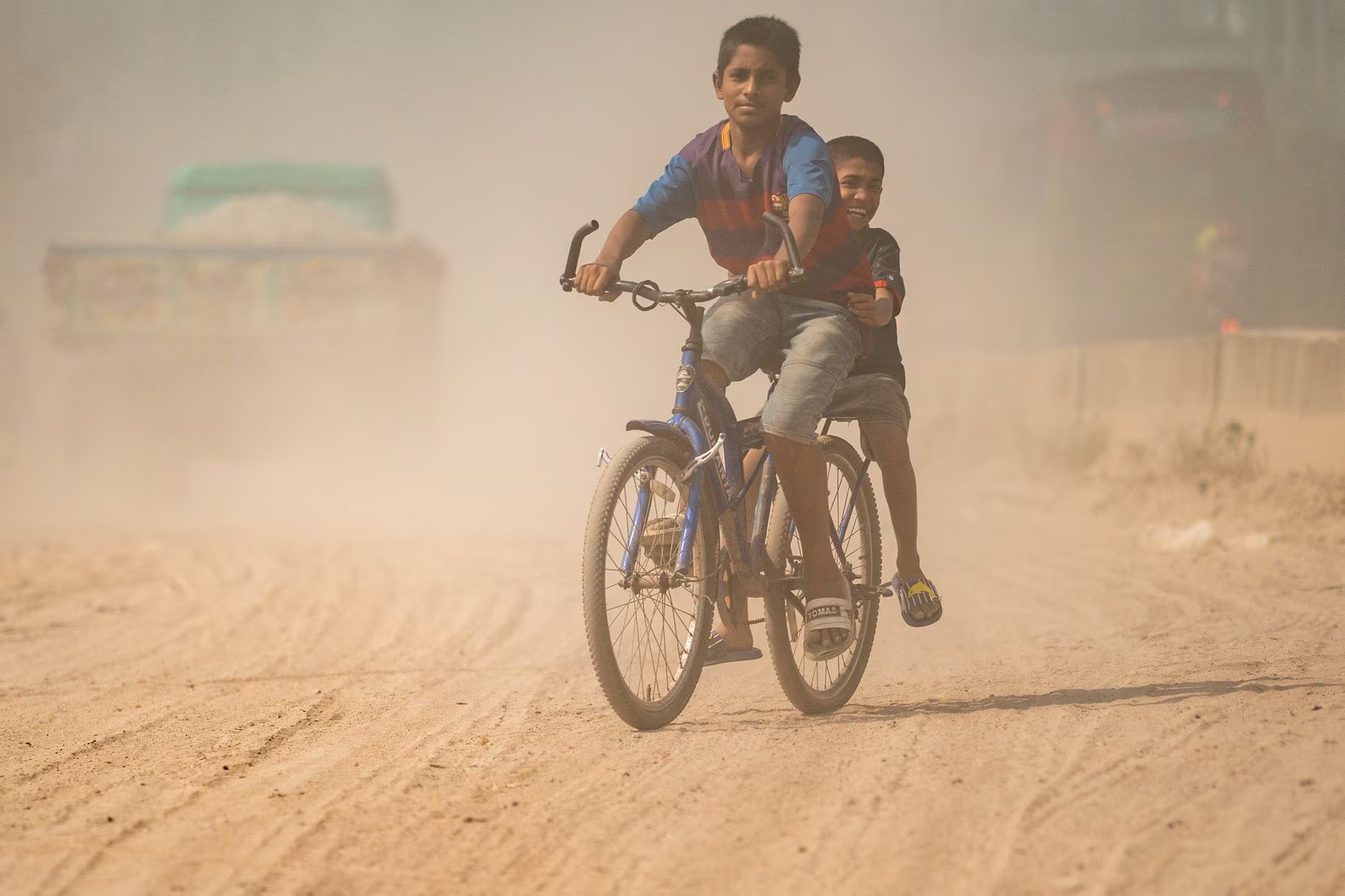
One of the most extensively studied cases is Bangladesh. Research shows that the main flow of internal migration there runs from low-lying coastal areas to major cities—Dhaka, Chittagong, Khulna, and others. According to some estimates, up to 400,000 new residents arrive in Dhaka each year—more than 1,000 people a day—although some studies put the figures at roughly twice that level.
Surveys conducted in urban slums, where a significant share of migrants end up after relocating, indicate that up to 70% of residents arrived in cities following natural disasters or prolonged environmental stresses—floods, rising sea levels, and tropical storms.
Bangladesh.
International movements linked to climate factors are smaller in scale than internal migration, yet they are far more likely to sit at the center of political debate, media attention, and legal disputes. People from countries facing high climate risks do indeed often move to more economically developed and comparatively less vulnerable regions, but they generally follow pre-existing routes—labor and family networks.
Thus, residents of vulnerable areas in Nepal, Bangladesh, and a number of other countries in South Asia and North Africa relocate not only within their own states but also beyond their borders, most often on labor visas. The main destinations are Malaysia, India, and the countries of the Persian Gulf, where large labor diasporas from neighboring regions have taken shape over the years.
Projections
Estimates of the future scale of climate migration by mid-century and toward the end of the century vary widely. The final figures depend on whether the world succeeds in curbing temperature increases—on emissions scenarios and compliance with the Paris Agreement frameworks—on the socio-economic trajectories of individual countries and regions, including rising or falling prosperity and levels of urbanization, on states’ capacity to adapt to change, and on the emergence of technologies that are still at an early stage of development, such as carbon capture and long-term CO2 storage. In essence, the models in use simultaneously incorporate climatic, economic, and demographic parameters, which explains the wide spread in estimates.
Reports by the Intergovernmental Panel on Climate Change, the World Bank, and the International Organization for Migration emphasize that international climate migration is particularly difficult to quantify. As long as climate change is not recognized as an independent and sufficient ground for relocation, cross-border movements in which climate plays a significant role are almost always channeled through labor, family, and other visa regimes.
As a result, the climate factor becomes embedded in overall migration statistics and is virtually inseparable from them. This significantly complicates both the measurement of the true scale of international climate migration and the construction of precise forecasts. As a result, analyses of cross-border flows typically rely on orders of magnitude and broad ranges of estimates. The IPCC, for example, notes that environmental factors could displace tens of millions of people as early as mid-century.
The situation is different for internal climate migration. More data are available on such movements, as they are more often captured by national statistics and specialized studies and are easier to attribute.
According to World Bank estimates, under the most adverse scenario, up to 216 million people across several regions of the world—South, East, and Central Asia, the Pacific region, Sub-Saharan Africa, Eastern Europe, and Latin America—could become internal migrants by 2050, relocating within their own countries because of rising sea levels, droughts, declining agricultural yields, and water scarcity.
At the same time, World Bank experts stress that with effective adaptation policies these flows could be reduced by roughly 80%. This means that climate migration does not have to take the form of a catastrophe and can instead be understood as one of the mechanisms for adapting to changing conditions. In this sense, it is not a system failure, but a test of the capacity of societies and states to respond to the challenges of the 21st century.