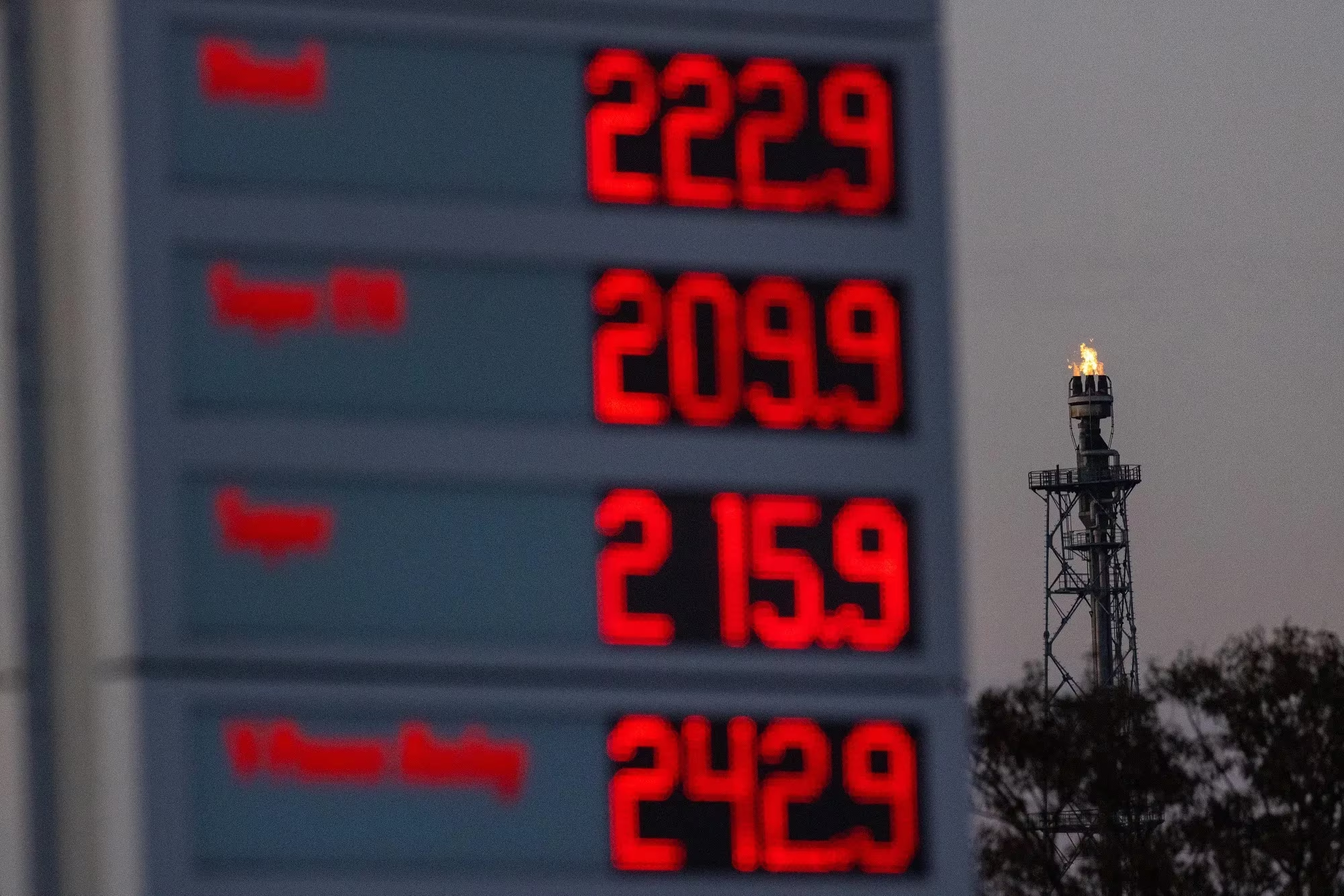
Germany’s Finance Ministry is considering the introduction of a windfall tax on oil companies, aiming to capture a portion of the profits generated by the sharp rise in crude prices driven by the US-led war against Iran, which is destabilising global markets.
According to a government source, the team of Vice Chancellor Lars Klingbeil is examining an excess-profits levy to channel funds toward consumer support. Among the options under discussion is using the proceeds to increase commuting allowances for working citizens.
The proposed tax is separate from a package of measures being advanced this week by Chancellor Friedrich Merz’s government in response to persistently elevated fuel prices linked to the Middle East conflict. These steps include limiting price increases at petrol stations to once per day, as well as changes to antitrust rules that shift the burden of justifying price hikes onto energy companies.
Amid pressure from lobbying groups and politicians, additional measures to ease the burden on households are also under discussion. Italy’s government this week approved a temporary cut in fuel excise duties—part of a broader package of emergency steps designed to cushion the impact of surging energy prices.
The Finance Ministry declined to comment on plans to introduce a windfall tax. In response to an inquiry, it noted that rising prices are “hitting workers, families and small businesses hard,” increasing the strain on both industry and consumers.
“At the same time, we see that oil companies are benefiting from the crisis,” the ministry added. Der Spiegel had earlier reported that such a measure was under consideration.
According to a source familiar with the calculations, the authorities are revisiting a model used after Russia’s invasion of Ukraine in 2022. At that time, under Chancellor Olaf Scholz—also a Social Democrat, like Klingbeil—profits exceeding the average of the previous two years by more than 20% were taxed at a rate of 33%, generating around €2.5 billion ($2.9 billion) for the budget.
However, the prospect of introducing such a tax may face resistance from the conservative CDU/CSU bloc led by Merz. Economy Minister Katherina Reiche, an ally of the chancellor, has expressed scepticism about excessive state intervention, noting that the current situation differs from the energy shock during the war in Ukraine, when supplies from Russia were cut off, and arguing that the measures already adopted are sufficient.