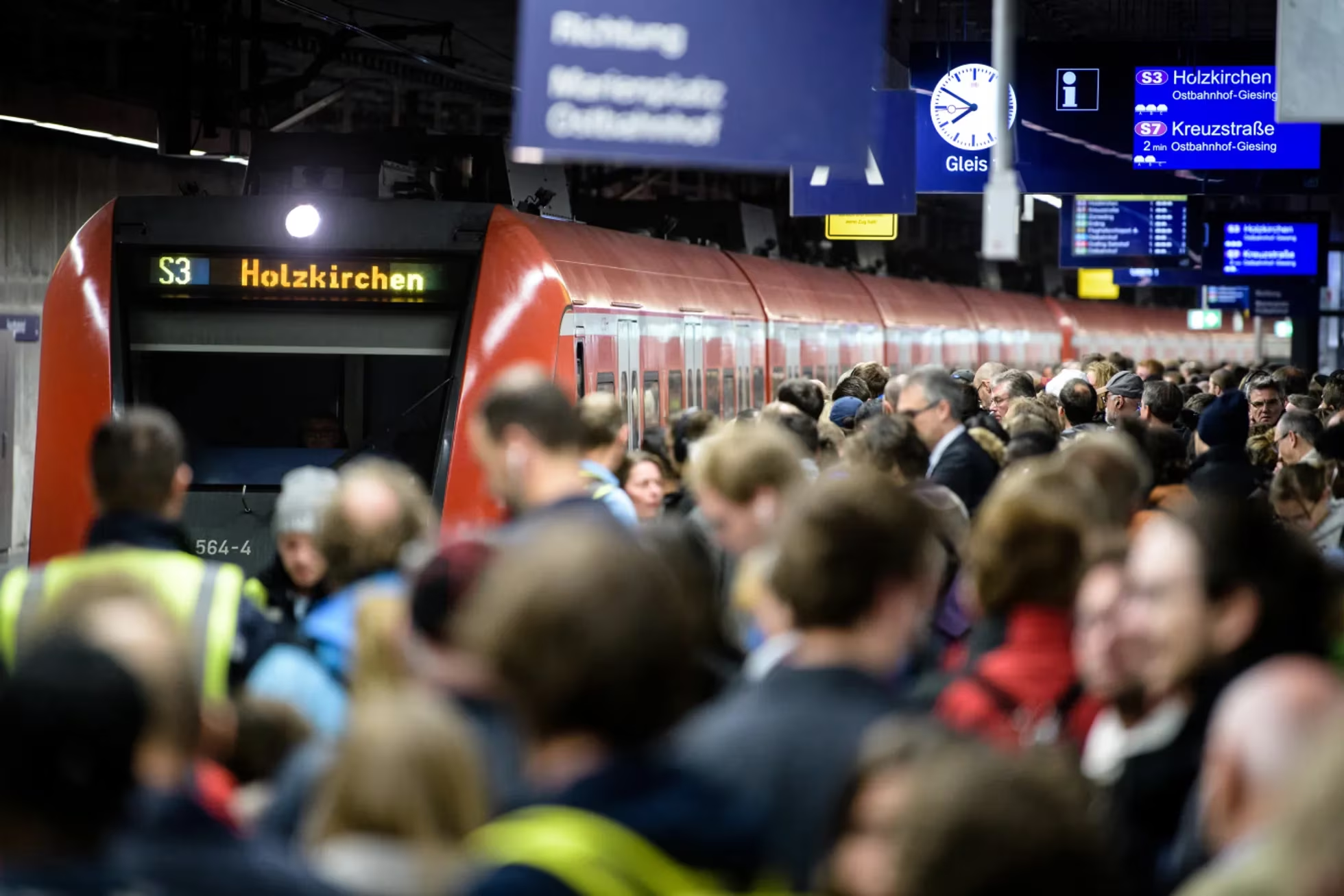
Germany has the largest railway network in Europe, but its condition has long been one of the country’s most visible infrastructure problems. Tracks, bridges and junctions have aged, the network is overloaded, and delays and cancellations have become so routine that Deutsche Bahn—the Federal Republic’s main rail operator—has itself tried to turn its lack of punctuality into a subject of irony.
For the German authorities, however, the problem has moved beyond a transport inconvenience. Transport Minister Patrick Schnieder has said the state of the railways is undermining citizens’ trust in the government’s ability to handle basic tasks. The government is now preparing a large-scale infrastructure renewal program: in the coming years, more than €100 billion is expected to be directed toward modernizing the rail network. The Financial Times explains how Germany’s railways reached their current condition and what the authorities are trying to do about it.
On the timetable, the journey from Hamburg to Düsseldorf takes four hours. For Nicolas Kramer, the head of a healthcare consulting company who regularly travels to hospitals across Germany, it recently took 23 hours. First, his train was delayed for several hours, then it was cancelled altogether. Other services were overcrowded, and Kramer was able to leave only the next morning. The second train also arrived late—by more than an hour and a half.
Kramer, 52, travels nearly 60,000 kilometers by rail each year. He says black humor and careful planning help him cope with constant disruptions. For important meetings, he allows as much as three and a half hours of extra time, and he travels with a change of clothes and a toothbrush.
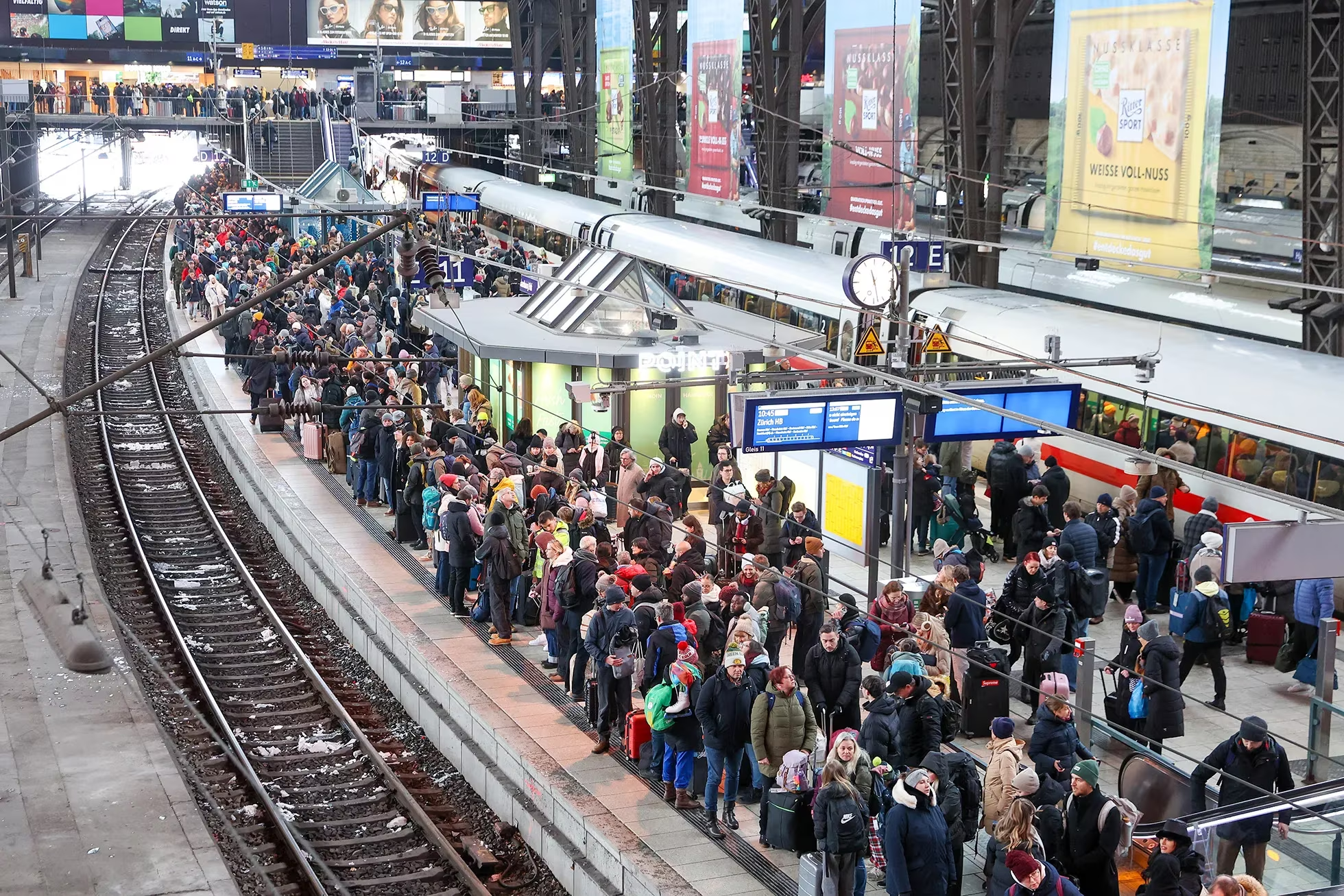
The problem of German trains’ lack of punctuality has long been part of the public perception of the railways. Although several operators work in Germany, Deutsche Bahn bears the main reputational burden. The state-owned company runs more than half of all local passenger trains and almost all long-distance services, and also manages most of the country’s rail network—the most extensive in Europe.
According to Deutsche Bahn itself, in 2024 only 63% of its long-distance trains arrived on time—that is, with a delay of less than six minutes. In 2025, the figure fell to 60%, a historic low. The company cites worn-out infrastructure and repair works as the main reason: without them, the network cannot be restored, but the repairs themselves place additional strain on routes that are already operating at their limit.
Germans, weary of delays, have begun betting on them. Deutsche Bahn also tried to use self-deprecation: in 2025 the company launched a €7 million social-media PR campaign. The Transport Ministry did not back that approach. Schnieder dismissed Deutsche Bahn’s chief executive and said the railway crisis had become a question of trust in the state. “We must not allow people to get the impression that the state is unable to deal with problems such as dilapidated bridges or chronically late trains,” the minister said.
The roots of the current crisis lie in decisions made more than 20 years ago. At the time, Germany was facing high unemployment, weak economic growth and a budget deficit. Against that backdrop, the authorities considered partially privatizing Deutsche Bahn through a stock-market listing. The plan was ultimately abandoned, but the preparations for it had a marked effect on the company.
The drive to improve financial metrics ahead of a possible IPO led to cuts in spending on rail-infrastructure maintenance, the Financial Times writes. According to the newspaper’s assessment, the rail-network budget in 2005–2010 was 20% lower than in the mid-1990s. Later, investment was constrained by the “debt brake,” introduced after the 2008 global financial crisis. It limited the government’s ability to spend more than it takes in.
In spring 2025, Germany eased the “debt brake” to expand investment in defense, infrastructure and environmental projects. The authorities created a €500 billion infrastructure fund, which is also financing the federal program to modernize the railways. Nearly €107 billion is expected to be allocated to it by 2029. Deutsche Bahn, as the rail-infrastructure operator, will be the main recipient of the funds. The key question now is whether the company can use the money effectively.
To do that, Deutsche Bahn is changing its approach to repairs. Previously, routes were renewed in sections, with efforts made not to take them completely out of service. Now the company is closing key lines for several months in order to carry out full-scale reconstruction. “In these few months, we are doing more work than in all the previous years put together,” Philipp Nagl, chief executive of DB InfraGO, Deutsche Bahn’s infrastructure division, told the Financial Times.
One such project is the closure of the Cologne–Hagen line from February to July 2026. It is one of Germany’s oldest and most important rail routes, opened in the mid-19th century. Normally, up to 280 trains a day use it. During the works, passengers will have to use detour routes or buses, which are themselves often stuck in traffic. “Quite difficult times are ahead. But after that, the situation will improve,” Nagl promises.
In 2024–2026, the number of construction sites on Deutsche Bahn’s network rose by a third, reaching 28,000. By the end of 2026, the company expects to have repaired 900 kilometers of track—almost a quarter of the overall modernization plan. The scale of the work is comparable to half the length of all railway lines built in Germany since 1945.
Nagl describes the current program as the largest investment in rail infrastructure since the country’s postwar reconstruction. Even so, he says, €107 billion will not be enough to fully compensate for years of underfunding. Industry experts, however, believe the modernization effort could become a turning point for Germany’s railways. The first signs have already appeared: at the very least, the condition of the network has stopped getting worse.