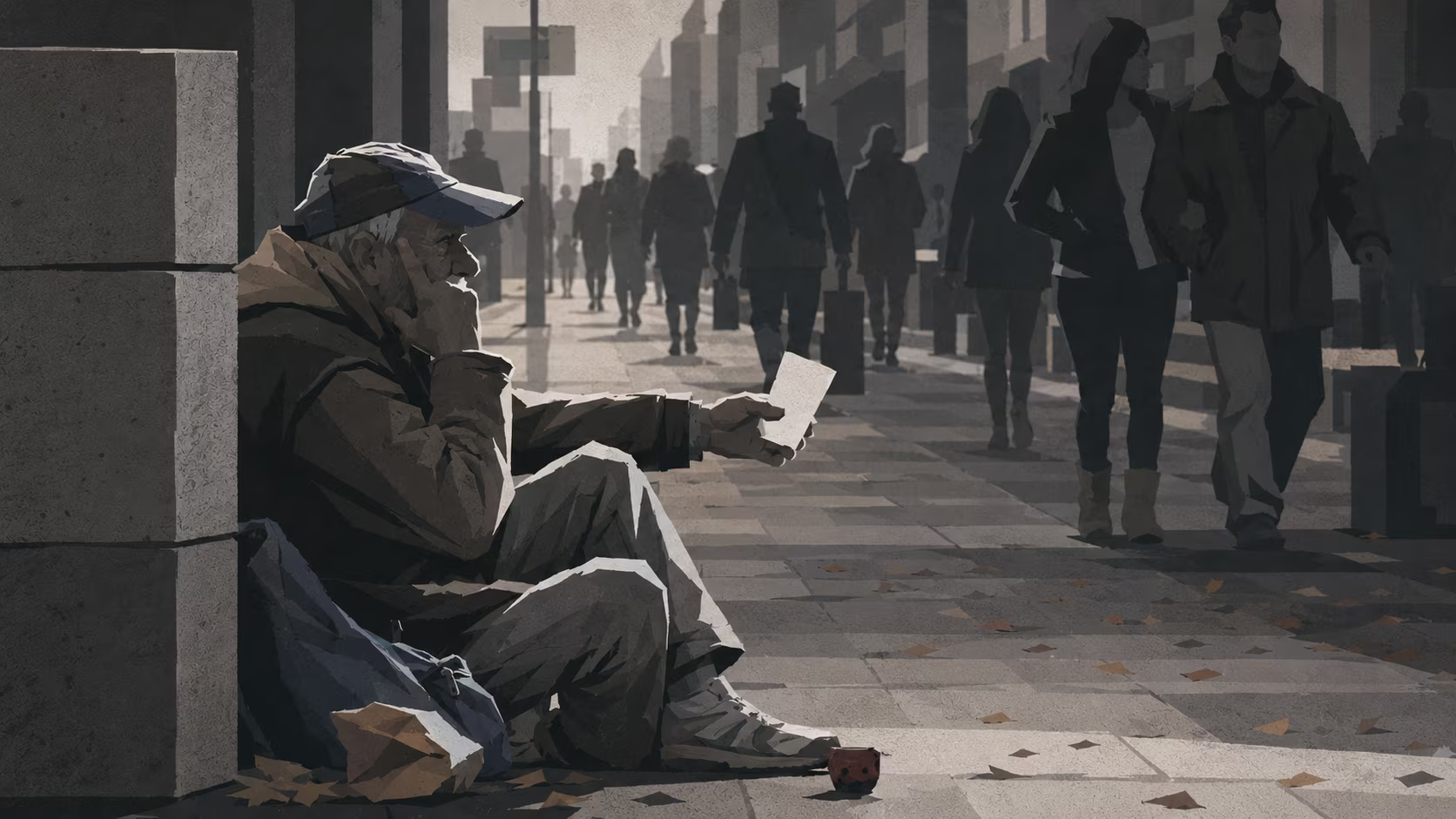
Poverty in Germany rose to 16.1% in 2025, according to the Parity Welfare Association. The organization says 13.34 million people were living below the poverty line. A year earlier, the rate stood at 15.5%, and since 2023 the number of people living in poverty has increased by about 1.2 million. The association warned of a “crisis-like situation” and urged the government not to cut social benefits.
The rise in poverty in Germany is not an isolated statistical aberration, but a symptom of broader pressure on the German social model. The country remains Europe’s largest economy, but its familiar structure—high employment, a strong industrial base, a generous welfare system and strict budget discipline—is increasingly struggling to withstand several crises at once.
One of the main factors is the prolonged rise in the cost of living. Even after inflation slowed, prices for food, energy, rent and basic services remained substantially higher than before the energy crisis. For low-income households, this is especially painful: they spend most of their budgets not on savings or consumption that can be postponed, but on housing, heating, electricity and food. As a result, even a small increase in compulsory expenses quickly turns into a decline in their real standard of living.
The second factor is the weakness of the German economy. Germany has spent several years in a state of near-zero growth, while its industrial model is under pressure from several directions at once: expensive energy after the break with Russian gas, slowing demand in China, competition from the United States and Asia, and the prolonged restructuring of the automotive and chemical industries. When the economy does not grow, poverty increases not only because of unemployment. Some people remain formally employed, but their incomes are no longer enough to offset rising prices.
The third layer of the problem is housing. In large cities and economically strong regions, rents are rising faster than incomes, while affordable housing remains scarce. This changes the very structure of poverty: a person may have a job, but after paying rent and utility bills, effectively live at the poverty level. Single people, pensioners, single-parent families and migrants are especially vulnerable—groups with fewer opportunities to spread costs across several incomes.
But poverty in Germany is rising not only because of the market. It is also rising because the state is entering a period of difficult budgetary choices. Social spending is increasing because of population ageing, rising costs for pensions, healthcare and support for the poor. At the same time, after Russia’s invasion of Ukraine, Germany sharply changed its security priorities: Berlin is increasing defense spending, modernizing the Bundeswehr and allocating large sums for military and financial support to Ukraine.
This does not mean that aid to Ukraine by itself “created” poverty in Germany. The causes are deeper: inflation, the energy shock, weak growth, demographics and expensive rent. But the financing of the war in Ukraine and Europe’s related rearmament have become part of a new budgetary reality. Money, political attention and the state’s borrowing capacity are now being divided among competing tasks: defending external security, rebuilding infrastructure, supporting the economy and preserving social protection at home.
That is why the debate over poverty in Germany is increasingly becoming not only a debate about benefits, but also about what the role of the state should be in an age of war. The government faces a double pressure. On the one hand, it cannot ignore the threat from Russia or the expectations of NATO allies. On the other, cutting social benefits or tightening access to them would hit the very parts of society already hurt most by inflation and expensive housing.
For German politics, this is an especially dangerous combination. When people see the state increasing spending on defense and external commitments while also discussing savings on social programs, the sense of injustice grows. Populist parties exploit this by linking domestic problems to migration, aid to Ukraine or Berlin’s “foreign” priorities. Even if that picture simplifies reality, it is politically effective: poverty becomes an argument against Germany’s entire postwar model—open, social and embedded in Western alliances.
The current rise in poverty is therefore not just a question of incomes. It is a test of whether Germany can remain both a welfare state and Europe’s military backbone. Before the war in Ukraine, Berlin could postpone many security costs for decades, relying on the United States and economic ties with Russia. That era is now over. But the new era requires money—and the question is who will ultimately pay for this turn.