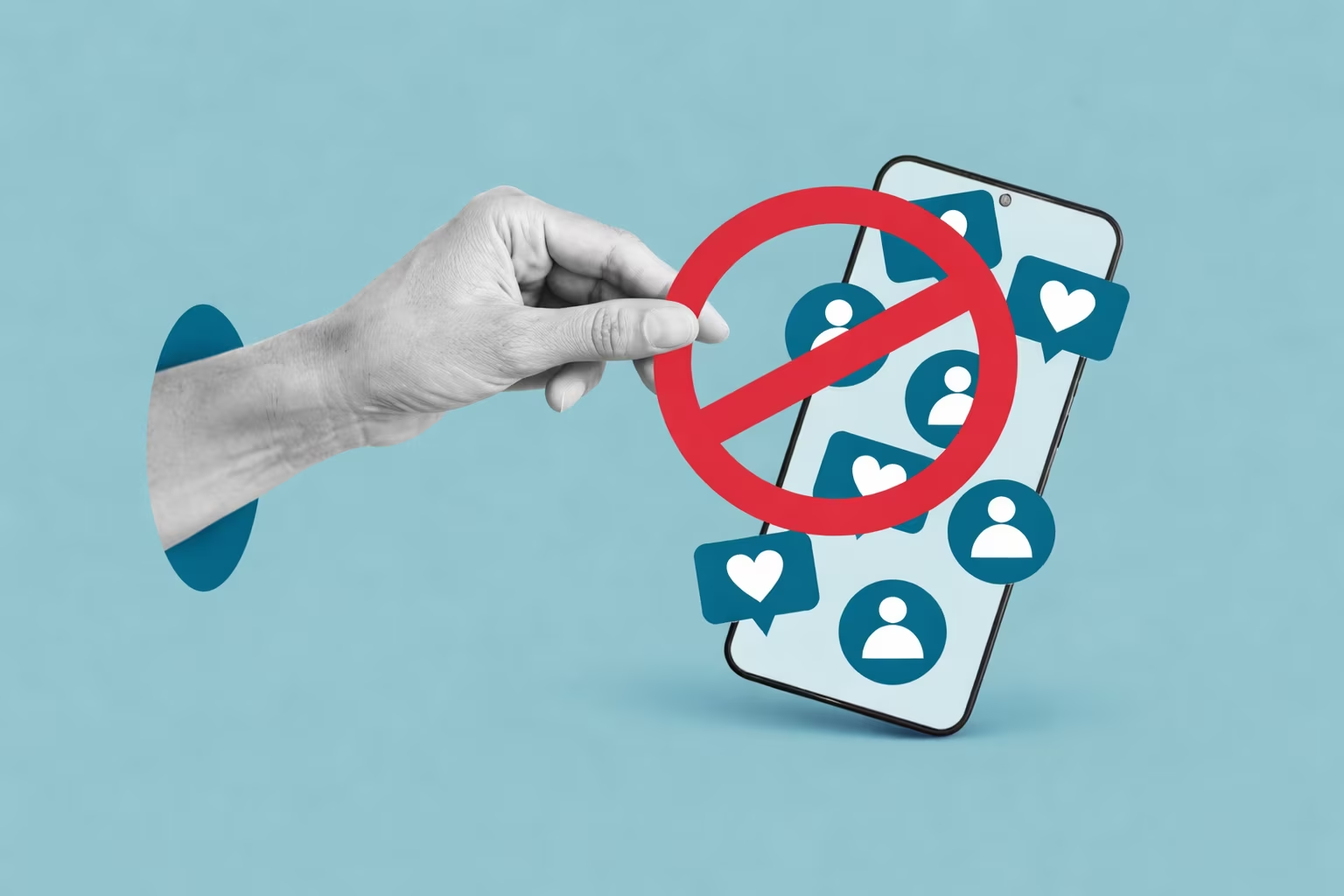
Germany’s chancellor, Friedrich Merz, said he viewed the idea of banning social media for children with “a great deal of sympathy”, ahead of discussions within the governing coalition set to begin on February 20.
A debate over age restrictions for social media is gaining momentum in Germany, as other European countries move toward similar measures in an effort to protect children’s mental and physical health. Speaking on the Machtwechsel podcast released on Wednesday, Merz said he felt “a great deal of sympathy” for a proposal by the Social Democratic Party to ban social media for children under the age of 14.
At the same time, Merz stressed that he is generally “very, very, very cautious” when it comes to legislative bans in an area such as social media. That said, he argued, the consequences of the spread of fake news, images generated by artificial intelligence, and the influence of platforms such as TikTok “make the situation more complex”. Protecting children in schools, the chancellor said, “must come first”, adding that the argument that children need to be introduced to digital tools as early as possible “does not stand up to scrutiny”. Otherwise, he said, “we would have to serve alcohol in primary school so that children could get used to it”.
Support for the ban has also been voiced by representatives of the Christian Democratic Union. Thorsten Frei, head of the Federal Chancellery and one of the party’s leading figures, said the issue would be discussed at a party conference in Stuttgart, scheduled for Friday and Saturday. Age restrictions have also been backed by the Greens and the left-wing Sahra Wagenknecht Alliance. Standing alone in opposition is the far-right Alternative for Germany, which argues that the proposal is not about children’s well-being but about control.
A government-appointed expert commission is expected to present its recommendations on policy in this area by the summer. France and Denmark have already passed laws restricting children’s access to social media, while similar initiatives are under discussion in many other EU countries. Spain’s prime minister, Pedro Sanchez, recently announced a ban for teenagers under the age of 16. Several states, including Greece, are calling for action at the European Union level, and the president of the European Commission, Ursula von der Leyen, has formed her own group of experts to prepare recommendations.
At the same time, human-rights and digital-privacy advocacy groups warn that bans are unlikely to be effective in protecting children from the negative aspects of the online environment. In their view, such measures could deprive minors of the right to access information and lead to a weakening of privacy-protection standards for the population as a whole.