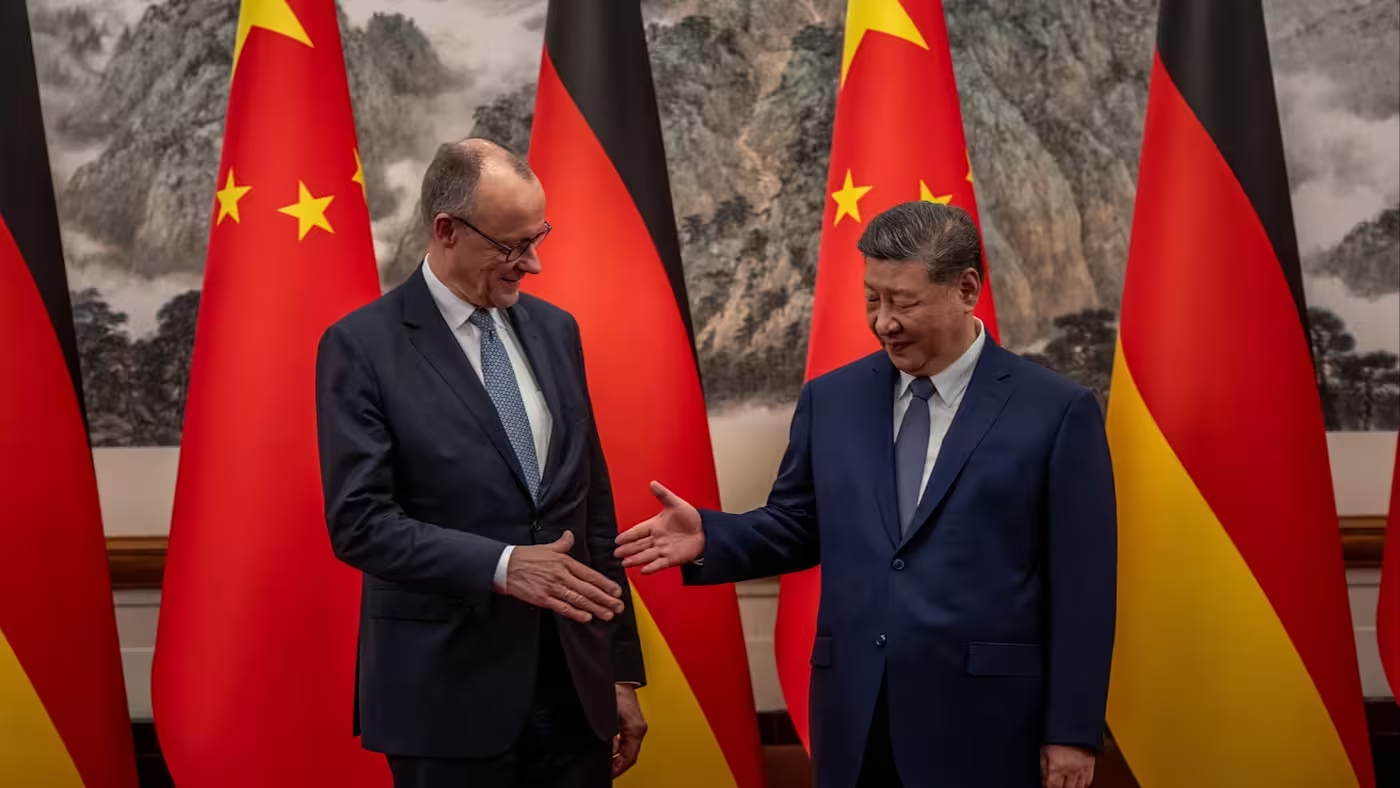
German Chancellor Friedrich Merz held talks in Beijing with Chinese President Xi Jinping—the discussions were expected to focus on mounting trade frictions between the European Union and the world’s second-largest economy.
Chinese state television reported the meeting on February 25. Earlier the same day, Merz held talks with Premier Li Qiang, China’s second-highest-ranking official. A dinner with Xi Jinping was also scheduled as part of the visit.
For Merz, this is his first trip to China since taking office. During the visit, he plans to address China’s industrial “overcapacity” as well as prospects for business cooperation. Before departing Germany, the chancellor said he aimed to build a “balanced, reliable, regulated and fair” partnership with Beijing, stressing that he would raise concerns over China’s “export restrictions” and competitive “distortions.”
The two-day visit comes against the backdrop of intensifying deindustrialization pressures on Europe’s largest economy and growing competition from low-cost Chinese manufacturers—particularly in sectors such as automotive production and machine tools, which form the backbone of Europe’s export-oriented industry.
According to EY estimates, German industrial companies cut more than 120,000 jobs in 2025.
Merz is accompanied on the trip by representatives of 30 companies. The chancellor also intends to stress the benefits of more balanced economic relations. Many major German conglomerates, including carmakers, continue to view the Chinese market as a key source of profits and innovation.
“Few places match the pace of development in areas such as electric mobility, software, artificial intelligence and battery technologies—China sets the tempo and shapes the standards,” said Ralf Brandstaetter, chief executive of Volkswagen Group China.
“A high-level trade delegation … vividly demonstrates Germany’s firm commitment to deepening bilateral trade and economic ties,” the state-run Xinhua news agency said on Wednesday.
Merz’s trip follows a series of visits by European leaders to Beijing—including British Prime Minister Keir Starmer last month and French President Emmanuel Macron in December.
Beijing is seeking to use these visits to present itself as a reliable defender of the multilateral trading order and to underscore divisions between the United States and its allies, against the backdrop of President Donald Trump’s erratic tariff policy and his statements about an intention to take control of Greenland.
However, according to diplomats in Beijing, China still struggles to overcome deep-rooted skepticism in Europe over its widening trade surpluses and its tacit support for Russia’s war against Ukraine.
Germany’s trade deficit with China—its largest trading partner—rose to a record €87 billion last year, an increase of €20 billion compared with 2024.
“Unilateral moves and protectionism pursued by the United States have pushed European countries to reassess their external relations,” the Global Times, a mouthpiece of the Chinese Communist Party, said.
The paper added that Beijing is a “staunch supporter of free trade” and “seeks to uphold an international system based on the United Nations.”