Every morning, Mansour Mohammad Bakr steps out of a small rented room in Gaza City, where he lives with his pregnant wife and two very young daughters. The twenty-three-year-old walks past the port and the waves of the Mediterranean Sea, where he once made his living.
Before the two-year war that devastated Gaza, Bakr was a fisherman—sharing nets and a boat with his father and brothers. Now his brothers are dead, his father is too old, and all the equipment was destroyed in the fighting. Like hundreds of thousands of other residents of the enclave, Bakr is in acute need of work.
“Money is the main means of survival in Gaza. Without it, a person cannot do anything,” he says. “The limited aid that reaches us in no way replaces the need for money and does not cover even the most basic necessities.”
Humanitarian organizations have scaled up aid distribution since October, when a ceasefire agreement came into force. This prompted Israel to partially ease strict restrictions on humanitarian shipments and to simplify their delivery within the enclave.
In January, UN agencies and their partners provided household-level food assistance to around 1.6 million people. The nongovernmental organization World Central Kitchen is now distributing 1 million hot meals a day. Yet this assistance remains catastrophically insufficient, covering only the most basic needs. Everything else brought in by the private sector can be obtained by Gaza’s residents only in cash.
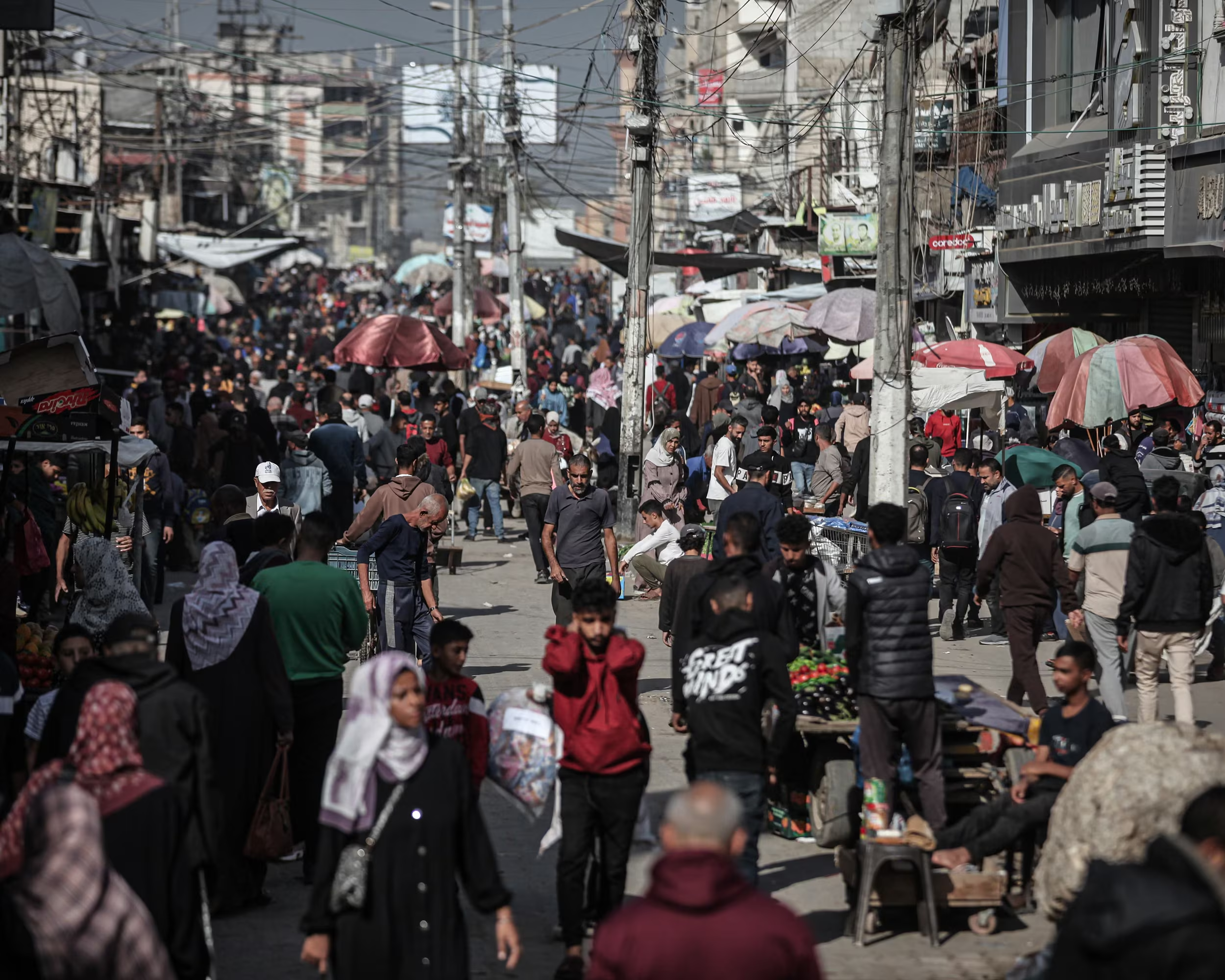
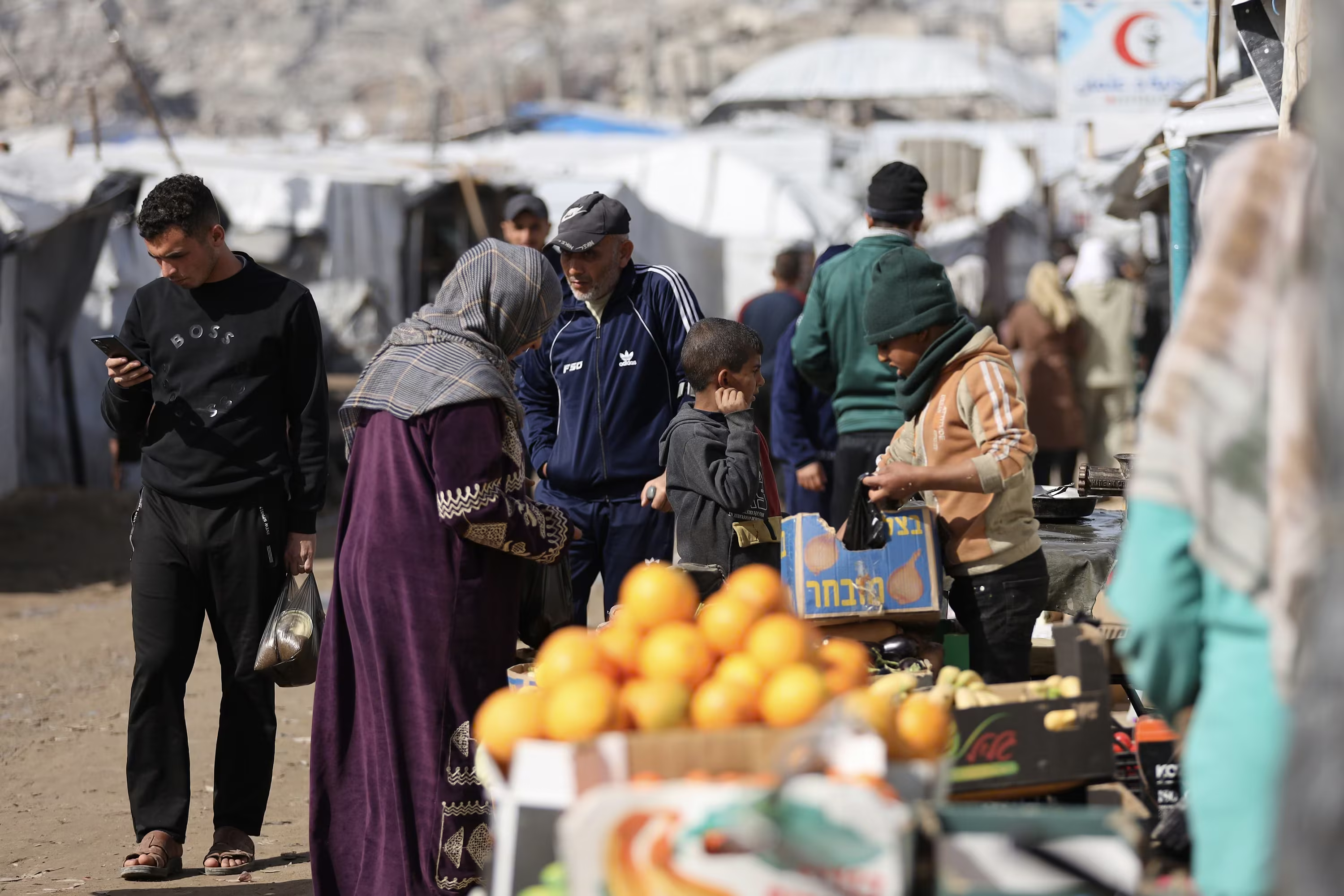
Humanitarian workers note that more fresh fruit, vegetables, meat, clothing, and household goods have appeared in the enclave—but at prohibitive prices. “There has been a significant increase in commercial supplies,” says Kate Charlton, medical coordinator for Doctors Without Borders in Gaza City. “But all of it is very expensive.”
Mohammed al-Far, a fifty-five-year-old former trader living with his family in Al-Mawasi—a coastal area densely packed with tent camps for displaced people—says that humanitarian organizations provide them with just one meal a day.
“It is either rice, lentils, or beans, and once or twice a week a small amount of meat. But to keep going, you need money. We can eat,” he says, “but transport, haircuts, charging mobile phones, buying vegetables and fruit—all of this requires cash.”
Al-Far tried to start small businesses selling falafel and sweets, but without success, and eventually fell into debt. His age, he says, has now become an additional obstacle in the search for work.
“My health is fine, I am ready to take on any job,” he says. “But employers are looking for younger people. I have been going around looking for work for months, walking through the market, but without results.”
The problem facing Mohammed al-Far and Mansour Bakr—like everyone trying to find work in Gaza—is that there is almost no work left. According to UN estimates, the official unemployment rate has reached 80 percent, and the economy has shrunk to just 13 percent of its former size.
In November, Pedro Manuel Moreno, deputy secretary-general of the UN Conference on Trade and Development, said the war had “destroyed decades of progress.” “Gaza is experiencing the fastest and most devastating economic collapse ever recorded,” he said.
According to UN data, in 2024 Gaza’s GDP per capita fell to $161 a year (£118)—one of the lowest figures in the world. The Israeli offensive has destroyed sanitation, transport, energy, and health-care systems, wiped out farmland and greenhouses, and all but erased the fishing industry, which once employed thousands of people.
Bakr says he dreams of returning to the sea and to the profession of fisherman, and of one day buying a boat again—the same kind he once had—to provide his family with food, water, clothing, and medicine.
The October ceasefire agreement envisaged a rapid transition to reconstruction, but the process has largely stalled. Some provisions have been implemented, including the return of all hostages and the limited reopening of the Rafah border crossing.
Plans for an international stabilization mission are also emerging—Indonesia has said it is preparing thousands of troops for humanitarian and reconstruction tasks.
However, Hamas, which controls much of the coastal zone where nearly all of Gaza’s 2.3 million people now live, is not prepared to fully disarm, while Israel appears unwilling to relinquish control over more than half of the territory.
Israel has also blocked the entry of a new technocratic administration that was meant to govern Gaza under Donald Trump’s “peace plan,” and key border crossings remain closed or operate under tight restrictions.
Even if Bakr were able to find and equip a new boat, the restrictions imposed by Israel on access to the sea would still prevent him from practicing his trade.
“My work as a fisherman in Gaza’s waters was passed down to us from our grandfathers,” he says. “I left school early, and fishing is all I have ever done. I am looking for work wherever I can.”
Even people with higher education are struggling to survive amid the ruins. Bisan Mohammad earned a degree in medical laboratory diagnostics just a few months before the war in Gaza, triggered by a Hamas raid into Israel in which 1,200 people—mostly civilians—were killed and another 250 were taken hostage by the Islamist armed group.
Her husband, who worked as a security guard, was killed in the first days of the war, and since then she has been providing for their daughter on her own. Mohammad now lives with her parents in a tent in Nuseirat, in central Gaza.
“I started looking for any work I could find, but without success. Everything requires money—even water, food, and bedding. Sometimes it feels as though you have to pay even to breathe,” says the twenty-three-year-old Mohammad.
Despite the ceasefire, violence continues. According to the independent US-based conflict monitoring group ACLED, Israel carried out more strikes on Gaza in January than in any month since October. Gaza’s Ministry of Health says that since the truce came into force, 586 Palestinians have been killed, bringing the total death toll of the war to more than 72,000 people, most of them civilians.
“What they call a ‘ceasefire’ has not changed our reality at all—on the contrary, it has made it even worse,” Mohammad says. “The media have stopped talking about the ongoing killings, while the bombardment continues, prices keep rising, and even the most basic things—if they are available at all—water and food—barely allow us to survive.
I do not think about the future and try not to—it is too exhausting and frightening, and the future remains uncertain. I do not know what will happen to me and my daughter if this situation continues and we still have no work or income.”