
The French government is under mounting pressure: in January it must secure a difficult budget compromise to finance investment in defence and industry while simultaneously reining in the deficit. Parliament is expected to approve rolling over the 2025 budget into the start of the new year to avoid a paralysis of state functions.
On Tuesday, December 23, the lower house was set to vote on emergency legislation that would allow France to avert a US-style shutdown. The measure is explicitly temporary, enabling police, schools, and public services to continue operating over the coming weeks.
At the same time, the central challenge facing Prime Minister Sébastien Lecornu—assembling a majority and finding an acceptable compromise on a new budget—remains unresolved. Government officials warn that emergency legislation cannot serve as a lasting solution.
“It’s a spare wheel that lets you reach the petrol station, fill up, and keep going,” Finance Minister Roland Lescure said on Tuesday in an interview with BFM TV.
He stressed that without an approved budget the government would be unable to begin recruiting new teachers, building prisons, or supporting polluting industries in cutting emissions.
Months-long efforts to agree on a 2026 budget collapsed last week, as parties in a fragmented parliament failed to reach a compromise with senators on new tax measures and spending cuts.
President Emmanuel Macron’s initiatives to raise France’s defence spending by €6.5bn over two years have also been frozen. The budget crisis has weakened Paris’s position at the European level as well—without financial resources and parliamentary consent, France is unable to actively advance initiatives that require funding or legislative approval.
“It’s not chaos, but it would be hard to call the situation satisfactory,” government spokesperson Maud Brejon told journalists late on Monday evening. According to her, Lecornu told a cabinet meeting that he still expects to secure the necessary number of votes to pass the budget.
The fate of the prime minister himself is also at stake. If he fails to secure a compromise and attempts to push the budget through parliament without a vote, it could trigger a no-confidence motion. Lecornu is already the third prime minister since Macron called snap parliamentary elections in the summer of 2024—polls that stripped centrists of their majority and further fragmented the lower house.
It was precisely budget disputes that forced the resignation of his two predecessors. Last year France had already resorted to a temporary rollover of its budget framework before managing to approve a full agreement only in February.
For now, Lecornu is betting on winning over the Socialists, including by suspending an unpopular increase in the retirement age. However, the Senate refused to back the proposed tax hikes on large companies, and representatives of both chambers failed to agree on a unified text.
“The centre-left continues to press for higher taxes on the wealthy, while the centre-right demands spending cuts… this fundamental conflict is not going away,” said Carsten Nickel, an analyst at Teneo, in a comment on Tuesday.
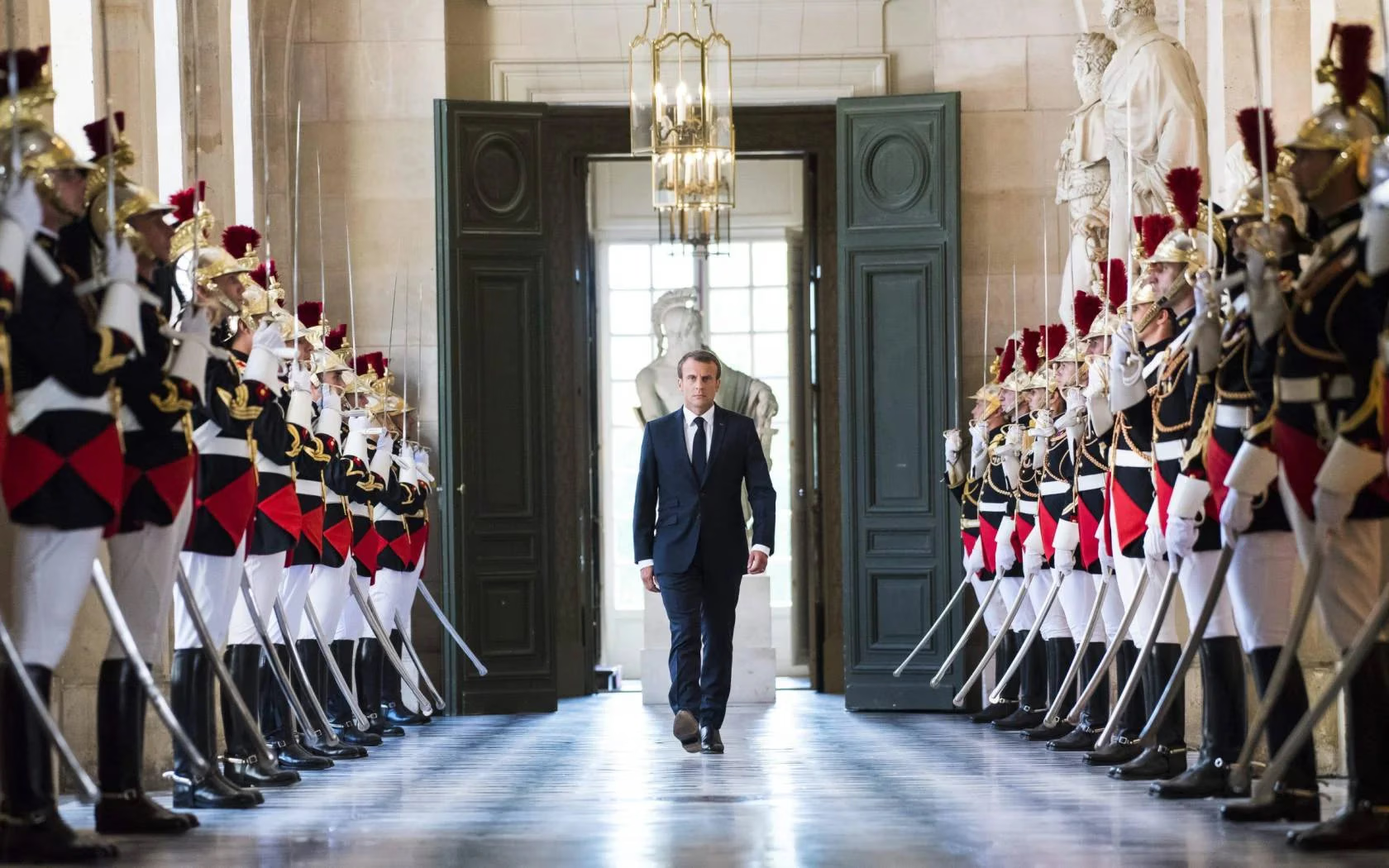
Emmanuel Macron Is Losing Control Over France’s Politics and Economy
The Centrist Project That Sustained His Political System Is Collapsing, and the Country Is Sinking into a Mix of Populism and Stagnant Social Models
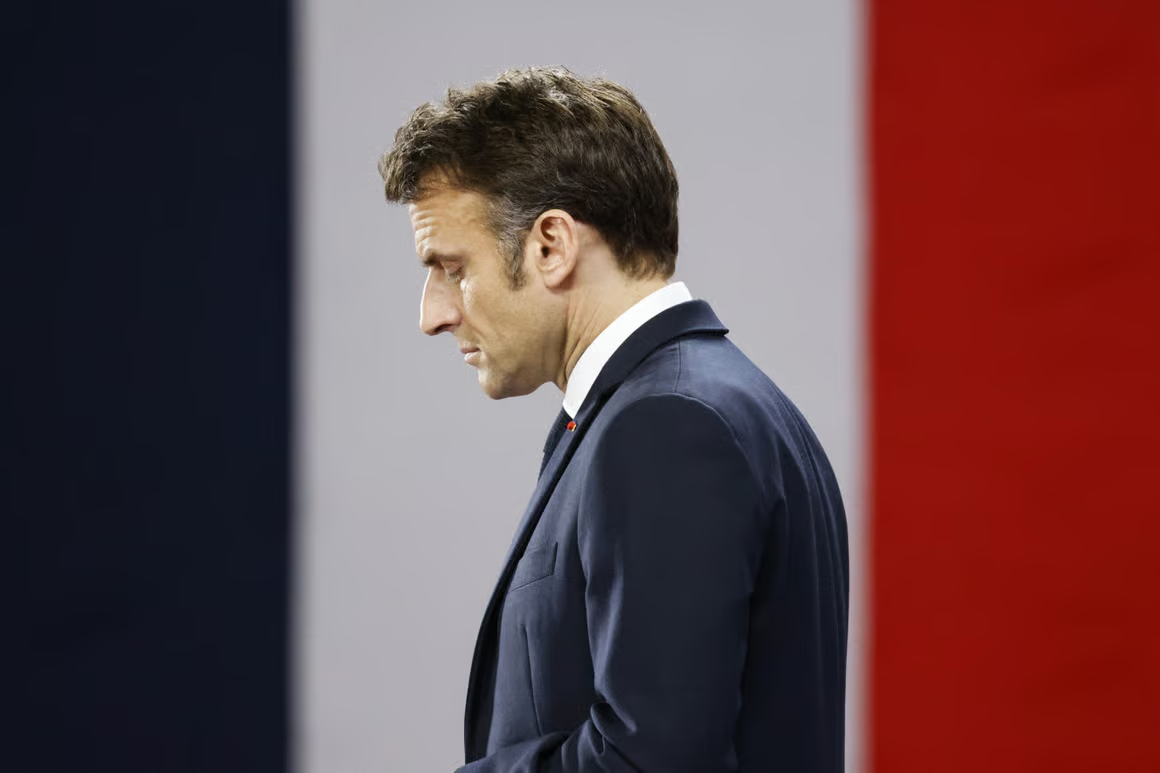
Macron Wanted to Rewrite the Rules of French Politics
Now His Own Reform Project Is Crumbling Under the Weight of the System He Created
At the same time, the government is seeking to bring the budget deficit below 5 percent of GDP next year, down from 5.4 percent in 2025, under close scrutiny from rating agencies and international investors. The Banque de France warns that simply rolling over the 2025 spending caps would not be sufficient to keep the deficit on a sustainably downward path.