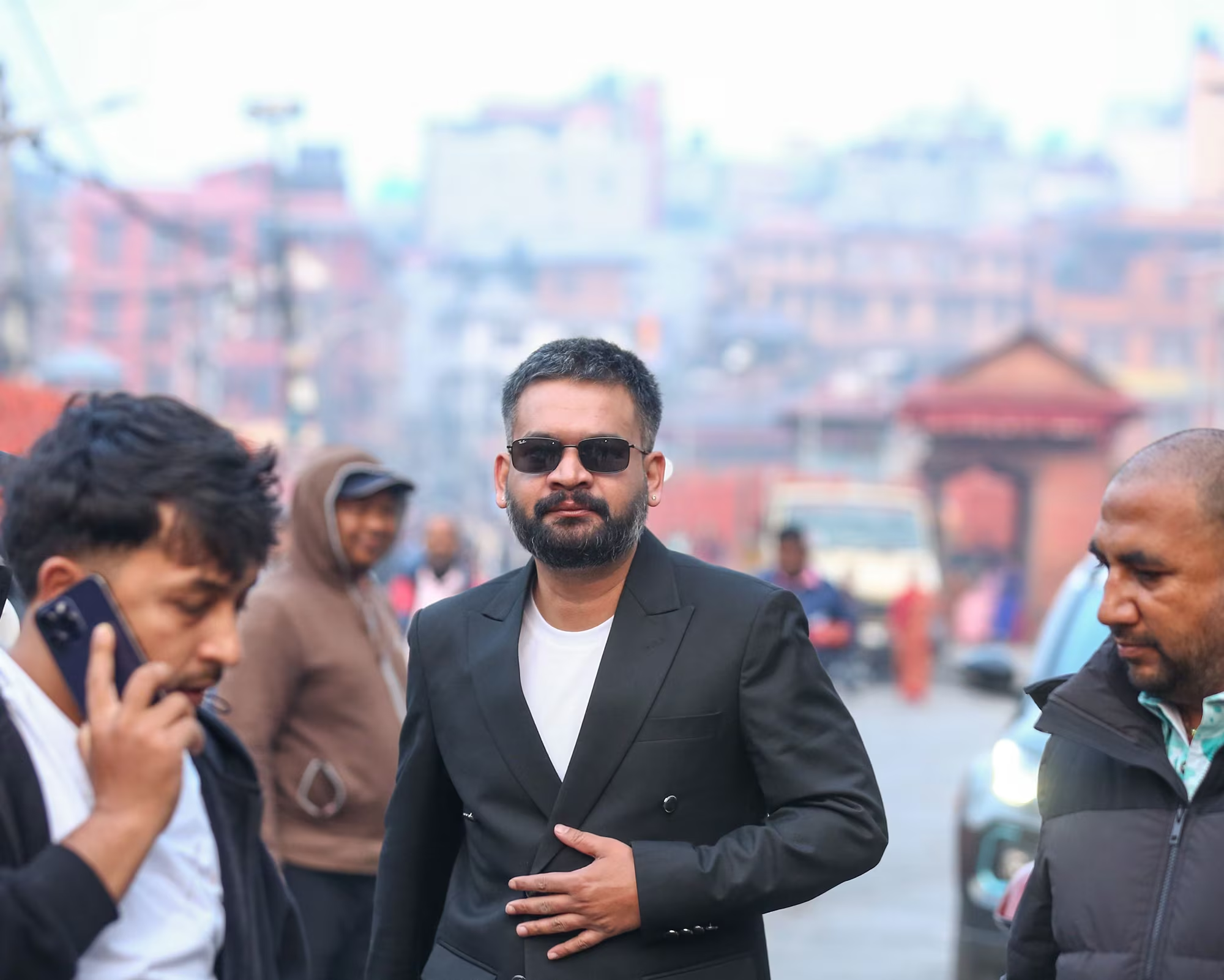
In the unremarkable, dust-laden neighborhoods of the Nepali city of Damak, a political confrontation is unfolding without precedent in the country’s recent history. On one side stands a veteran of high office; on the other—a former rapper in dark glasses and impeccably tailored suits. The contest has the potential to fundamentally reshape Nepal’s balance of power.
Against the backdrop of one of the most fraught election campaigns in recent years, attention has centered on 35-year-old Balendra Shah—Balen. He first gained prominence as a popular rapper whose tracks castigated the ruling elite, before unexpectedly pivoting to politics and, in May 2022, securing a decisive victory in the race for mayor of Kathmandu.
He became a truly national figure, however, after the bloodiest day of protests in recent memory. In September of last year, demonstrations by Generation Z against corruption and a ban on social media were met with a harsh police response, including the use of live ammunition across the country. More than 70 people were killed. It was then that Balen came to be seen as a unifying figure—above all among young Nepalis disillusioned with a system they regard as broken and detached from society.
The unrest and the violence that followed led to the swift collapse of the communist government of veteran politician KP Sharma Oli, long dogged by allegations of corruption, cronyism, and elitism. Leaders of Generation Z viewed Balen as their preferred candidate to serve as interim head of state, but he declined, choosing instead to wait for elections and to enter the contest through the ballot box.
“As mayor, Balen has shown that he is capable of transforming the system of governance,” said 24-year-old business graduate Parbat Basnet, one of the leaders of the Generation Z uprising in Damak, where protests were also marked by police gunfire.
“He could have accepted unelected power after the protests, but he chose the democratic path. He wants to defeat corrupt leaders through the ballot box so that both those in power and the voters themselves change their mindset.”
For many in Nepal—particularly the 46% of the population under the age of 24—the current vote has become a test of whether the demands and energy that fueled Generation Z’s protests can evolve into durable political change, or whether the old elite will once again reclaim lost ground.
According to Basnet, the aftershocks of the uprising extend well beyond the young. Nepal’s complex and cumbersome electoral system has entrenched an endless succession of fragile coalition cabinets and bred election fatigue. Over 35 years, the country has cycled through 31 prime ministers, some of whom have returned to power multiple times.
“But this election carries a different energy,” Basnet said. “Even older voters are finally asking leaders: where is the promised gas pipeline? Where is the railway? Where is the development you spoke about?”
“In the past, leaders were treated like gods. Now people demand accountability.”
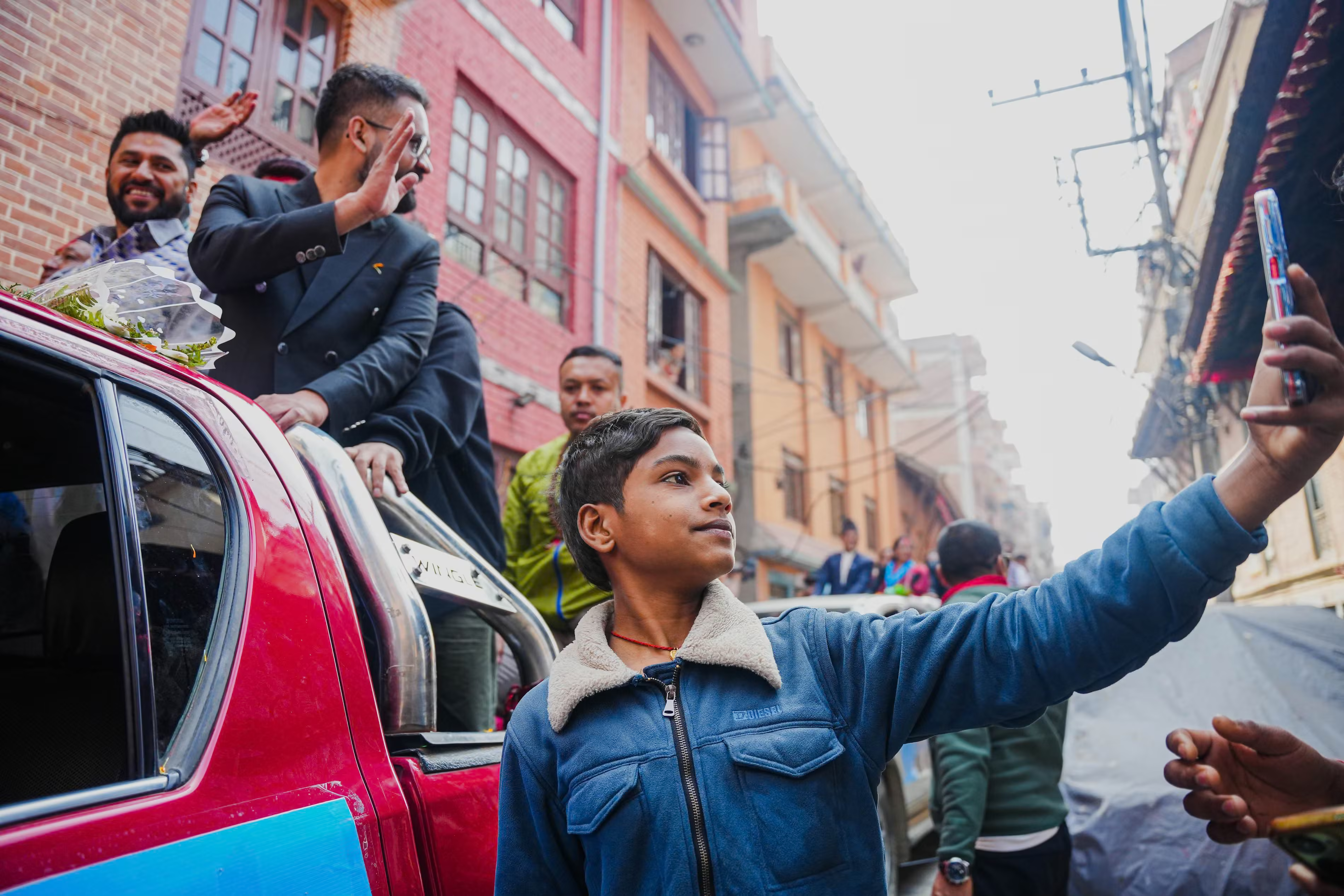
Balen greets supporters during a campaign event.
Nowhere is this shift felt more acutely than in the Jhapa-5 constituency and its center—the city of Damak. For years, the region was considered a stronghold of four-time prime minister Oli and his Communist Party of Nepal (Unified Marxist–Leninist), known as UML.
When Oli announced his intention to run again, despite having been removed from office six months earlier, Balen resigned as mayor of Kathmandu and declared he would challenge him directly—for his parliamentary mandate and for the post of prime minister.
From that moment, his popularity surged, and the so-called “Balen effect” became visible across Jhapa-5. During a motorcade in Damak, crowds filled the streets, balconies, and rooftops, with people even standing atop trucks. When Balen emerged through the sunroof of his campaign vehicle in his trademark black suit and dark glasses, supporters surged forward, straining to touch him. Women who failed to secure a selfie did not hide their tears.
Among those who managed to take a photo was 23-year-old Sarita Baral. Before the Generation Z protests, she admitted, politics barely held her attention, but the events changed that. She now wants to fight for a country in which most young people will not have to leave for grueling and often exploitative work abroad—including in the Gulf states—simply to earn a living.
“Young people in Nepal support Balen because we want change, jobs, and an end to corruption,” Baral said.
“He is different from other politicians, he does not make grand promises and he appears bold. He could have run in any constituency, but he chose Jhapa-5 to challenge KP Oli. That alone makes us see him as a decisive leader.”
Against this backdrop, Oli’s campaign appeared restrained. His motorcade passing through Damak was largely met with indifference. Speaking to the Guardian at his home in the city, Oli in a rare comment made clear he still does not accept responsibility for the violence that unfolded during the Generation Z protests against his government.
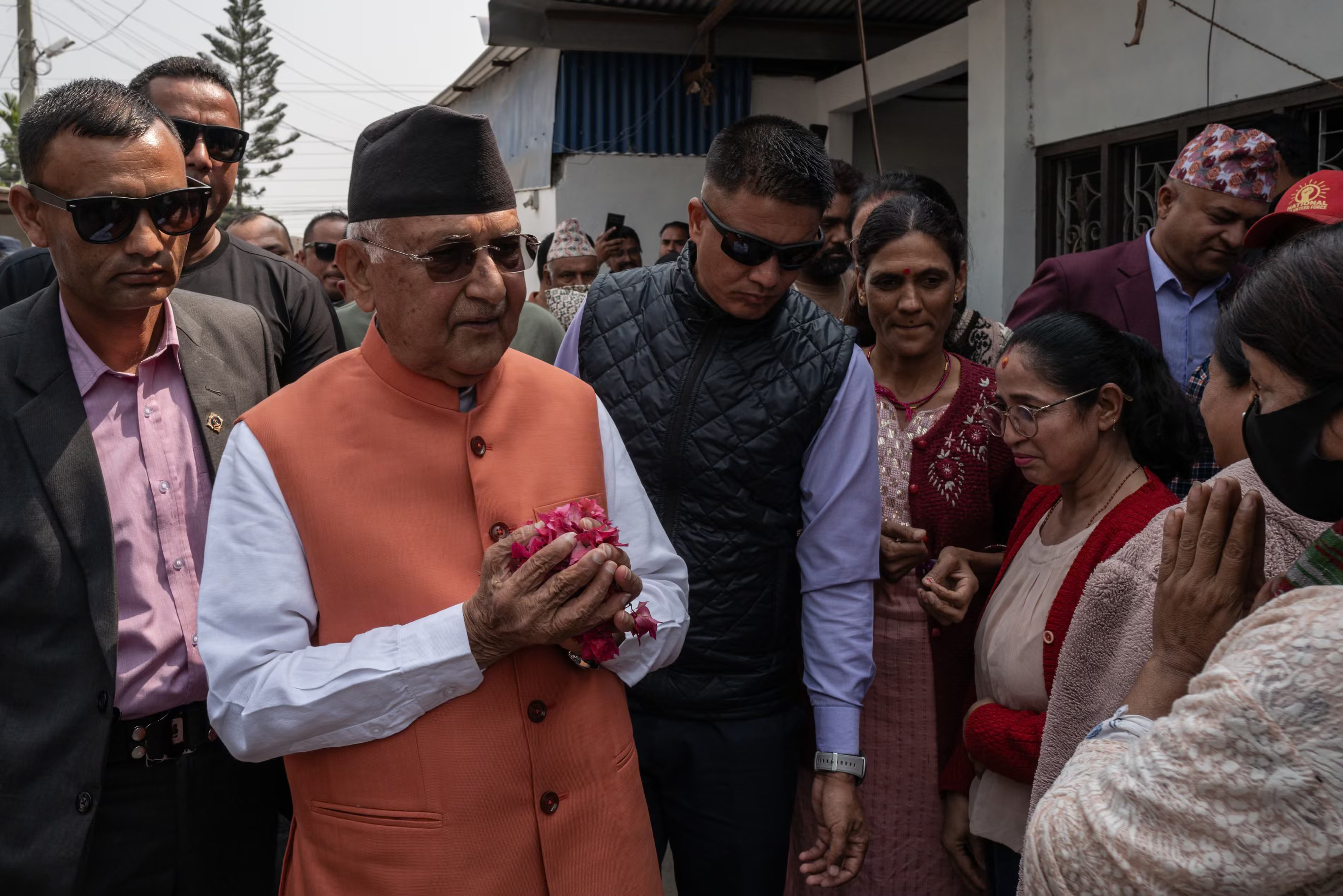
KP Sharma Oli greets supporters during a visit to a factory in the Jhapa district.
“Young people were misled, they were brought out into the streets, and then their movement was hijacked by criminals,” Oli said. “This was a conspiracy to topple my government. Yes, it is a tragedy, I was very saddened that people died. But their conspiracy was greater than our preparedness, they wanted to set the country ablaze.”
After resigning, Oli disappeared from public view for several weeks, but he rejected accusations that he had fled or gone into hiding. “This is bad propaganda,” he said, adding that there was “no doubt” he would prevail.
Oli’s party—UML—continues to enjoy firm support, particularly in the rural areas of Jhapa-5, where he has won six times. At the same time, questions are being raised about Balen himself—about his campaign style, his past sharp-edged social media posts, and a tendency toward impulsive statements. Some fear that for a small country wedged between China and India, such unpredictability could carry foreign-policy risks.
Balen has largely eschewed interviews with traditional media, choosing instead to address his audience through social platforms, where he commands millions of followers. His team did not respond to requests from the Guardian. On the campaign trail, he behaves in ways atypical for a national politician—encounters with voters are brief, substantive exchanges are rare, and critics accuse him of sidestepping difficult questions. Even when addressing a crowd, his speeches seldom last more than three minutes.
This approach has irritated some residents of Jhapa. During a visit to Gaurigunj—a small town about 30 kilometers from Damak—he merely smiled at those gathered and moved on. “He goes from place to place and says nothing at all,” said 47-year-old Buddhimaya Kerung. “If he wins, will he become even harder to hear?”
Just a few months ago, shortly before midnight, Balen posted on Facebook the message “Fuck America, Fuck India, Fuck China,” mentioning other Nepali parties as well. The post was later deleted, but the absence of clear explanations about his foreign-policy strategy—and how he intends to balance the interests of India and China—continues to unsettle some voters.
“Balen is difficult to approach, it is almost impossible to ask him a question,” said 62-year-old Kumar Hatiwada, who said he would vote for Oli. “He waves to the crowd, stands on stage—and that is all.”
Even members of Generation Z who support Balen acknowledge that, for all the surge of enthusiasm, he remains an untested figure at the national level.
“Yes, expectations are high, but I do not follow him blindly just because he is a celebrity or a rapper,” Basnet said. “If he performs well, I will support him. If he fails, I will ask questions. We must never stop holding our leaders to account.”