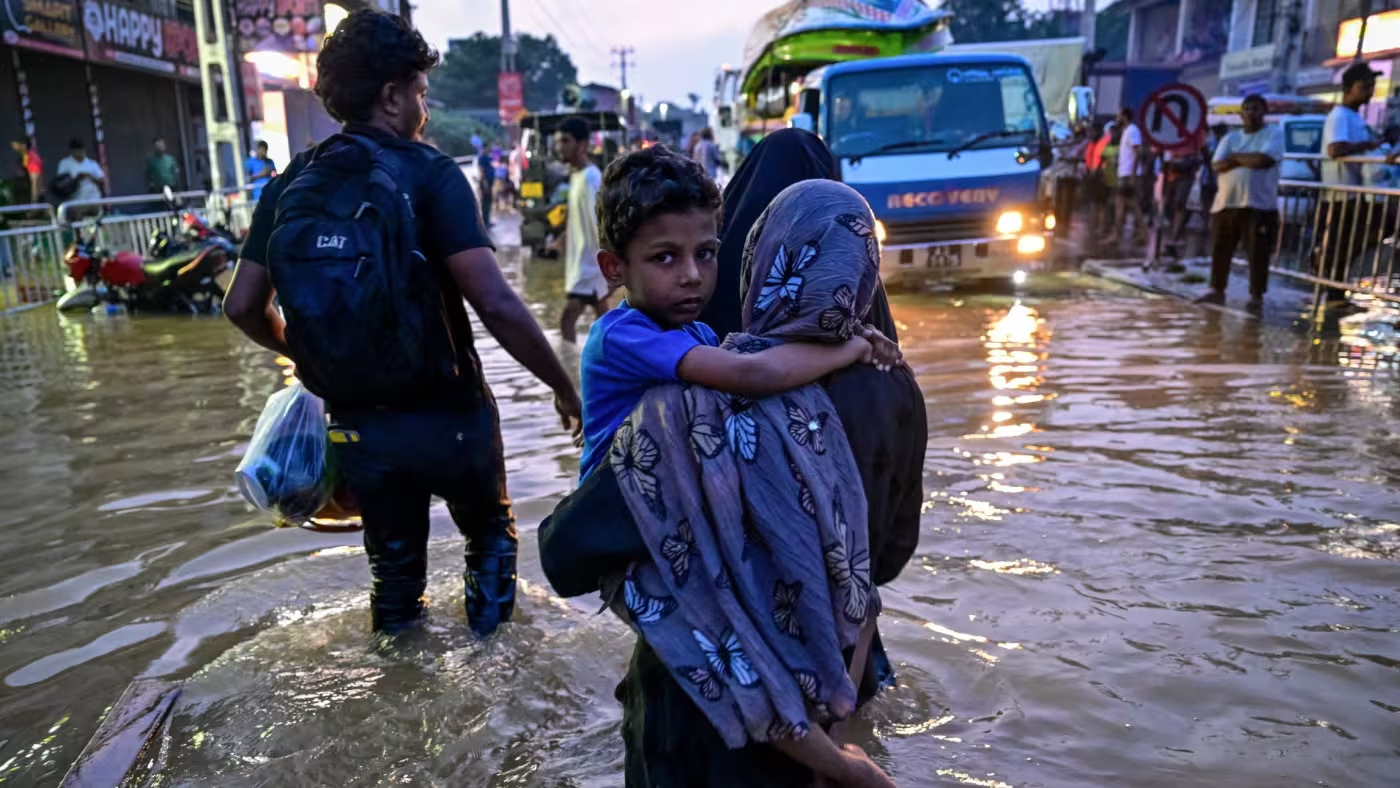
Floods that swept across large parts of South-East Asia—triggered by an unusual convergence of three tropical storms—have claimed more than 1,300 lives in five countries. Indonesia and Sri Lanka have borne the heaviest toll. Meteorologists say the extreme conditions stemmed from the interaction of Cyclone Senyar over the Strait of Malacca and Typhoon Koto over the South China Sea. By the end of the week, Cyclone Ditwah had formed over the Bay of Bengal, amplifying the overall impact. A further driver was the coincidence of two natural anomalies—La Niña in the Pacific and the Indian Ocean Dipole.
Experts note that parts of the world’s oceans have maintained unusually high sea-surface temperatures this year. The average global temperature, now more than 1.5C above pre-industrial levels, reached a record last year as a result of human-driven climate change. The oceans absorb around 90 percent of the excess heat trapped by greenhouse gases in the atmosphere, while warmer air can hold more moisture.
Richard Nugee, a retired British Army lieutenant general and the UK’s national adviser on climate and security, was among nine experts who spoke at a recent briefing in London warning of escalating risks. «What troubles me most is not a single crisis. It is their convergence», he said. «Multiple crises—food, health, infrastructure, migration, energy, extreme weather—are unfolding at the same time, eroding public trust in the state because responses are slow or ineffective».
Unrelenting monsoon rains across South-East Asia have triggered extensive floods and landslides, overwhelming soil that was already saturated. In Indonesia, rivers burst their banks in Sumatra, sweeping away villages and inundating tens of thousands of homes. By Tuesday, according to AP, the country’s death toll had surpassed 700.
Indonesia’s president, Prabowo Subianto, pledged to rebuild affected communities during a visit to Sumatra. «We need to confront climate change effectively», he said. «Local authorities must take a leading role in protecting the environment and preparing for the extreme weather conditions that will arise from further climate change».
Thailand recorded its most intense single rainfall event in roughly three centuries. Severe flooding across nine southern provinces killed at least 180 people and affected more than 3.2 million residents, officials said. A mass evacuation was ordered around the city of Hat Yai, and a disaster zone was declared.
In neighbouring Malaysia, tens of thousands of people were forced from their homes, while in Vietnam weeks of torrential rain continued to batter the country, causing at least 98 deaths. In Sri Lanka, Cyclone Ditwah made landfall on the central-eastern coast on Friday, bringing heavy downpours and sustained winds of 65km/h. According to the state’s Disaster Management Centre, more than 400 people have died and around 218,000 residents are sheltering in temporary facilities.
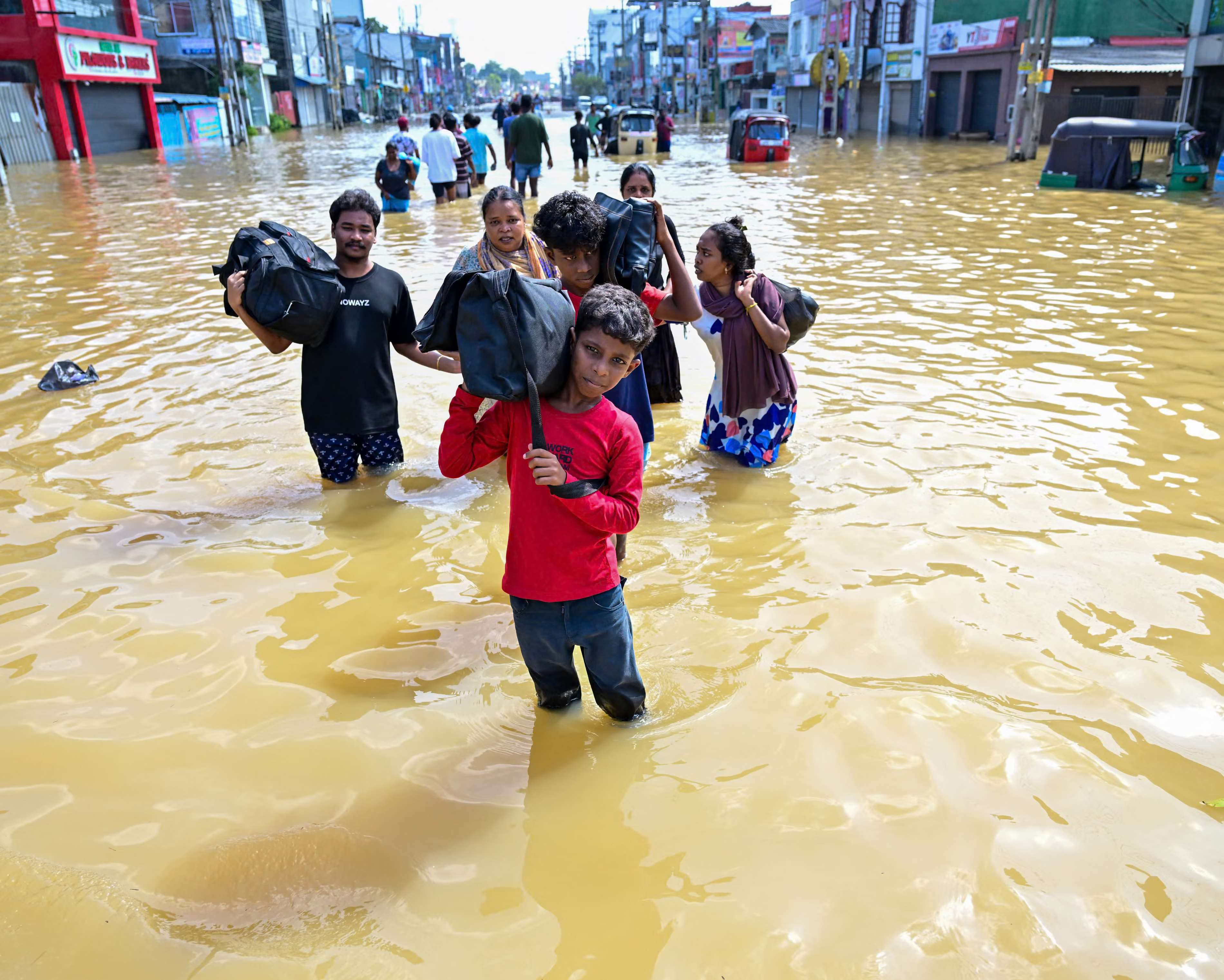
A Powerful Cyclone Causes Massive Floods and Landslides in Sri Lanka
Nearly 200 People Have Died
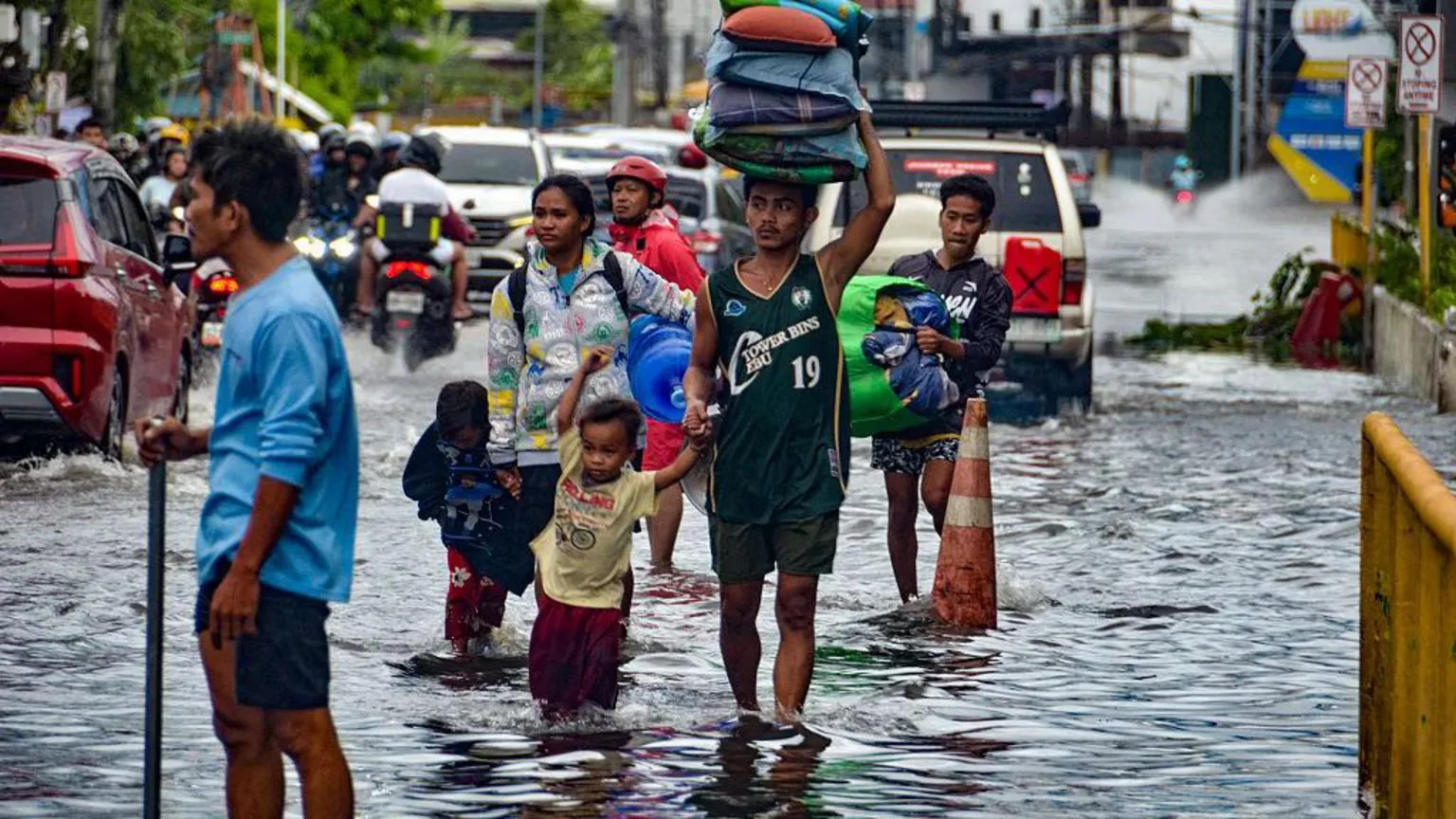
Philippines Declare a State of Emergency After Typhoon Kalmaegi
The Storm Causes Catastrophic Flooding in Cebu and Claims More Than 110 Lives as Authorities Brace for Another Hit
The western Indian Ocean Dipole is currently in what is known as a negative phase. This pattern is associated with warmer sea-surface temperatures in the eastern Indian Ocean, near Indonesia’s shores. At the same time, the La Niña cycle is linked to cooling in the central Pacific, which strengthens monsoon rains across South-East Asia. Although this year’s La Niña is relatively weak, it has persisted longer than usual. These phenomena unfold in different ocean basins and follow distinct circulation patterns, yet they can influence one another and generate complex weather interactions.