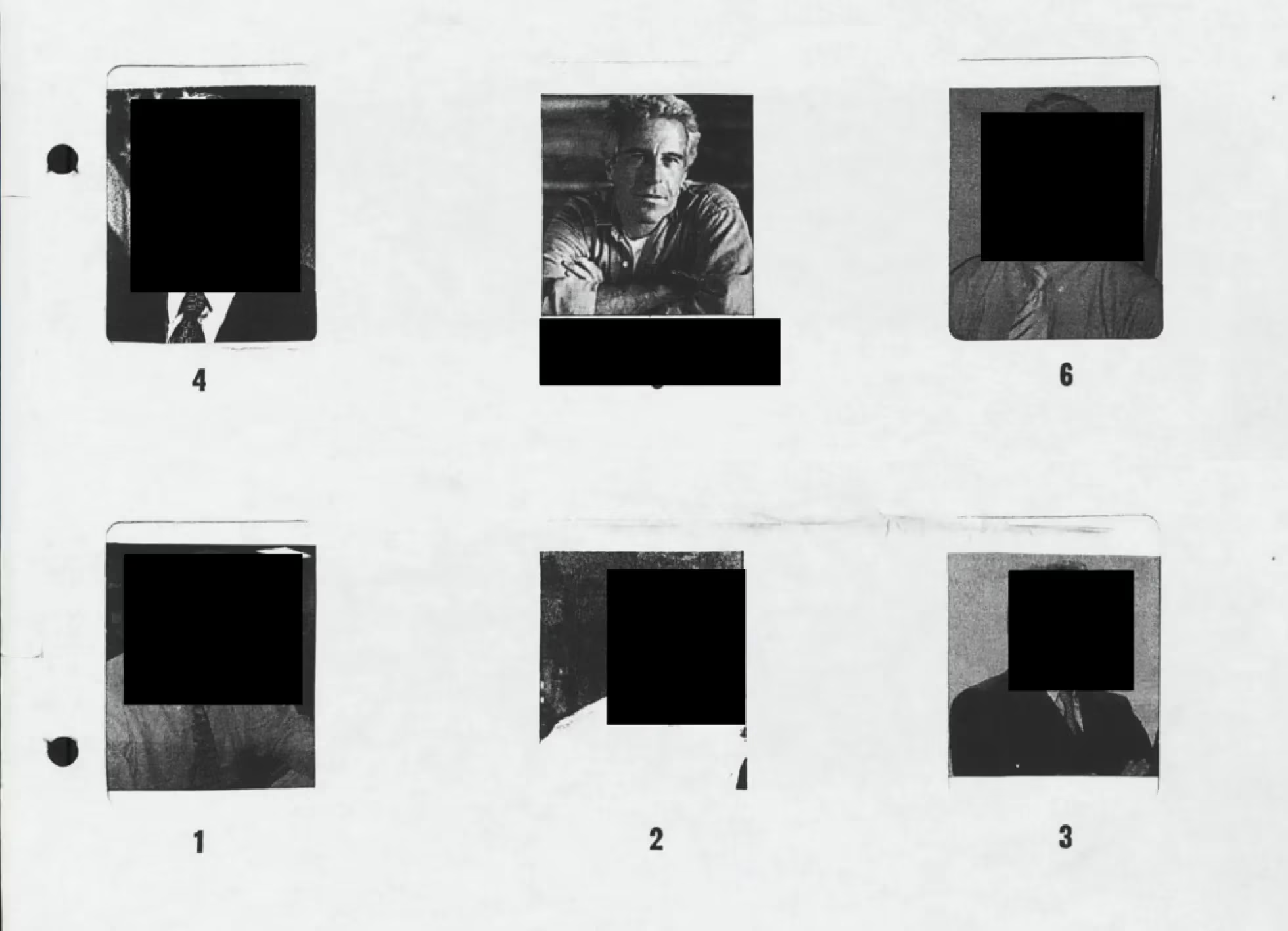
On December 19, the U.S. Department of Justice released a trove of more than 13,000 documents related to the case of financier Jeffrey Epstein, who was accused of human trafficking for the purpose of sexual exploitation. A substantial portion of the disclosed material—more than 3,800 files—consists of photographs, collages, and scanned documents. The release also includes police interview transcripts and materials prepared during the investigation.
A significant share of the materials made public had either already circulated in the public domain or was heavily redacted. One investigative file, for example, runs to 100 pages that are entirely blacked out. In addition, 631 images were withheld altogether due to the presence of sexual violence against children.
The Department of Justice said the redactions were necessary to protect victims of abuse and their relatives—authorities identified more than 1,200 names requiring concealment—and to avoid compromising an investigation that remains ongoing. Deputy Attorney General Todd Blanche stated that more than 200 lawyers were involved in reviewing the materials.
Some of the photographs feature former Prince Andrew, musicians Mick Jagger and Michael Jackson, as well as former U.S. President Bill Clinton—on one image he is swimming in a pool, on another he is lying on his back in a jacuzzi. The mere presence of an individual in such images, however, does not indicate that they used Epstein’s services or engaged in any unlawful activity.
Clinton was repeatedly photographed alongside Epstein, yet survivors of sexualized abuse have never brought accusations against him, and the former president maintains that he was unaware of the crimes being committed. “They can publish as many grainy photographs from twenty years ago as they like, but this story is not about Bill Clinton,” his spokesman Angel Urena wrote. “It never was and never will be about him.”
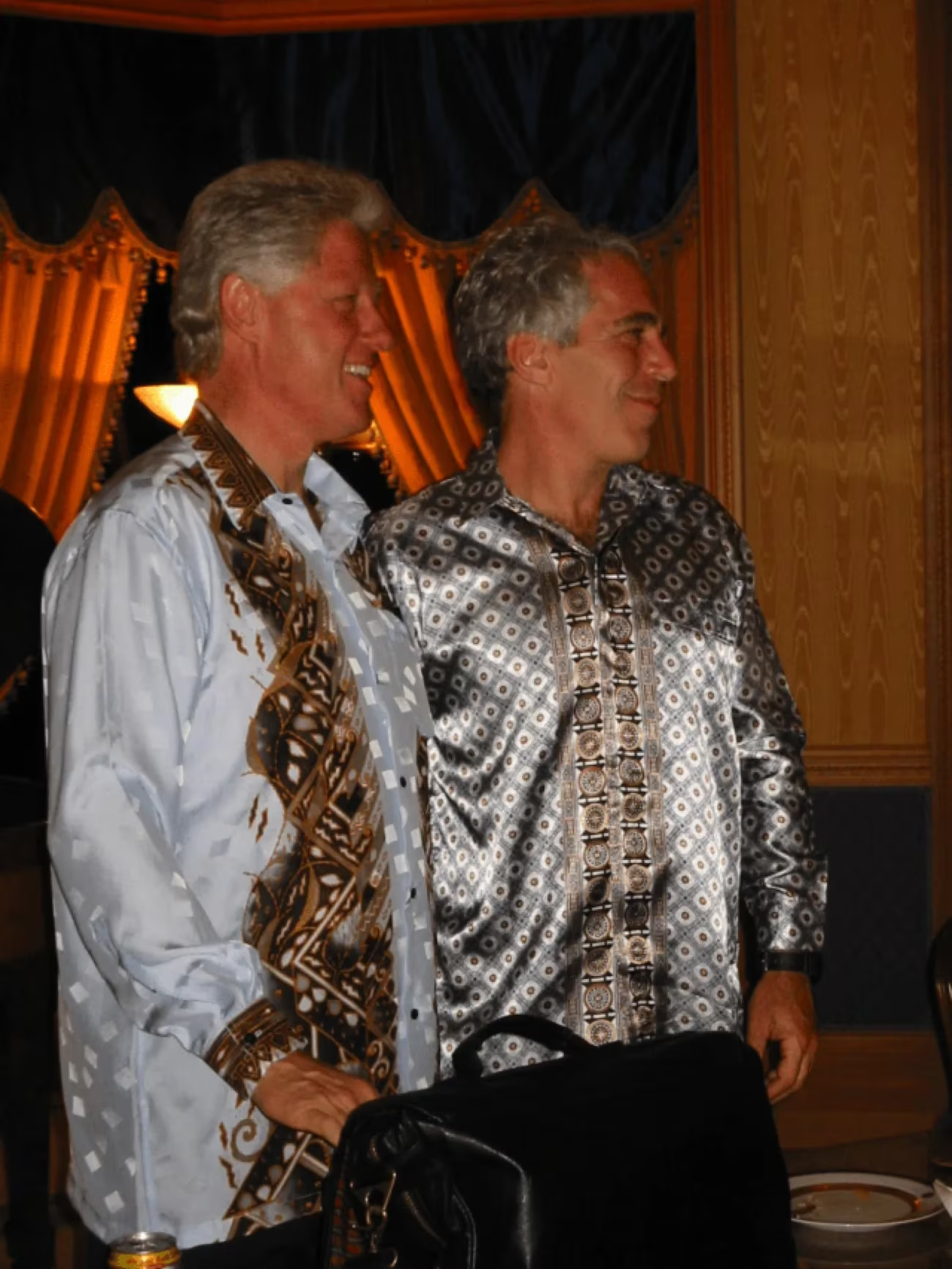
Urena argues that the release of these particular images may have been intended to divert public attention from Donald Trump’s ties to Jeffrey Epstein. In November 2025, Trump did indeed instruct the Department of Justice to review possible contacts between Clinton and other Democrats and Epstein.
Earlier, however, Trump had actively opposed the release of materials related to the Epstein case, with whom he maintained a personal relationship. He dismissed the documents as a Democratic “hoax” and threatened sanctions against members of Congress who voted in favor of their publication.
The newly released cache of documents also mentions Trump himself. It describes in detail an episode in which Epstein introduced him to a 14-year-old girl identified as Jane Doe. The encounter took place at Trump’s private residence, Mar-a-Lago, in Florida. The document states:
During one of Doe’s meetings with Epstein, he took her to Mar-a-Lago, where he introduced her to the owner—Donald Trump. Presenting the 14-year-old Doe, Epstein playfully nudged Trump with his elbow and, referring to Doe, asked, “Nice, isn’t she?” Trump smiled and nodded in agreement. Both men laughed, while Doe felt uncomfortable but was too young at the time to understand why.
Epstein subjected Doe to sexualized abuse for many years; however, she did not bring any accusations against Trump. As with other victims of Epstein.
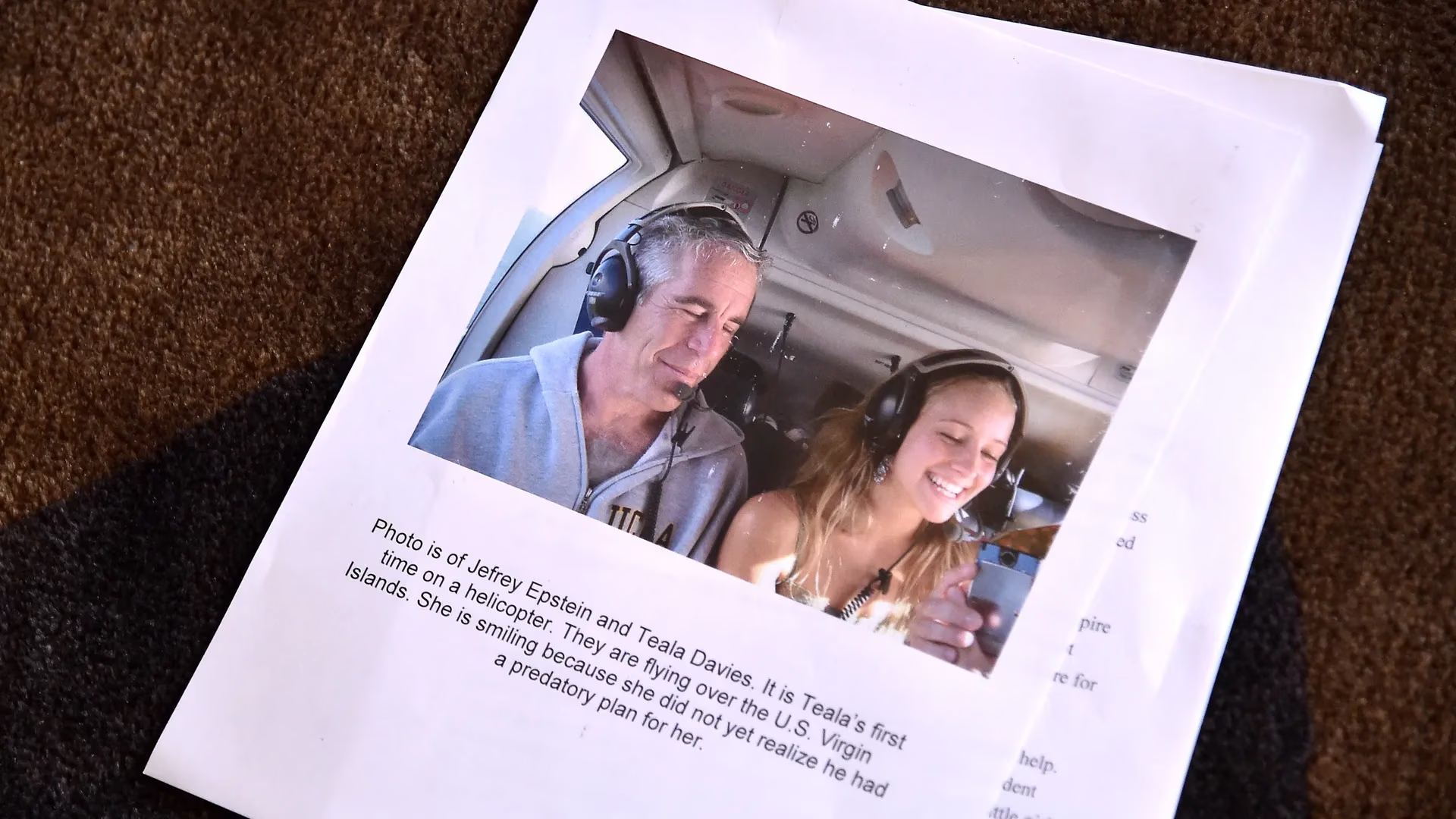
Trump and Epstein: Years of Acquaintance, Joint Parties, and Dozens of Documented Contacts
New Archives and Correspondence Undermine the President’s Attempts to Portray Their Relationship as Fleeting
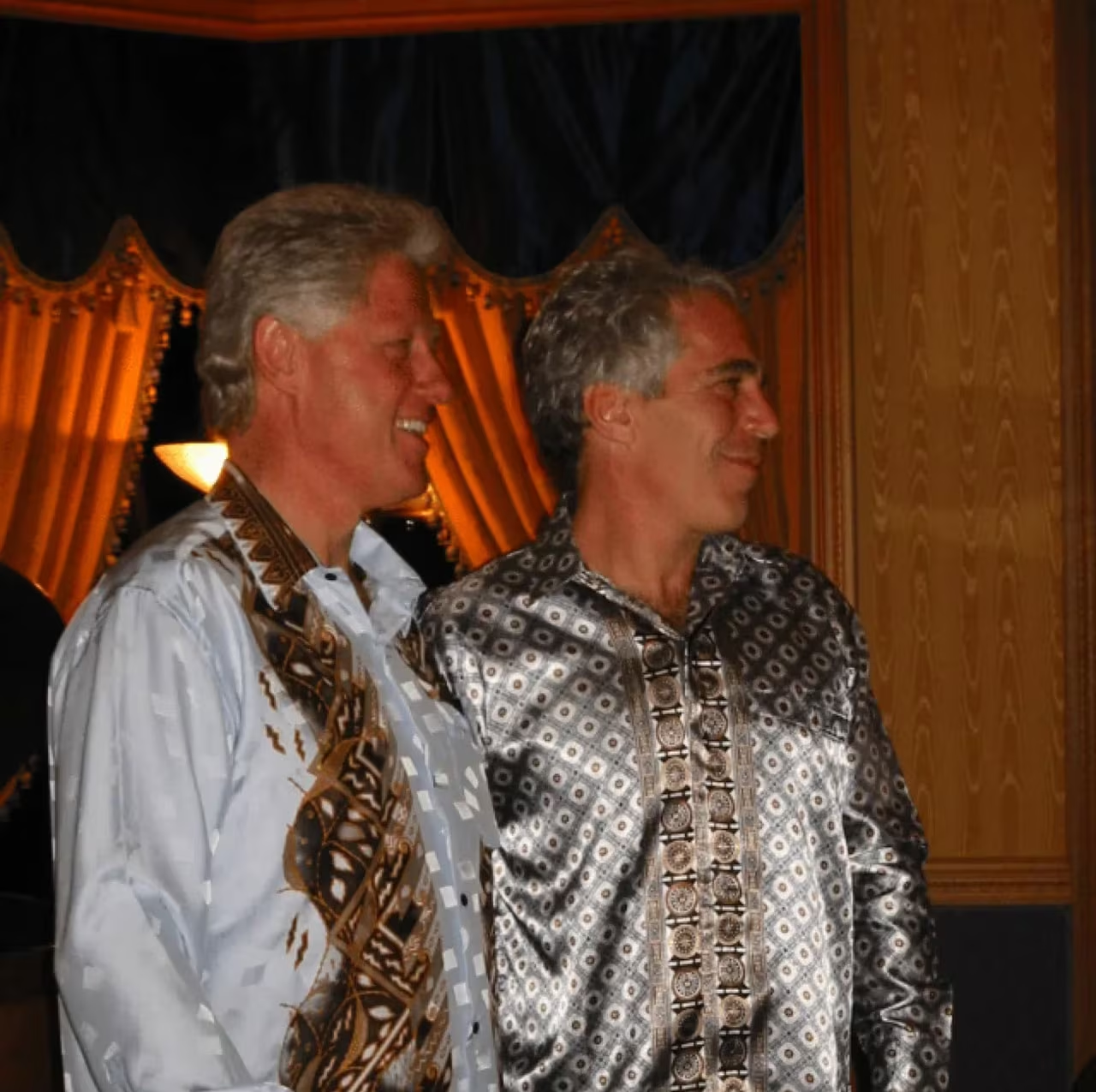
The Release of the Epstein Archive Shifted Attention From Trump to Clinton
The Sexual Crimes Case Is Being Used as a Tool of Partisan Warfare in the United States
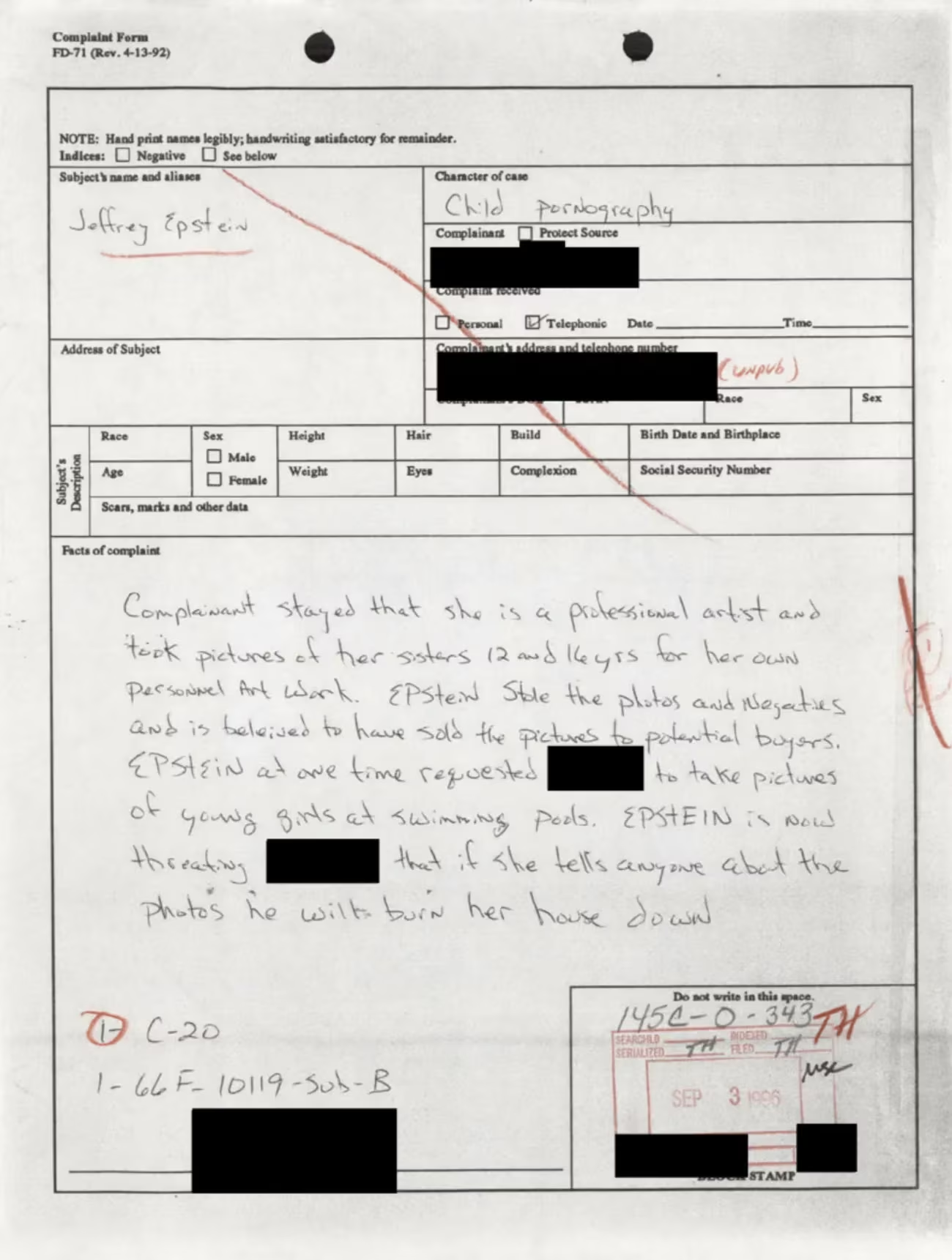
Another significant episode among the released materials is a complaint filed with the FBI against Jeffrey Epstein, dated 1996. It was submitted by Maria Farmer—one of the financier’s victims and, at the same time, his employee—who accused him of producing child pornography nearly three decades ago.
The complaint states that Farmer had taken photographs of her younger sisters, aged 12 and 16, for personal use, including nude images. According to the document, these images were stolen by Jeffrey Epstein. He also insisted that Farmer photograph young girls in a swimming pool and threatened to burn down her house if she told anyone about what was happening.
Despite the complaint, the FBI appears to have taken no action against Epstein in 1996.
A full investigation began only ten years later. In the years that followed, many questioned whether the complaint had ever been filed at all and accused Farmer of lying.
After the document was made public, The New York Times contacted Maria Farmer. She broke down in tears. “I’ve been waiting for this for 30 years,” she said. “I can’t believe it. They will no longer call me a liar.”
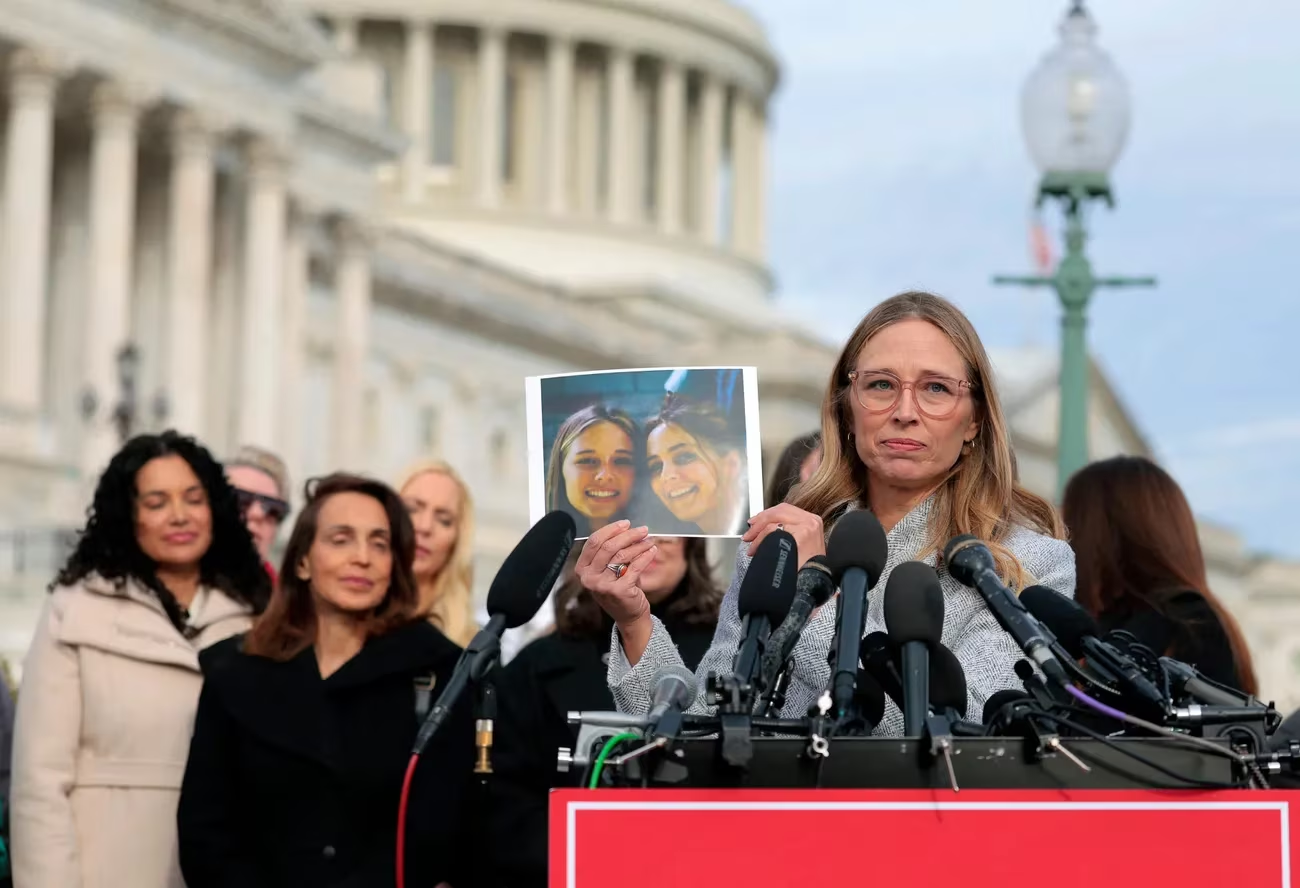
Annie Farmer, a survivor of abuse by Epstein, holds a photograph showing herself and her sister Maria. Washington. November 18, 2025.
The publication of materials related to the Epstein case is being carried out under the “Epstein Files Transparency Act,” which was approved by the U.S. Congress a month ago and subsequently signed by Donald Trump. So far, only about 10% of the documents held by the Department of Justice have been made publicly available. The department says it intends to release tens of thousands more files over the next two weeks.
Nevertheless, the manner of the release drew sharp criticism—including from Epstein’s victims and a number of lawmakers. Republican Representative Thomas Massie, whose relationship with Trump deteriorated precisely over the Epstein case, posted an image on X of the text of the “Epstein Files Transparency Act,” highlighting its requirement that all existing documents be made public by December 19.
“Unfortunately, today’s release complies with neither the spirit nor the letter of the law that Donald Trump signed just 30 days ago,” Massie wrote.
“They confirm everything we have been saying—about corruption and the obstruction of justice,” said Jess Michaels, whom Epstein subjected to sexualized abuse in 1991, when she was 22 years old.
“If everything is redacted, then where is the transparency?” asked Marijke Chartuni, who survived abuse by Epstein at the age of 20.
A day earlier, on December 18, the U.S. House Oversight Committee, which is conducting its own investigation, released 60 photographs related to the Epstein case. The images include, among other things, several foreign women’s passports, including a Ukrainian one.
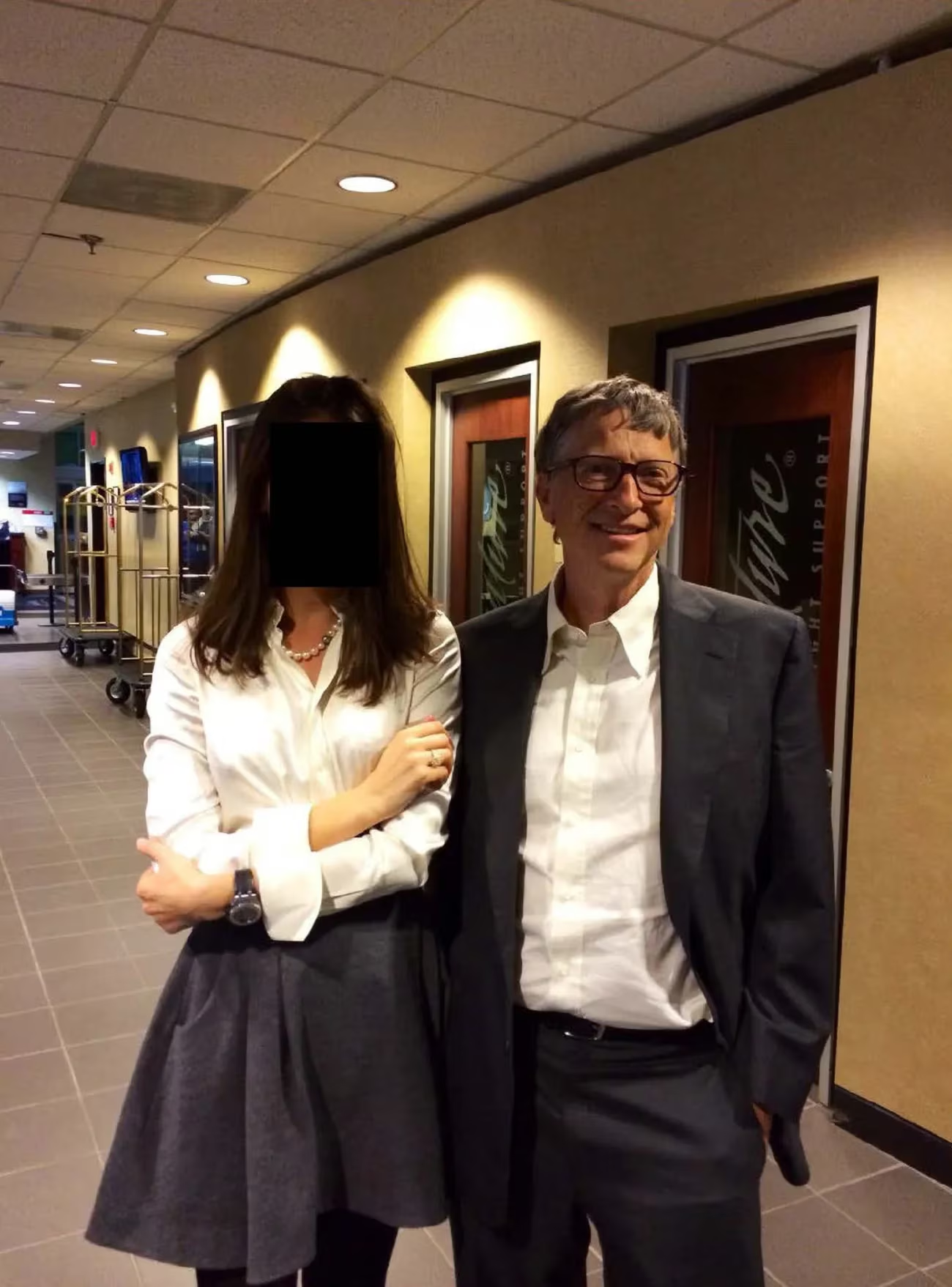
In addition, the materials include images pointing to Epstein’s ties with a number of prominent figures—including philosopher Noam Chomsky, Microsoft founder Bill Gates, and filmmaker Woody Allen.
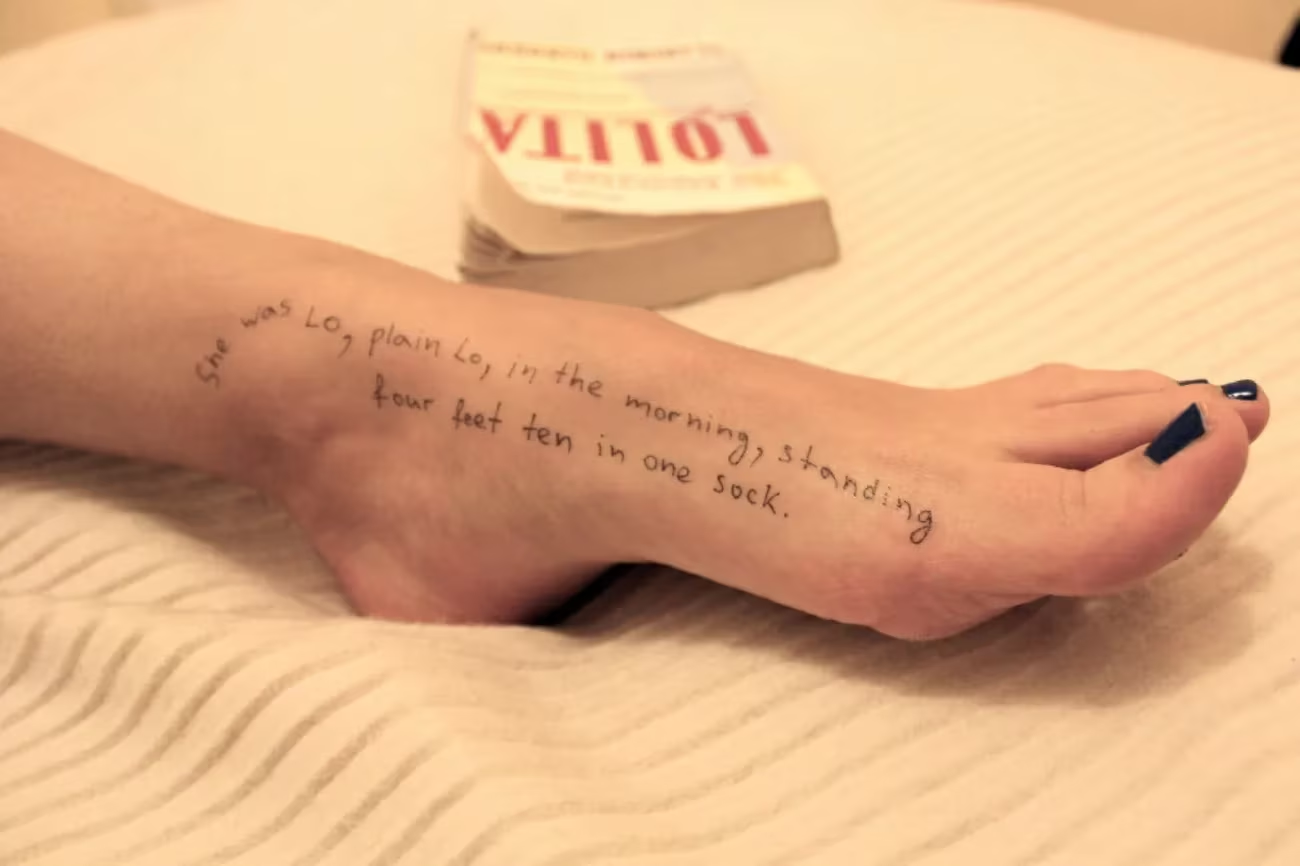
The released materials also included photographs of a female body on which quotations from Vladimir Nabokov’s novel Lolita had been written. Separately, a screenshot of a conversation was published in which the selection and subsequent exploitation of girls is discussed:
I don’t know, try sending someone else.
I have a scout friend, she sent me several girls today.
But she is asking $1,000 per girl.
I’ll send the girls to you now.
Maybe someone will also work for J?
I have a scout friend, she sent me several girls today.
But she is asking $1,000 per girl.
I’ll send the girls to you now.
Maybe someone will also work for J?
This was followed by a detailed description of a girl—her name, age (18), height, body measurements, and weight were listed. Russia was indicated as the country of departure.