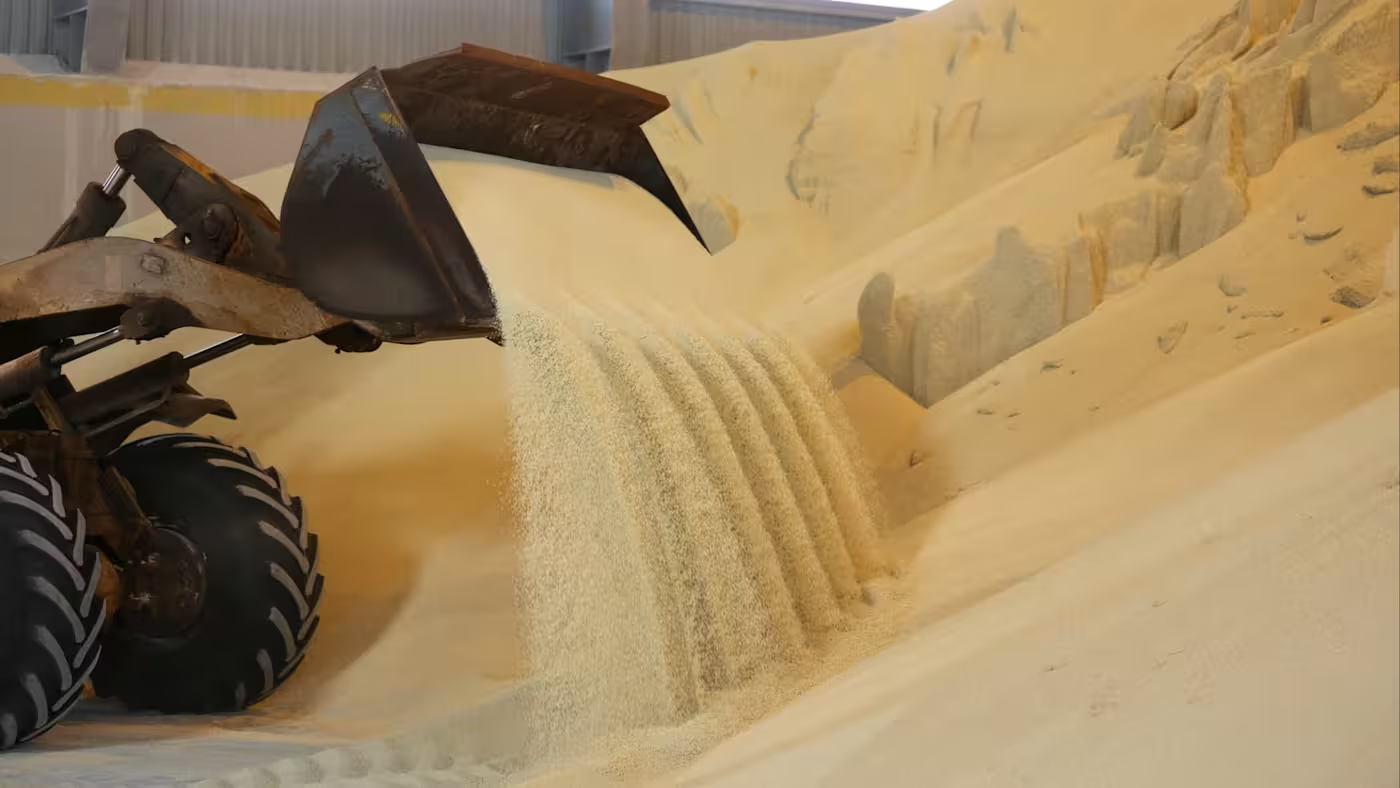
Russia is benefiting from a sharp surge in fertilizer prices driven by the U.S. and Israeli war against Iran. Major producers in the Middle East are cutting output and facing difficulties exporting through the Strait of Hormuz, adding strain to an already tight market.
This is creating risks for supplies to Europe while simultaneously strengthening the position of EU countries advocating for a relaxation of restrictions on Russian fertilizers imposed after the start of the war in Ukraine.
“Russia is one of the main beneficiaries [of this war] as a major producer of raw materials. And it is not only about oil and gas, but also fertilizers,” said Andrey Sizov, managing director of the consulting firm SovEcon. “Across the entire agricultural supply chain, prices are rising, and Russia holds substantial reserves.”
Russia’s role in the global fertilizer market is even more pronounced than in energy. It accounts for 23% of global ammonia exports and 14% of urea, and together with allied Belarus—around 40% of potash fertilizers. At the same time, its supplies are unaffected by any disruption in the Strait of Hormuz.
Prices for urea in the Middle East—which serves as a global benchmark—have risen by 44% since the start of the war, exceeding $670 per tonne.
The surge in commodity prices is already generating up to $150 million in additional daily revenue for the Russian budget through oil exports.
In the Kremlin, developments in commodity markets are being framed as an opportunity to reintegrate Russia into the global economy after four years of sanctions imposed following Vladimir Putin’s full-scale invasion of Ukraine.
On Tuesday, March 24, Russia temporarily suspended exports of ammonium nitrate to secure domestic supply, demonstrating its ability to influence already destabilized markets.
“Russia is well prepared for the expected—and already emerging—era of acute shortages,” Kirill Dmitriev, Putin’s special envoy for economic cooperation, wrote on X.
According to him, as global supply chains deteriorate, “both Russia’s partners and its adversaries will increasingly recognize its pivotal role” as an exporter.
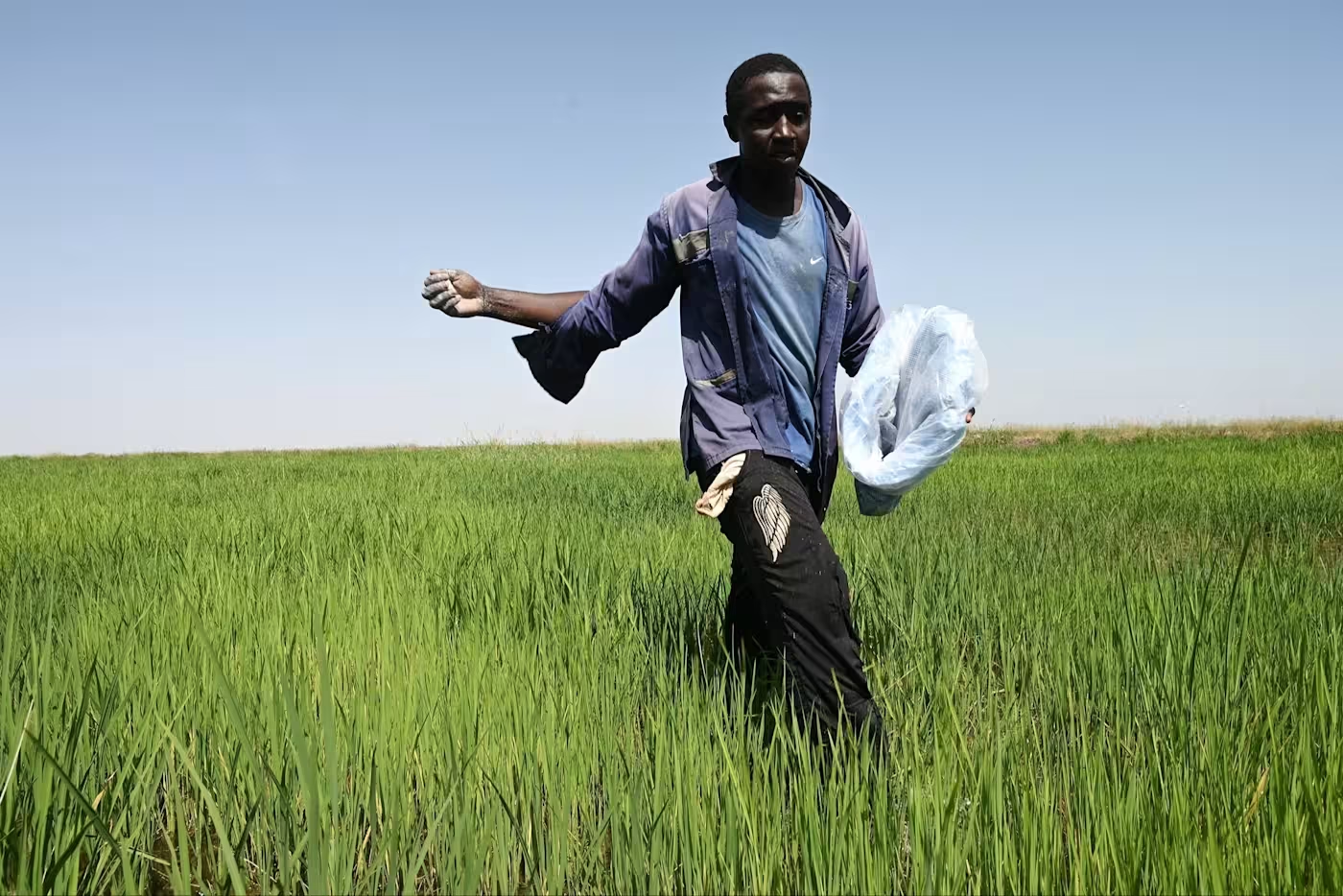
A farm worker spreads urea fertilizer across a rice field in Senegal.
Exports of Russian fertilizers to EU countries totaled around €2 billion last year, although physical volumes declined after new tariffs were introduced in 2025.
Hungary, which has consistently advocated lifting sanctions on Russia, has called on Brussels to ease restrictions. In a letter to the European Commission sent on Monday, Agriculture Minister Istvan Nagy warned that limited access to cheaper imports could lead to lower yields and higher food prices—particularly in countries dependent on supplies of phosphorus and potash fertilizers.
Last week, Washington said it intended to ease sanctions on several Belarusian producers, including the state-owned company Belaruskali, potentially increasing export volumes.
Nevertheless, according to Chris Lawson, head of fertilizers at the consulting firm CRU, there is little indication that the EU is prepared to reconsider its own restrictions.
He noted that even with increased production, Russia will not be able to fully offset the shortfall from the Middle East. Exports are expected to reach around 9.5 million tonnes of urea in 2026—roughly 15–16% of global trade. By comparison, Gulf countries account for about one-third of global export supply.
Andrey Sizov warns that production capacity is already operating at around 90%. In addition, facilities producing ammonium nitrate are also used to manufacture explosives for the Russian army and have been targeted by Ukrainian drones.
At the same time, Moscow retains the ability to use exports as a tool of pressure in response to Western sanctions—and as a means of persuading countries in the developing world to support its position.
According to Alexandra Prokopenko, a research fellow at the Carnegie Russia Eurasia Center in Berlin, the war’s impact on global agricultural markets in the medium term could further work in Russia’s favor. Countries dependent on imports are being forced to cut planting, while supply disruptions are driving up food inflation.
“An official in an Asian or African country who needs urea ahead of the rainy season does not discuss the Ukrainian issue. He calls the Kremlin—and they pick up,” she says.
“Russia is capable of turning market power into political rent—extracting geopolitical gains from its role as an indispensable supplier.”