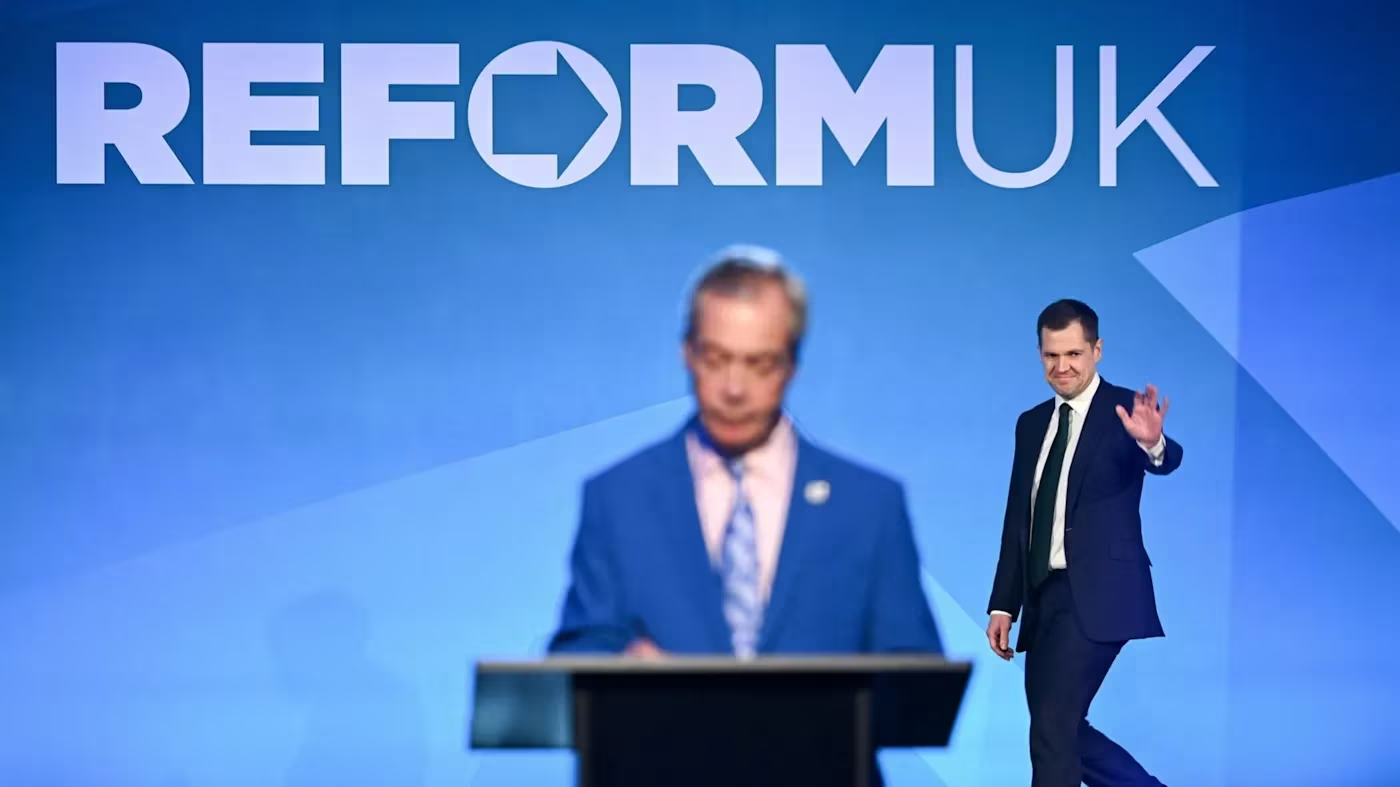
Nigel Farage announced the appointment of Robert Jenrick as the “shadow chancellor” of Reform UK, unveiling several other key figures from his team at the same time. He presented the move as an effort to persuade voters that the party can lay claim to governing competence and is not a one-off political venture.
Jenrick, who held ministerial posts under four Conservative prime ministers between 2018–2023, joined Reform a month ago—after being dismissed from his role as shadow justice secretary. This is the most high-profile defection to Farage’s party to date. Zia Yusuf, the head of party policy, who had previously signaled an interest in overseeing the economic brief, was instead given the home affairs portfolio, covering Reform’s core priorities on crime and immigration. The party’s deputy leader and one of its largest donors, Richard Tice, took on the role of shadow minister for business, energy, and industry. The team was also joined by former Conservative home secretary Suella Braverman, who has been assigned responsibility for education, skills, and equality issues.
Speaking at a press conference on Tuesday, Farage said this was “only the beginning.” He argued that the party needs managerial experience, has much to learn, and that these appointments are meant to speed that process. He stressed that the goal is to build a fully fledged “machine for running the state.” Farage insisted that Reform has its own identity and brand, and that even in the event of his departure the party would be able to carry on. Asked about possible discontent within the team over the choice of candidate for the economic role, he replied tersely—if it exists, “so much the worse.”
Jenrick himself said that Britain’s economy “is not working,” and described the actions of the Labour government as “almost vandalism.” According to him, the party intends to put forward the most detailed political plan of all for repairing the country’s “broken” economy.
Although Reform has just eight MPs and is not the official opposition—the Conservatives hold 116 seats and the Liberal Democrats 72—the party is rapidly gaining ground in opinion polls. Its support is now estimated at around 28 percent, compared with roughly 19 percent for Labour and 16 for the Conservatives.
Farage is increasingly aware of the need to convince both voters and potential donors that the party is ready to govern—and to dismantle the entrenched perception of Reform as a project dependent on a single leader. Within the Conservative Party, the move was met with skepticism. According to Tory chairman Kevin Hollinrake, the announcement was “uninspiring,” and the line-up—largely made up of former Conservatives—looked more like “a tribute to the old Conservative Party” than a credible alternative.