On Tuesday, March 3, global markets came under pressure as equities and bonds fell sharply amid fears that the expanding conflict in the Middle East would trigger a prolonged surge in energy prices.
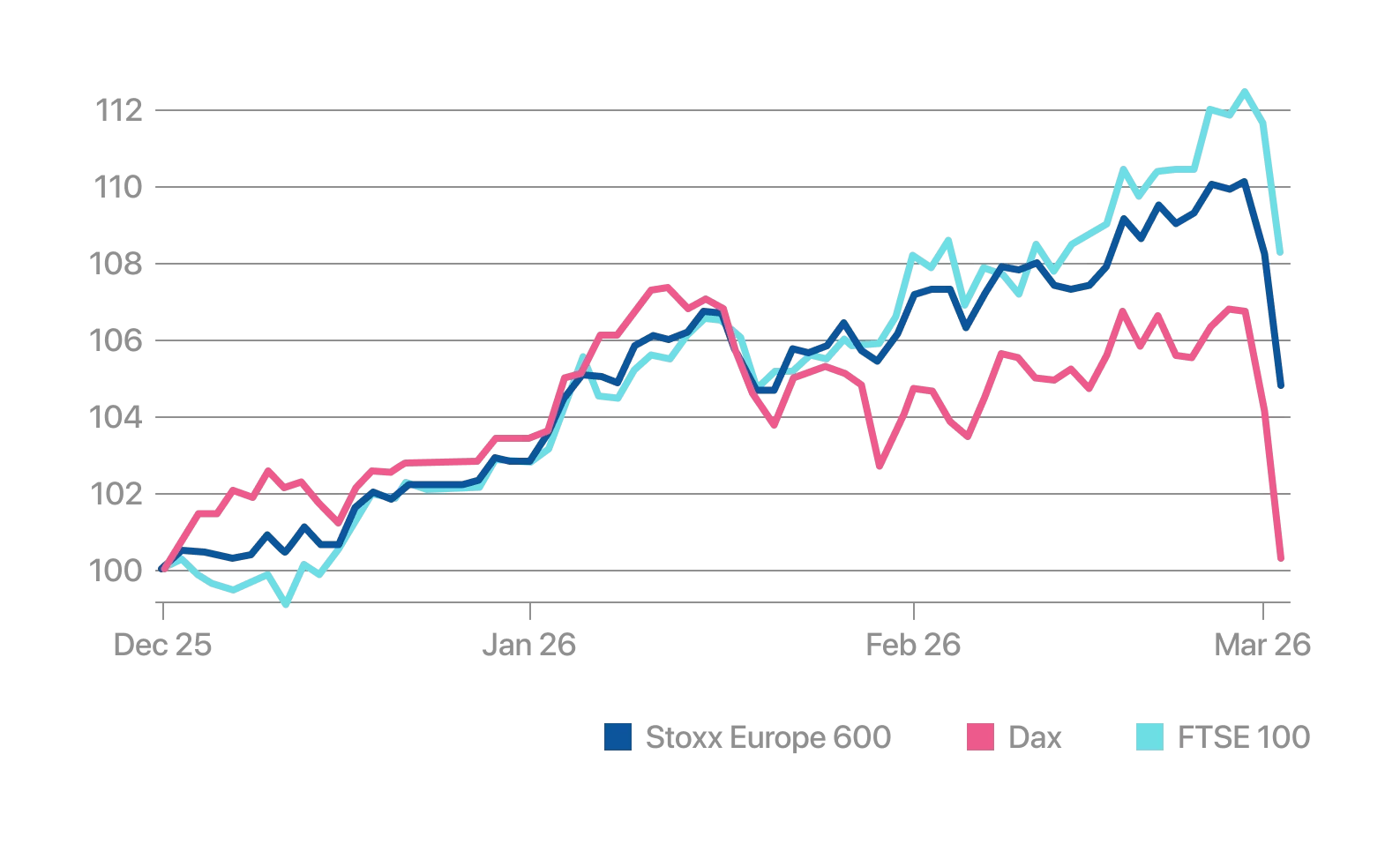
In Europe, the Stoxx Europe 600 index declined 3.3 percent—its steepest daily drop since the turbulence that followed President Donald Trump’s trade war in April last year. Banks led the losses, while European gas prices climbed a further 20 percent. Germany’s Dax fell 3.8 percent, compounding a 2.4 percent decline recorded on Monday.
Futures on the S&P 500 and the Nasdaq 100 pointed to declines of 1.9 percent and 2.4 percent respectively.
“This is panic selling,” said Emmanuel Cau, head of European equity strategy at Barclays. In his view, the move reflects “fears of stagflation,” adding that before the weekend the market had shown “complacency in assessing the scale of this war.”
European Equity Indices in Euros, December 25 = 100
Gold, which rose on Monday as investors sought shelter from uncertainty, fell 1 percent on Tuesday alongside equities and bonds. Analysts suggested that market participants may have unwound other positions to offset losses.
“People are cutting risk,” said Peter Schaffrik, global macro strategist at RBC Capital Markets. In his assessment, the market is psychologically shifting from expectations of a short-lived conflict to a scenario of prolonged war.
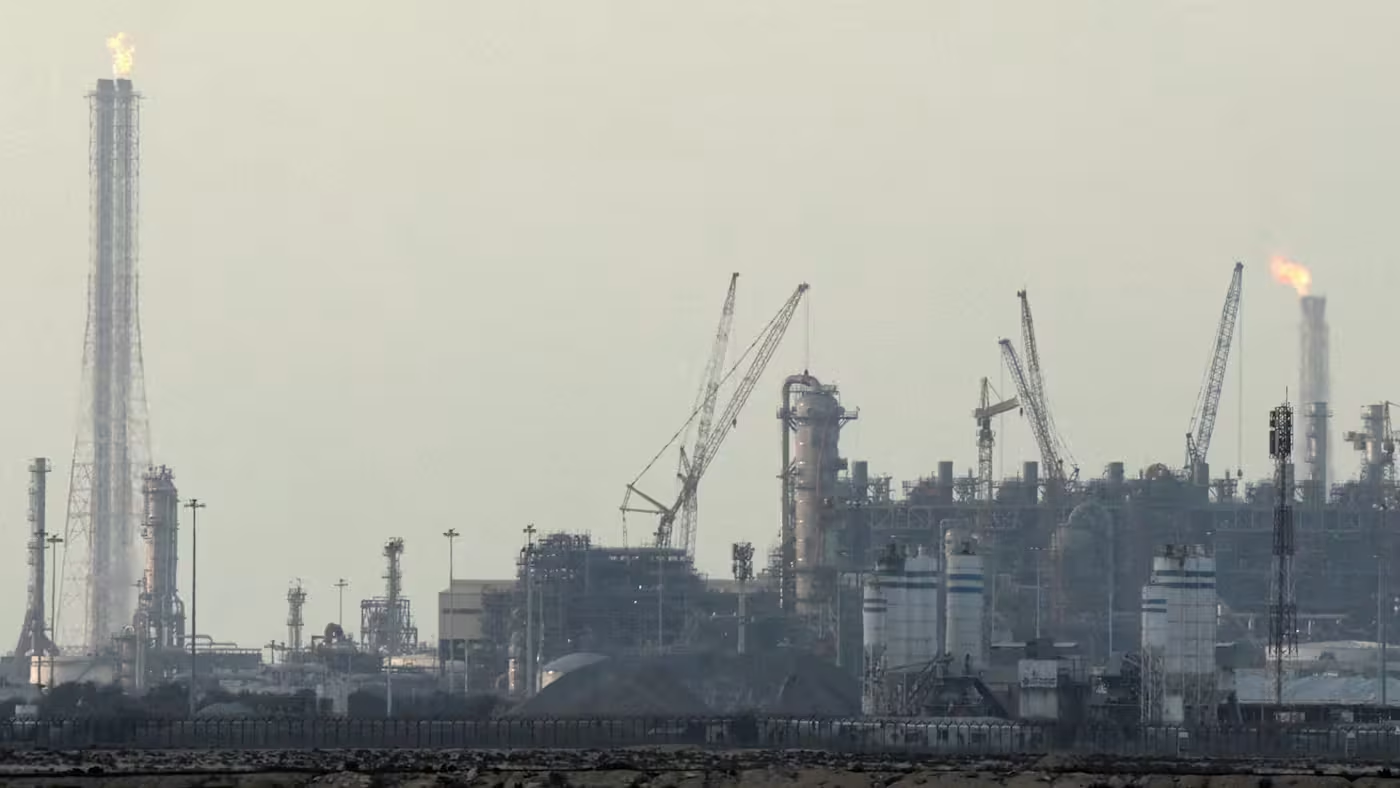
These swings come as the conflict in the Middle East enters its fourth day, with oil and gas supplies from the region sharply reduced—most vessels are avoiding the Strait of Hormuz, the critical shipping route at the entrance to the Persian Gulf.
In response to U.S. and Israeli strikes that began on Saturday, Iran launched large-scale attacks on the region’s energy infrastructure. On Monday, Qatar’s defense ministry said Iran had targeted a Qatari LNG facility in Ras Laffan.
On Tuesday, government bonds—particularly in Europe—came under pressure, as rising energy prices forced investors to reassess expectations for further interest rate cuts.
According to swap market pricing, traders have begun to assign roughly a 30 percent probability to a European Central Bank rate increase by year-end. Before the conflict began, markets had been positioned for further cuts rather than policy tightening.
Against this backdrop, the yield on Germany’s two-year government bonds rose 0.12 percentage points to 2.20 percent, adding to a 0.08 percentage point increase recorded on Monday. Bond yields move inversely to prices.
The bond market is now paying the price for its “overconfidence” in assessing inflation risks and for hopes of further rate cuts, said Andrew Jackson, head of investments at asset manager Vontobel.
“Inflation is not dead—we have not slain the beast,” he said, adding that the sharp rise in oil and gas prices “will only make matters worse.”
In the United Kingdom, the probability of a quarter-point rate cut at the Bank of England’s meeting later this month has fallen to about 30 percent—from 90 percent on Friday. Markets now fully price in just one such cut by year-end.
The yield on two-year U.K. government bonds rose 0.16 percentage points to 3.81%, after increasing a further 0.12 percentage points on Monday.
As Jim Reid of Deutsche Bank noted, “the conflict has shown no signs of de-escalation so far,” and episodes such as the drone strike on the U.S. embassy in Riyadh are “adding to fears that the confrontation could become protracted.”
The bank’s economists wrote on Tuesday that “if energy prices remain at current levels, we expect [the Bank of England’s] rate cuts to slow.”
U.S. Treasuries also came under pressure, with the yield on two-year notes rising 0.08 percentage points to 3.57%.
European natural gas prices surged as the market continued to react to Qatar’s decision to halt production after Iran struck energy infrastructure in the Gulf state.
Europe’s TTF gas benchmark jumped nearly 40% to €62 per MWh, extending Monday’s rally that began after QatarEnergy, the world’s largest liquefied natural gas producer, suspended operations.
Since the start of the week, prices have already doubled. The same has occurred with the U.K. wholesale natural gas benchmark.
Qatar accounts for one-fifth of global LNG production and remains the largest supplier to Asia, reigniting competition between Asia and Europe for limited cargoes of the fuel.
Oil also extended its gains on Tuesday: Brent, the global benchmark, rose more than 7% to above $83 a barrel, reaching its highest level since July 2024.