The European Union is approaching another summit under mounting pressure over long-term support for Ukraine. After two years of war and a series of stopgap financial arrangements, Brussels is being forced into a strategic choice: how to secure funding for Kyiv in 2026–2027 and how much of this burden Europe is prepared to shoulder itself. Against the backdrop of uncertainty in relations with the United States and internal divisions within the EU, the debate over EU-level borrowing and the potential use of frozen Russian assets is becoming not merely a budgetary matter, but a fundamental political test—of Europe’s ability to take responsibility for its own security and act autonomously.
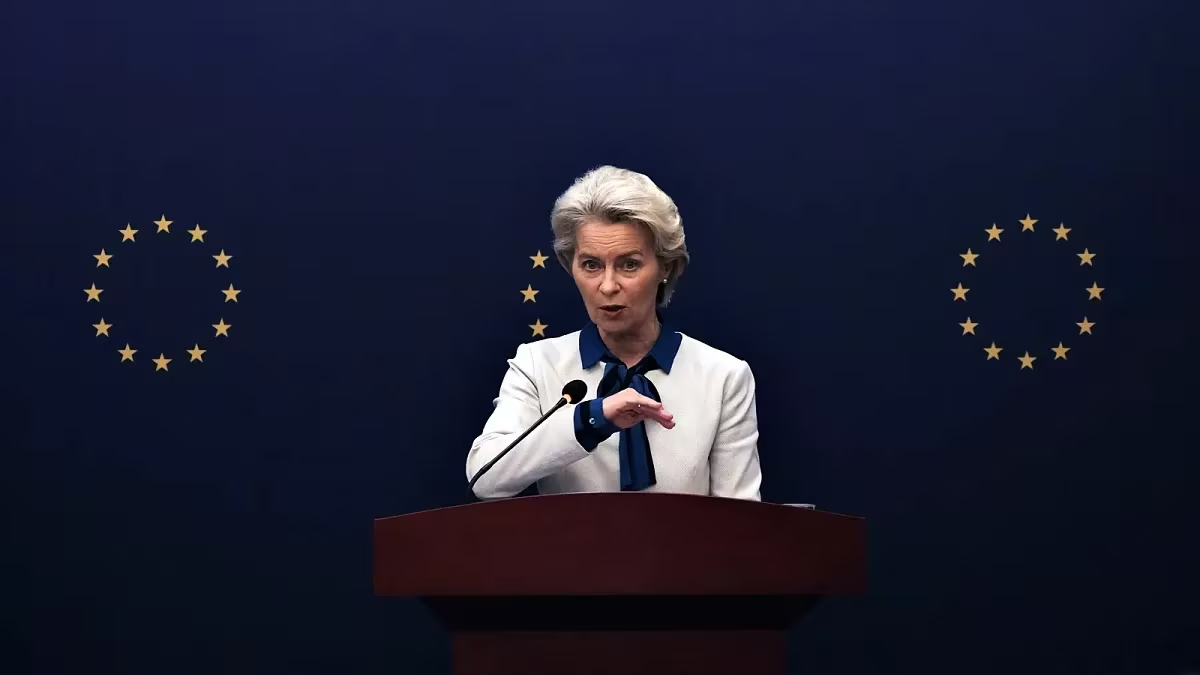
European leaders at the upcoming Brussels summit must reach an agreement on financing Ukraine, European Commission President Ursula von der Leyen said on Wednesday. Speaking at the European Parliament in Strasbourg, she said she had presented the European Council with two options—one based on assets, the other relying on EU borrowing. “We will have to decide which path we want to take, which route to choose,” she said, stressing that a decision on funding Ukraine for the next two years must be taken at this very meeting.
Von der Leyen linked the issue to the need to strengthen Europe’s defence capabilities, arguing that the continent can no longer outsource responsibility for its own security. “Europe must be responsible for its own security. This is no longer a choice. It is a necessity. We must be ready,” she said. In her words, “there is no more important act of European defence than supporting Ukraine’s defence,” and the coming days will be decisive in securing that support. The task of the summit, she added, is to demonstrate that Europe is acting on the basis of its own strategy, interests, and priorities.
The summit, to be held on Thursday, is of critical importance for both Europe and Ukraine. The most contentious—and still unresolved—issue is whether Kyiv should be granted access to frozen Russian assets to finance its military needs. Belgium, where the bulk of these funds are held, opposes their use, fearing that if Russia attempts to reclaim the money, the liability for compensation could fall on Brussels.
Addressing members of the European Parliament, von der Leyen stressed that the bulk of the funds Ukraine needs to continue the war must come from Europe itself. “According to IMF estimates and our own calculations, Ukraine’s needs in 2026 and 2027 amount to around €137 billion. Europe must cover two thirds—€90 billion,” she said.
The EU Seeks a Way to Fund Ukraine Using Frozen Russian Assets
A New Mechanism Could Bypass the Veto Right and Become a Legal Turning Point for the Union
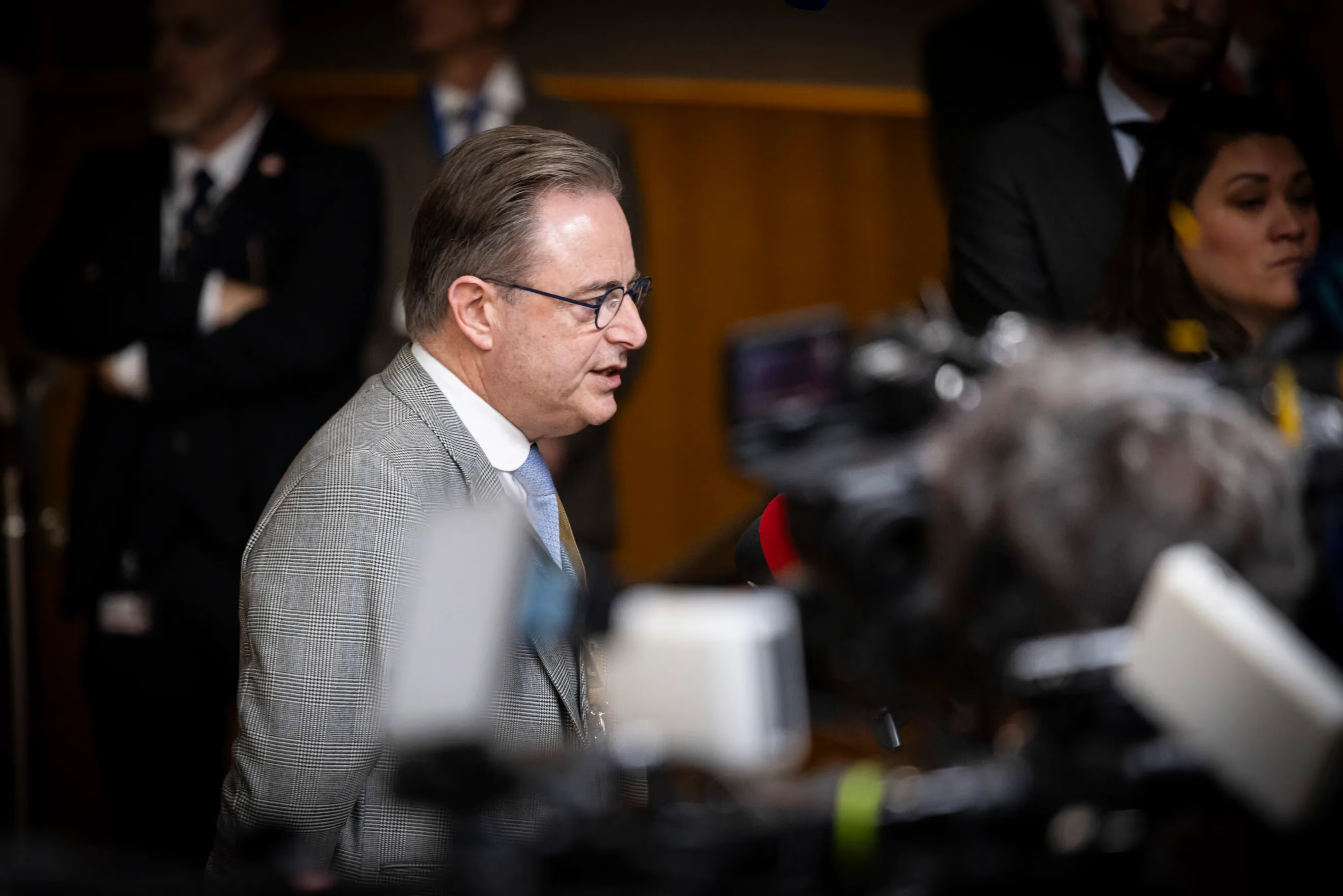
“This Will Undermine Peace Efforts”
Belgium Steps Up Its Opposition to Granting Ukraine a ‘Reparations Credit’ Funded by Frozen Russian Assets
The head of the European Commission also touched on the EU’s competitiveness, the need for diversification, and the strengthening of supply chains, stressing that “the era of European independence must be irreversible.”
Von der Leyen also responded to criticism coming from outside Europe, without directly naming US President Donald Trump. “We cannot allow the worldviews of others to define us… But it must be said that this is not the first time perceptions of Europe have proved outdated,” she said. The remarks came a week after Trump’s interview with Politico, in which he described European leaders as “weak” and added: “Europe does not know what to do.”
In closing, von der Leyen warned Europeans against complacency: “The world of yesterday is gone. We have no time for nostalgia.”