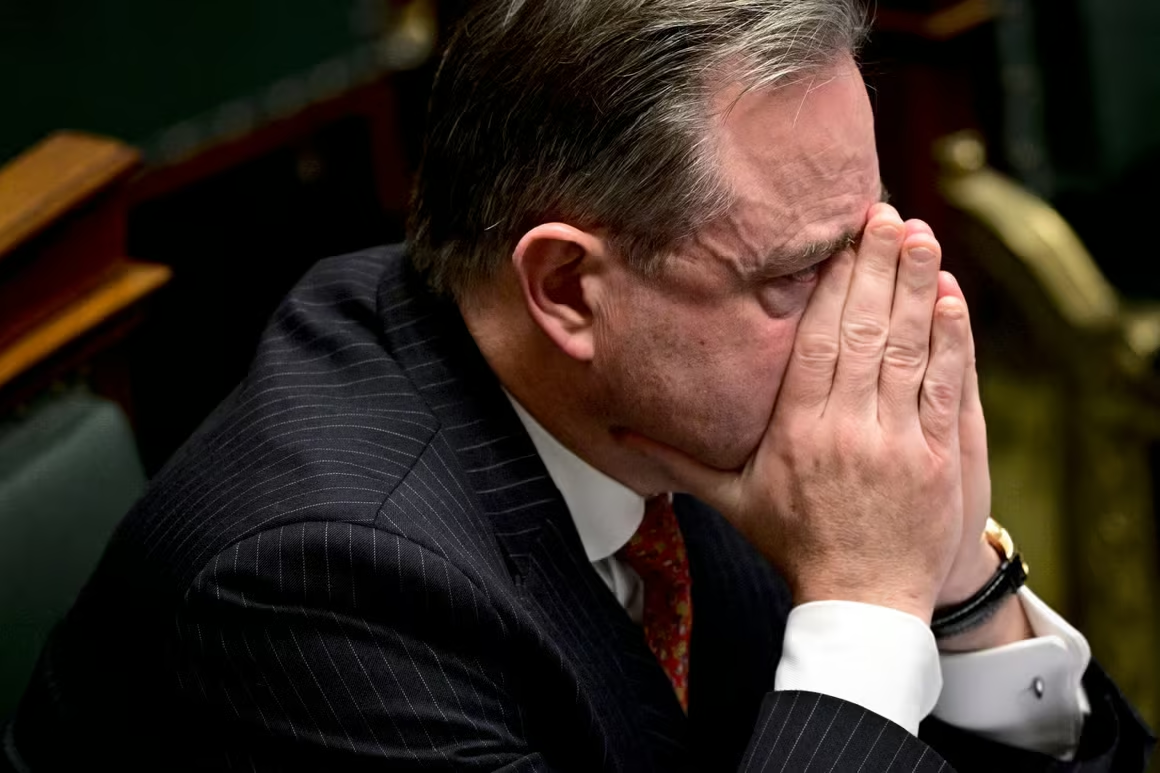
According to reporting by Politico, the EU has signaled to Belgium’s prime minister that Brussels is prepared to sideline him in European affairs—and treat him much as it treats Viktor Orban—should Belgium refuse to approve the plan to channel frozen Russian assets to Ukraine.
The article stresses that “the message to Belgium is that if it refuses to join the talks, its diplomats, ministers, and leaders will lose their voice at the EU negotiating table. De Wever’s views on the EU’s proposals will no longer be solicited. His calls will go unanswered. Officials will set aside Belgium’s concerns over the EU’s long-term budget for 2028–2034, creating serious difficulties for the government, particularly as the negotiations enter their decisive final phase in 18 months.”
A key summit on the so-called “reparations loan” is scheduled for next week. Belgium has yet to approve the transfer of assets held at Euroclear, insisting on terms that would ensure shared legal responsibility.
According to diplomats, EU ambassadors will work to accommodate Belgium’s requests, and “the chances of success look very high.” Three rounds of meetings—on Wednesday, Friday, and Sunday—are planned in an effort to reach a compromise.
The ECB Rejects a Request to Guarantee a Reparations Loan for Ukraine
At the Same Time, EU Countries Dismiss Belgium’s Demand for ‘Blank Check Guarantees’ From Frozen Russian Assets
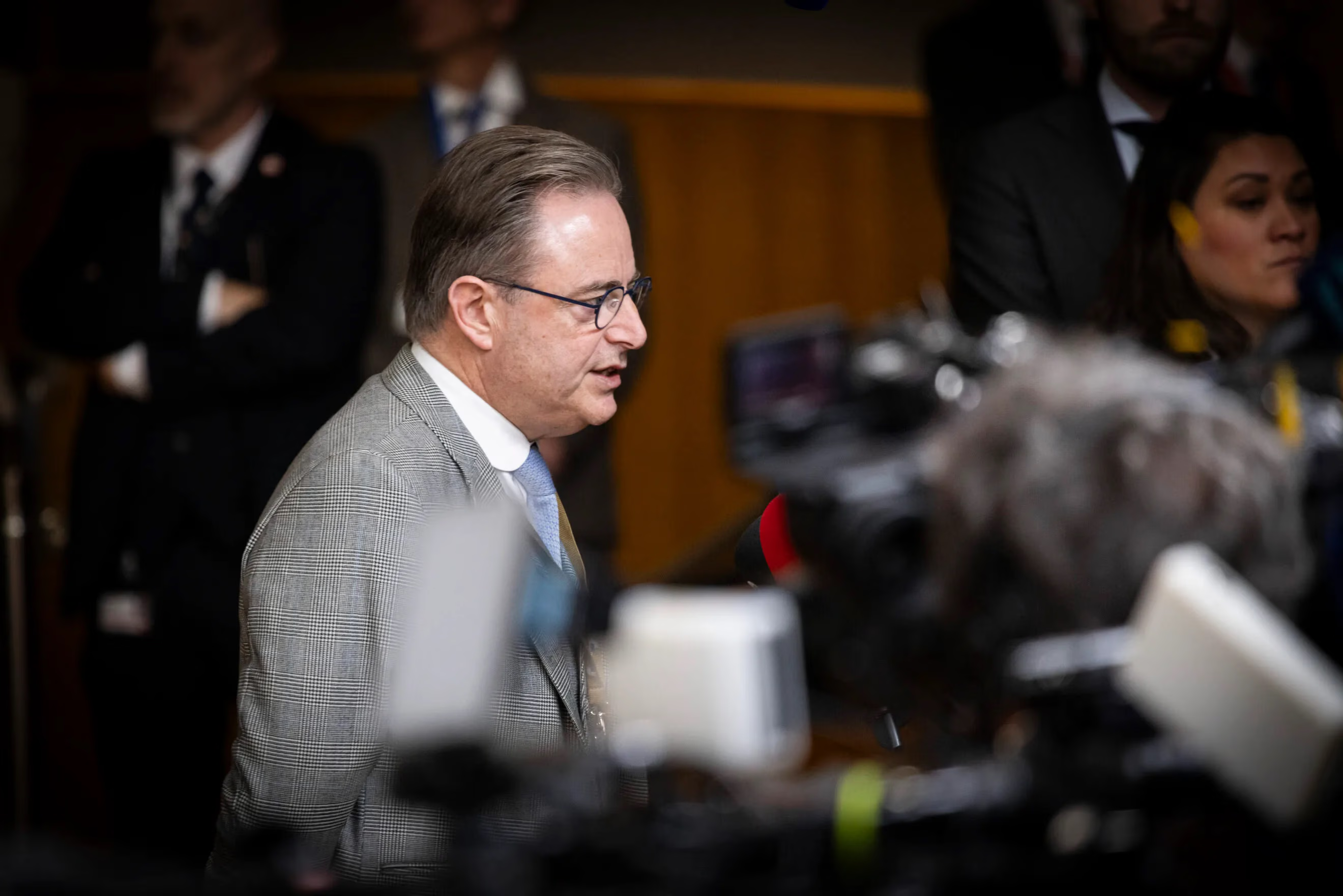
“This Will Undermine Peace Efforts”
Belgium Steps Up Its Opposition to Granting Ukraine a ‘Reparations Credit’ Funded by Frozen Russian Assets
Meanwhile, the European Commission has unveiled a “Plan B” that would involve issuing joint debt backed by the EU’s seven-year budget framework. Hungary has blocked the initiative, and unanimity is required for its approval. Brussels is therefore preparing a “Plan C,” under which a group of member states would have to rely on their own financial resources to support Ukraine. Most likely, this would fall to Germany, as well as the Nordic and Baltic states. Yet such an approach carries the risk of a profound rift within the union, as some members would be left solely responsible for financing Ukraine’s needs.
An alternative path is also being discussed—approving the “reparations loan” scheme by qualified majority, disregarding Belgium’s position. Diplomats, however, insist this option is not being seriously considered.
Ukraine faces a budget shortfall of €71.7 billion in 2025, and without external support it will have to begin cutting public expenditures as early as April.