
EU taxpayers will have to shoulder roughly €3 billion a year in interest costs under a plan to issue common debt to finance Ukraine’s defense against Russia, senior European Commission officials said. In the early hours of Friday, the bloc’s leaders agreed to raise €90 billion over the next two years, backed by the EU budget, to prevent Kyiv from running out of funds as early as April.
The war-ravaged country is set to face a budget deficit of €71.7 billion next year and is in urgent need of additional financing to survive after Russian President Vladimir Putin on Friday reaffirmed his intention to continue the conflict. The Czech Republic, Hungary, and Slovakia will not join the other 24 member states in sharing the debt burden, but have agreed not to block support for Ukraine. Under the compromise reached, the European Commission plans as early as next week to propose a mechanism of so-called enhanced cooperation, providing those 24 countries with a legal framework for joint borrowing.
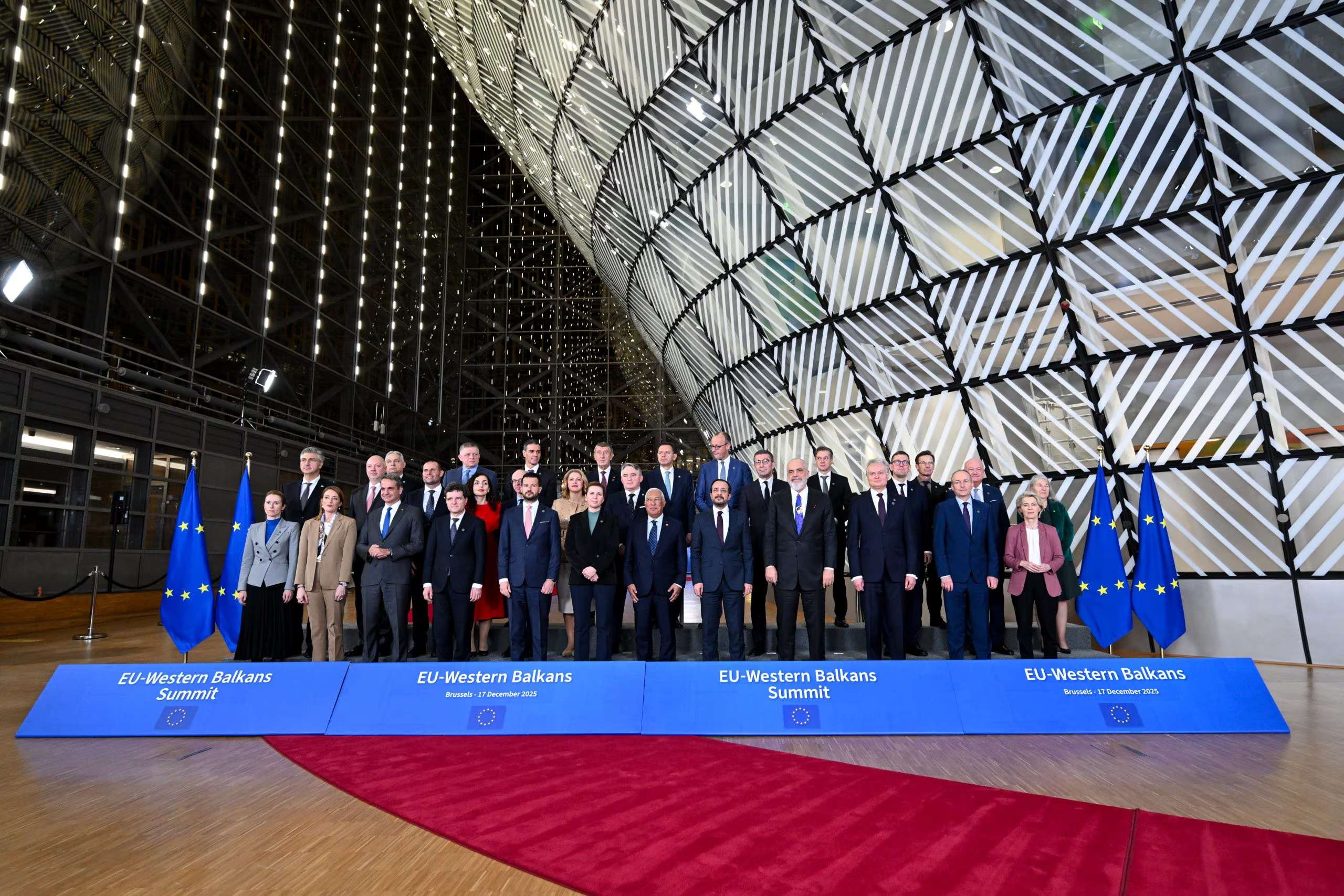
The EU Failed to Agree on the Use of Frozen Russian Assets
Ukraine Will Receive a €90 Billion Loan Backed by the Bloc’s Budget
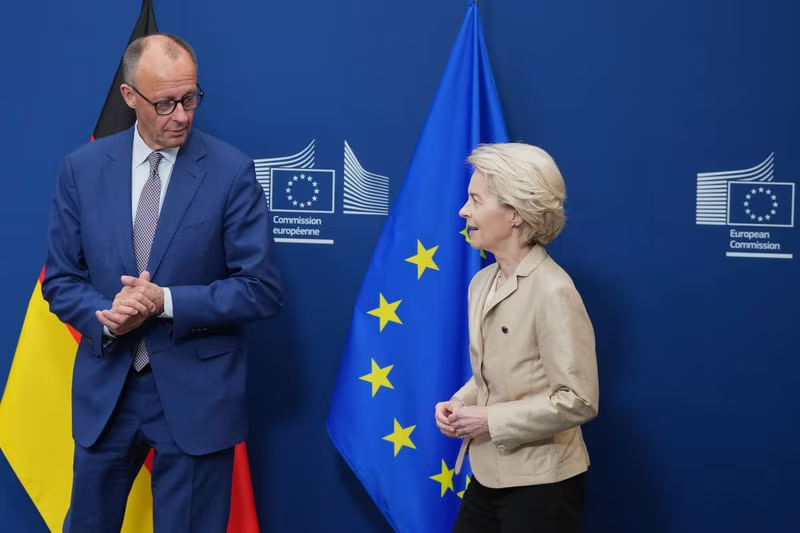
Merz and von der Leyen Suffer a Defeat in Their Push to Use Frozen Russian Assets
Macron Says Direct Dialogue With Moscow Must Be Resumed
Key elements of the previous €210 billion aid package for Ukraine will be carried over into the new common-debt plan. These include phased disbursements, anti-corruption safeguards, and rules governing how funds are allocated between Kyiv’s military spending and the country’s broader budgetary needs. European governments moved toward issuing joint debt after failing to agree, at the bloc-wide level, on a controversial plan to use frozen Russian assets.
The new mechanism is expected to deliver €45 billion to Ukraine as early as next year, providing Kyiv with critically important financial support on the eve of the fifth year of the war. The remaining funds will be disbursed in 2027.
The EU Failed to Agree on the Use of Frozen Russian Assets and Chose Joint Borrowing to Support Kyiv
The new plan will not come cheap for the EU. According to senior European Commission officials, from 2028 the bloc will pay around €3 billion a year in interest over its seven-year budget cycle, which is largely financed through contributions from member states. Interest payments will begin as early as 2027, but in the first year will amount to only about €1 billion.
Ukraine would be required to repay the loan itself only after the end of the war and once Russia has paid war reparations. That scenario appears unlikely, meaning the EU would either have to continuously roll over the debt or seek to repay it using frozen Russian assets. Doing so would require a new political agreement among the bloc’s leaders, as Belgium is firmly opposed to using those funds, most of which are held at the Brussels-based financial depository Euroclear.
Belgium’s stance ultimately pushed European leaders toward issuing common debt. The country’s prime minister, Bart De Wever, demanded unlimited financial guarantees for a loan backed by Russian assets, a condition that proved excessive for his EU partners.