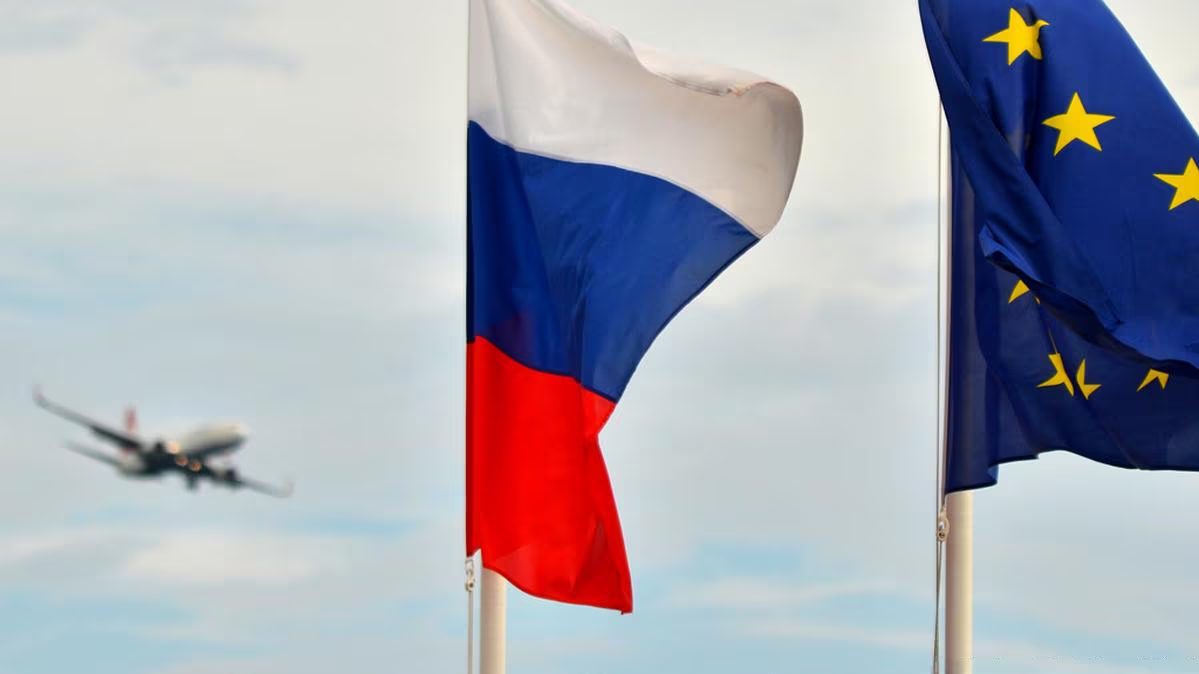
The European Union has begun preparing for possible negotiations with Vladimir Putin amid growing frustration in European capitals over the course of the Ukraine peace process being mediated by US President Donald Trump. The announcement was made by European Council President António Costa.
According to Costa, EU officials believe the bloc has the “potential” for direct dialogue with the Russian president, and Volodymyr Zelensky supports preparations for such a scenario.
“I am discussing with the leaders of the EU’s 27 member states how best to organize our position and what exactly will be required for an effective dialogue with Russia when the right moment comes,” Costa said during an event at the European University Institute in Florence.
He added that at last month’s EU summit in Cyprus, Zelensky “encouraged Europe to be ready to contribute positively to negotiations.”
At the same time, Costa stressed that Brussels does not intend to obstruct the process being led by the Trump administration and acknowledged that Moscow has so far shown no signs of readiness for contacts with EU representatives.
“Yes, the potential [for negotiations with Putin] exists. But so far, no one has seen indications that Russia is genuinely prepared for serious negotiations,” he said.
Zelensky’s office confirmed that the issue had been discussed with Costa but emphasized that any future contacts must be coordinated so Europe acts as a united front and maintains pressure on Russia.
Within the EU, there is still no consensus on key questions: who could represent the bloc in negotiations with the Kremlin, when such dialogue should begin, and what proposals could be offered to Moscow. Belgian Prime Minister Bart De Wever had previously suggested the possibility of opening a communication channel with Russia.
At the same time, Kyiv is attempting to restart the negotiation process with the United States. On Tuesday, Zelensky said National Security and Defense Council Secretary Rustem Umerov had arrived in the United States for meetings with Trump’s special envoys, including Steve Witkoff. According to the Ukrainian president, the purpose of the visit is to “relaunch the diplomatic process,” which effectively froze after the start of the US war with Iran.
The last trilateral meeting involving representatives of the United States, Ukraine, and Russia took place on February 18.
Zelensky said Kyiv remains in “constant contact with the American side” and is aware of its partners’ communications with Moscow.
“We are working to ensure that this brings a dignified peace closer and guarantees security,” he said.
At the same time, the Ukrainian president accused Russia of lacking a constructive approach even on the issue of a ceasefire. This week, Moscow and Kyiv exchanged competing proposals on limiting strikes.
Putin announced a short-term ceasefire during the May 9 Victory Day celebrations, expecting Ukraine to halt attacks during the same period. In response, Zelensky declared a unilateral ceasefire beginning May 6.
According to the Ukrainian president’s office, Kyiv wanted to demonstrate that if Russia is capable of enforcing a ceasefire for the sake of holding a military parade, such a ceasefire could also be extended across the entire front line. Ukrainian officials also argue that this exposes a contradiction in Moscow’s position: it demands security for ceremonial events while continuing offensive operations in Ukraine.
Shortly afterward, Russia launched new strikes on Ukrainian cities. According to Ukrainian authorities, 27 people were killed and at least 120 others were injured.