At the start of 2026, European officials entered the year with cautious optimism: after a turbulent 2025—marked by constant crisis management driven by developments in Washington—they hoped to finally shift toward shaping their own agenda.
Those expectations quickly faded.
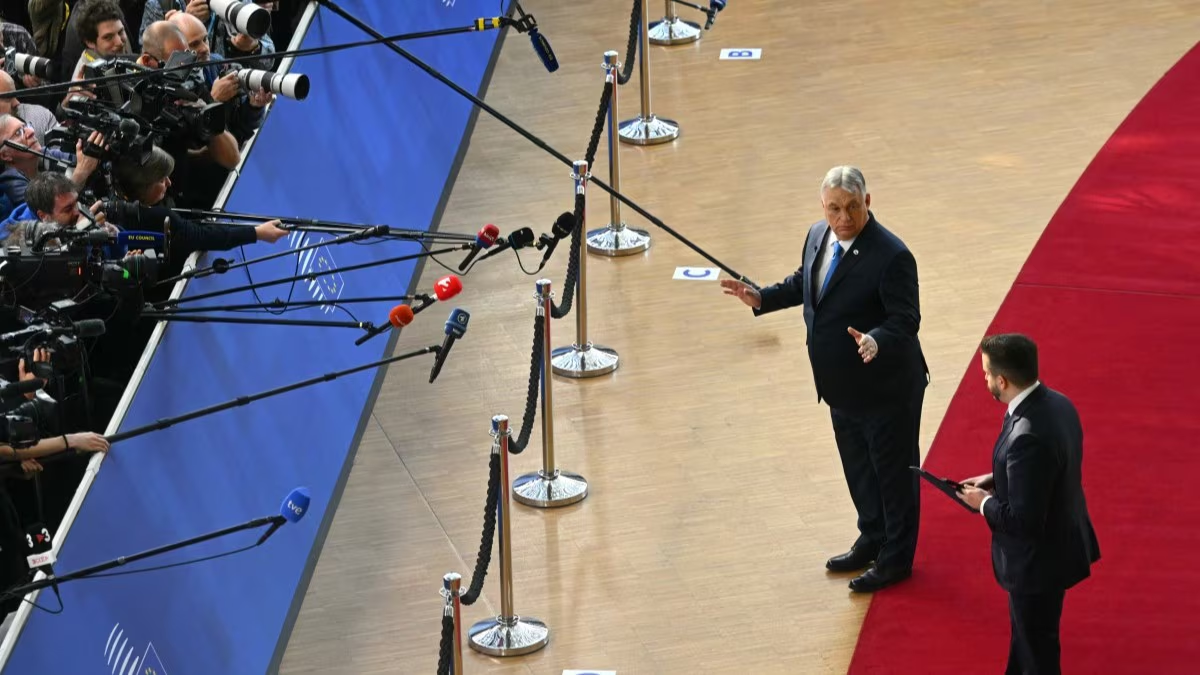
The summit in Brussels on March 19 made clear how significantly Europe’s plans have once again been disrupted by the actions of President Donald Trump. Leaders of the 27 European Union countries gathered for a lengthy meeting that had originally been intended to inject new momentum into the bloc’s economic competitiveness.
However, after the United States and Israel launched their attack on Iran nearly three weeks ago, the focus of discussions shifted to rising fuel prices and the consequences of the war in the Middle East. An additional factor was Hungary’s persistence in blocking a much-needed loan to Ukraine, further diverting attention from the original agenda.
Here is what is currently preoccupying European leaders.
Rising Fuel Prices Are Causing Serious Concern
Energy costs in Europe have surged sharply since the war with Iran began on February 28. After Iranian missile strikes damaged a major liquefied natural gas facility in Qatar, gas prices in Europe on Thursday rose to more than twice their prewar levels.
Fearing a repeat of the painful price shock of 2022, European countries are scrambling to find ways to cushion the impact on consumers.
“We are very concerned about the energy crisis,” Belgian Prime Minister Bart De Wever told reporters as he arrived at the meeting in Brussels. “We were already concerned before the war began.”
The attacks are “creating additional chaos,” the European Union’s foreign policy chief, Kaja Kallas, said on Thursday morning.
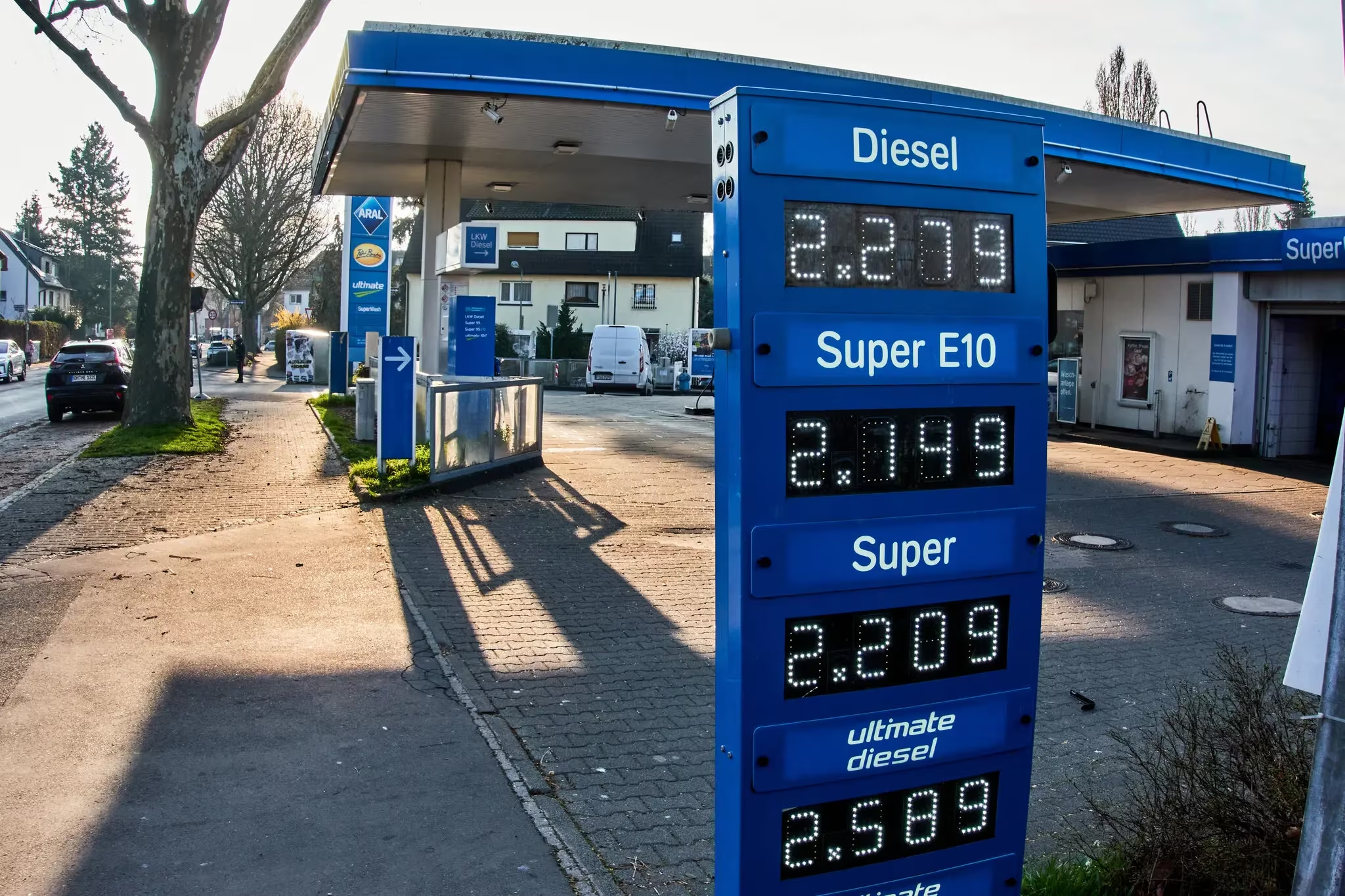
A range of measures is being considered to mitigate the impact of rising prices. Several countries are proposing that the European Union ease rules aimed at reducing carbon emissions in order to lower costs.
“Flexibility could benefit our citizens,” Latvian Prime Minister Evika Siliņa told reporters ahead of the meeting.
However, Nordic countries and several others have pushed back against easing environmental standards, warning that it would undermine progress toward the transition to green energy.
Decarbonization rules are “a cornerstone of our climate policy,” Finnish Prime Minister Petteri Orpo stressed.
Growing Concern in Europe That the Iran Conflict Will Divert Attention From Ukraine
Even as they grapple with rising fuel prices, European countries are also weighing other potential consequences of the war in the Middle East. For the most part, they are refraining from responding to President Donald Trump’s calls to help restore shipping through the Strait of Hormuz—a critical trade route blocked by Iran—fearing they could be drawn into the conflict.
“We can and will be involved only when the weapons fall silent,” German Chancellor Friedrich Merz said.
Luxembourg’s Prime Minister Luc Frieden noted: “We want to ensure the safe passage of ships through the Strait of Hormuz, but we must be extremely careful not to be drawn into a conflict that could escalate into a broader confrontation.”
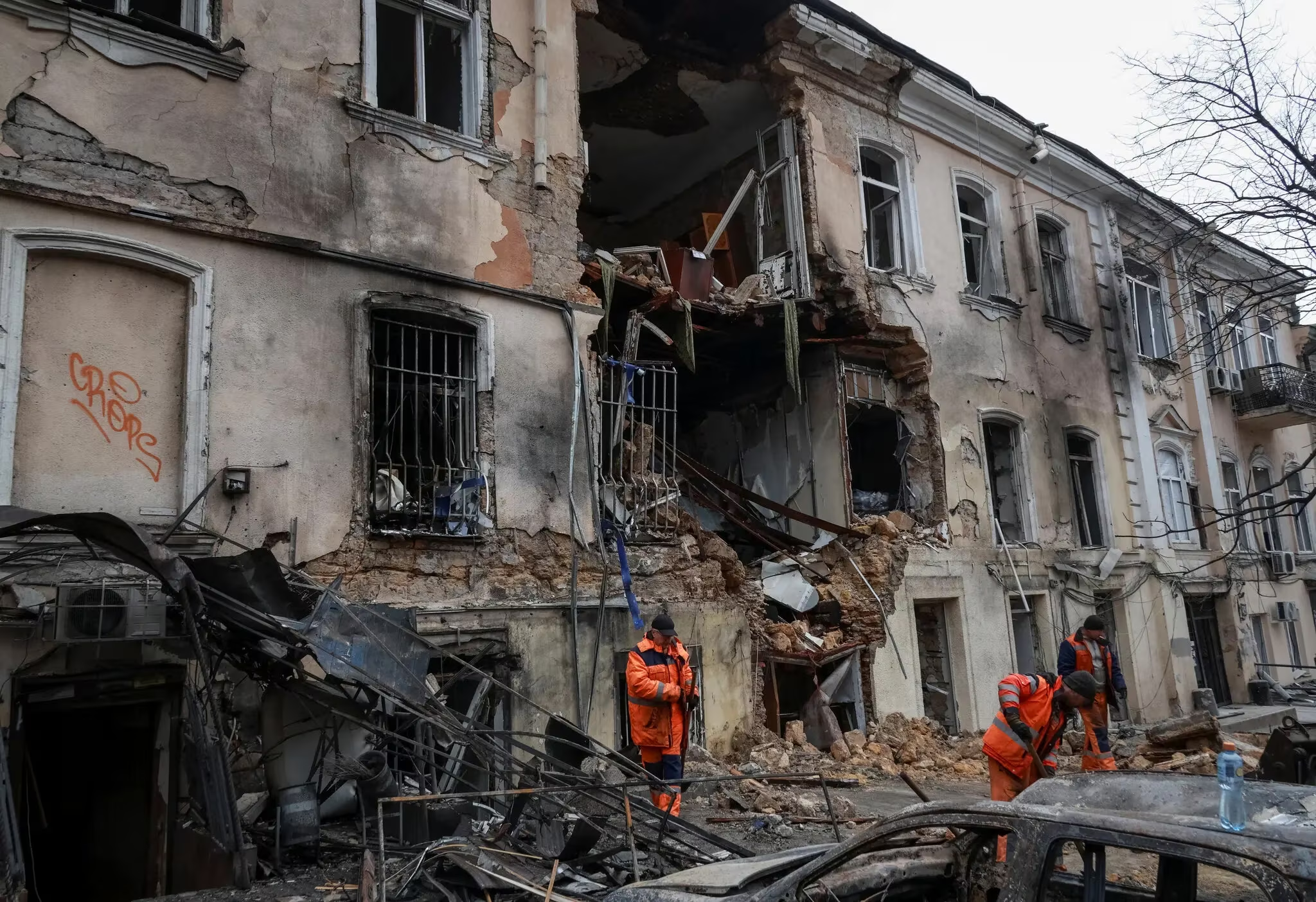
European officials are also expressing concern that instability in the Middle East could divert attention from Russia’s war against Ukraine—at a moment when Kyiv is in particular need of Western support.
“I am concerned that developments in the Middle East could overshadow the war in Ukraine,” Lithuanian President Gitanas Nausėda told reporters ahead of the meeting.
European Leaders Express Frustration with Hungary’s Position
On Thursday, European leaders are set to address at least one Ukraine-related issue—the blockage by Hungary’s prime minister, Viktor Orban, of a €90 billion loan, roughly $100 billion, for Kyiv that the European Union had already agreed upon in December.
Orban argues that he is refusing to support the funding because Ukraine has been slow to restore a damaged pipeline through which Russian fuel flows to Hungary and Slovakia.
“Hungary is not receiving the oil that rightfully belongs to us,” Orban told reporters on his way to the meeting on Thursday, adding that he will not approve the loan until supplies are resumed.
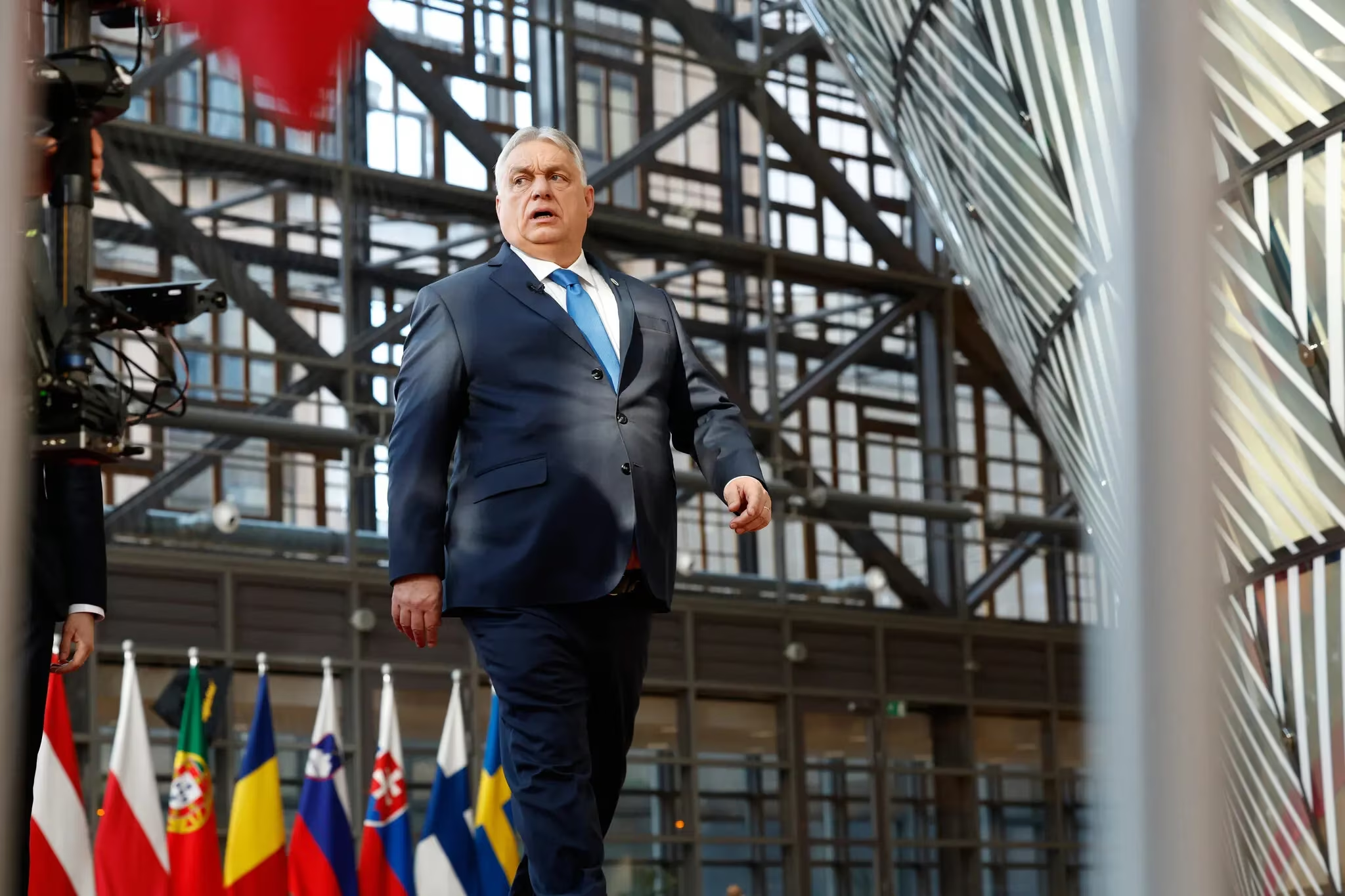
However, many European Union officials suspect that the obstruction is tied to Hungary’s upcoming election on April 12—and are stepping up pressure on Orban to unblock the funds.
“It is regrettable that we are losing time,” said Lithuania’s president, Gitanas Nauseda.
Kaja Kallas was even more direct: “I am not very optimistic,” she told reporters. “During elections, people do not always act rationally.”
European leaders also warn that Orban’s move to block a package he had previously endorsed could undermine trust in such agreements within the EU.
Competitiveness formally remains on the agenda.
Economic issues will still feature in Thursday’s discussions. Participants intend to address steps to simplify regulation and attract businesses to the European Union. However, these topics are being pushed into the background by mounting geopolitical pressures.
“Today, leaders will focus on competitiveness,” European Council president Antonio Costa told reporters—with a note of hope—as he headed into the meeting.
Within a few sentences, however, he was forced to return to the dominant issue of the day.
“Of course, no one can ignore that we are facing serious challenges in energy,” Costa added.