
Brussels has proposed a legally contentious mechanism to raise up to €210bn for Ukraine backed by immobilised Russian state assets, invoking emergency provisions that would in effect strip Hungary and other sceptical members of their veto. The initiative would mark a watershed moment for the EU—allowing sanctions to be imposed without unanimity—and is viewed as a last-ditch effort to secure Kyiv’s financial stability by circumventing resistance from countries more sympathetic to Moscow, such as Hungary or Slovakia.
The proposed “reparations loan” would leverage up to €210bn in Russian assets frozen under EU sanctions to support Ukraine. The loan would be repaid only once Russia pays reparations. In the first phase, the European Commission plans to raise €90bn to cover Kyiv’s needs over the next two years, with member states providing national guarantees. “Europe will remain its strongest and most steadfast partner… we can equip Ukraine with the means to defend itself and to enter peace negotiations from a position of strength,” said Commission President Ursula von der Leyen. “The message to Russia is that the reparations loan increases the cost of war for Moscow and urges it to come to the negotiating table to finally achieve peace,” she added.
Under the proposal, the European Commission seeks to lock in the freeze on Russian sovereign assets in the EU indefinitely by invoking emergency powers. The mechanism is designed to neutralise any attempt by member states—including Hungary—to use their national veto when sanctions come up for renewal every six months. The document introduces a “temporary prohibition on any direct or indirect transfers to or for the benefit of the Central Bank of Russia”. These measures—effectively mirroring existing sanctions and keeping the Russian central bank’s assets immobilised—are justified on the grounds that they are “essential to limiting damage to the Union’s economy”.
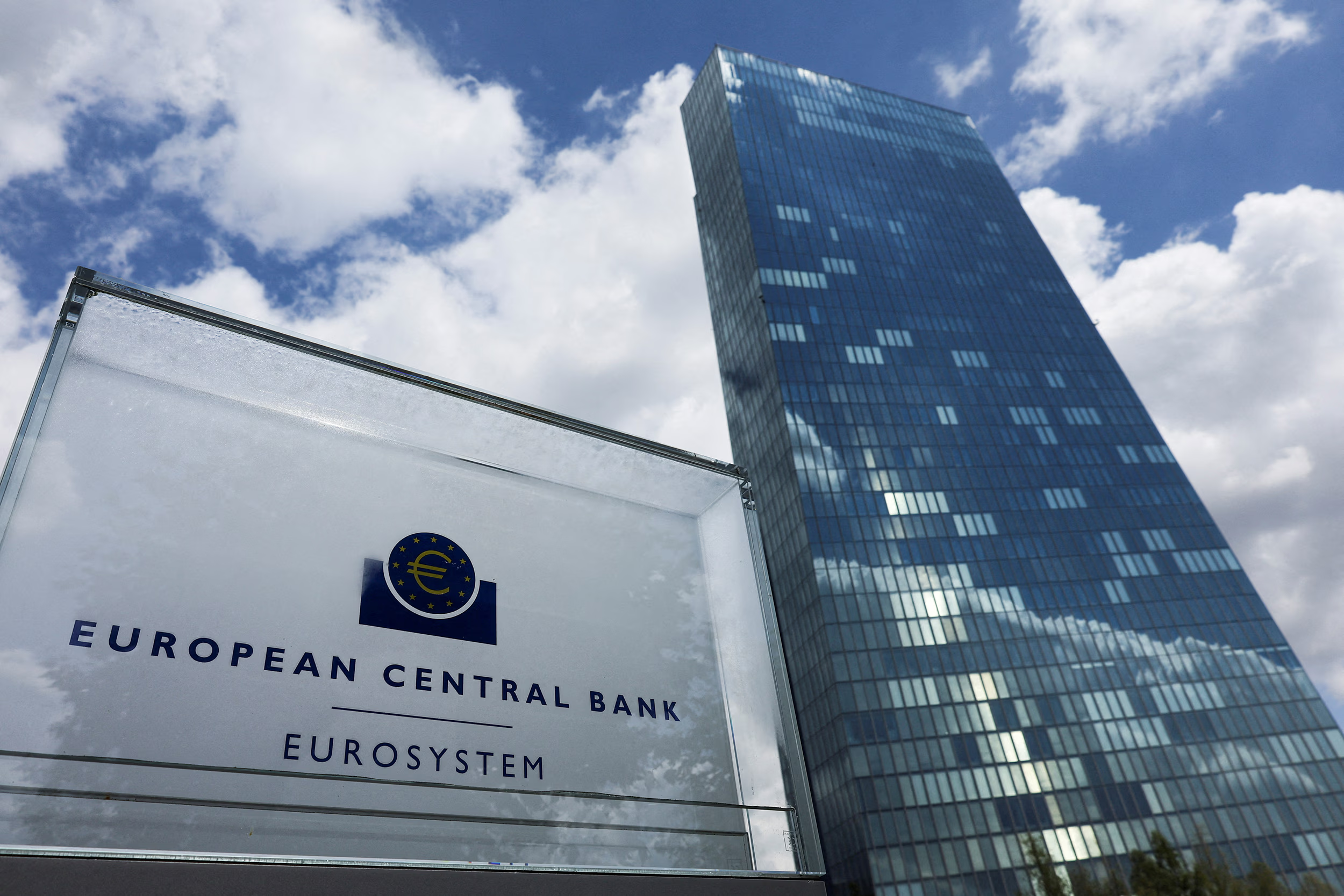
The ECB Rejects a Request to Guarantee a Reparations Loan for Ukraine
At the Same Time, EU Countries Dismiss Belgium’s Demand for ‘Blank Check Guarantees’ From Frozen Russian Assets

Euroclear Does Not Rule Out Going to Court if the EU Decides to Confiscate Russian Assets
The Head of the Depository Warns of Reputational Risks and a Possible Obligation to Return €140 Billion
The proposed measures aim to address Belgium’s central concerns. Brussels has been a vocal opponent of the initiative, fearing it may ultimately be liable for the loan, since most of the assets are held at the Brussels-based depository Euroclear. Belgian officials worry that if sanctions are lifted, assets unfrozen or a peace deal reached without a reparations agreement, the country could be forced to cover the loan. To partially accommodate these concerns, the Commission expanded its proposal to include all frozen Russian central-bank assets held across EU financial institutions, rather than only the €185bn parked at Euroclear. Even so, Belgian authorities have signalled firm opposition to what they see as an attempt by the Commission to circumvent states that do not support the loan. “A decision backed only by a smaller group of countries is never ideal,” a Belgian official said, noting that scenarios remain “that would require the immediate availability of the entire amount”.
The Commission is relying on an emergency clause—Article 122 of the EU treaties—arguing that unfreezing the assets would trigger an economic shock for member states, which would then have to raise funds immediately to pay Russia. The article can be invoked when an EU country faces “severe difficulties caused by natural disasters or exceptional occurrences beyond its control”. Yet some officials fear the move could breach EU law. One described the strategy as “madness”, stressing that there is “clearly no emergency” within the single market. At the same time, Economy Commissioner Valdis Dombrovskis maintains that the proposal is “legally sound” under both EU and international law.
The Commission has also put forward an alternative funding model, which would raise money for Ukraine backed by the EU budget. Such a scheme, however, would require unanimity—and Hungary has already said it will not support additional aid for Kyiv. EU leaders are expected to discuss financing options at their summit later this month.