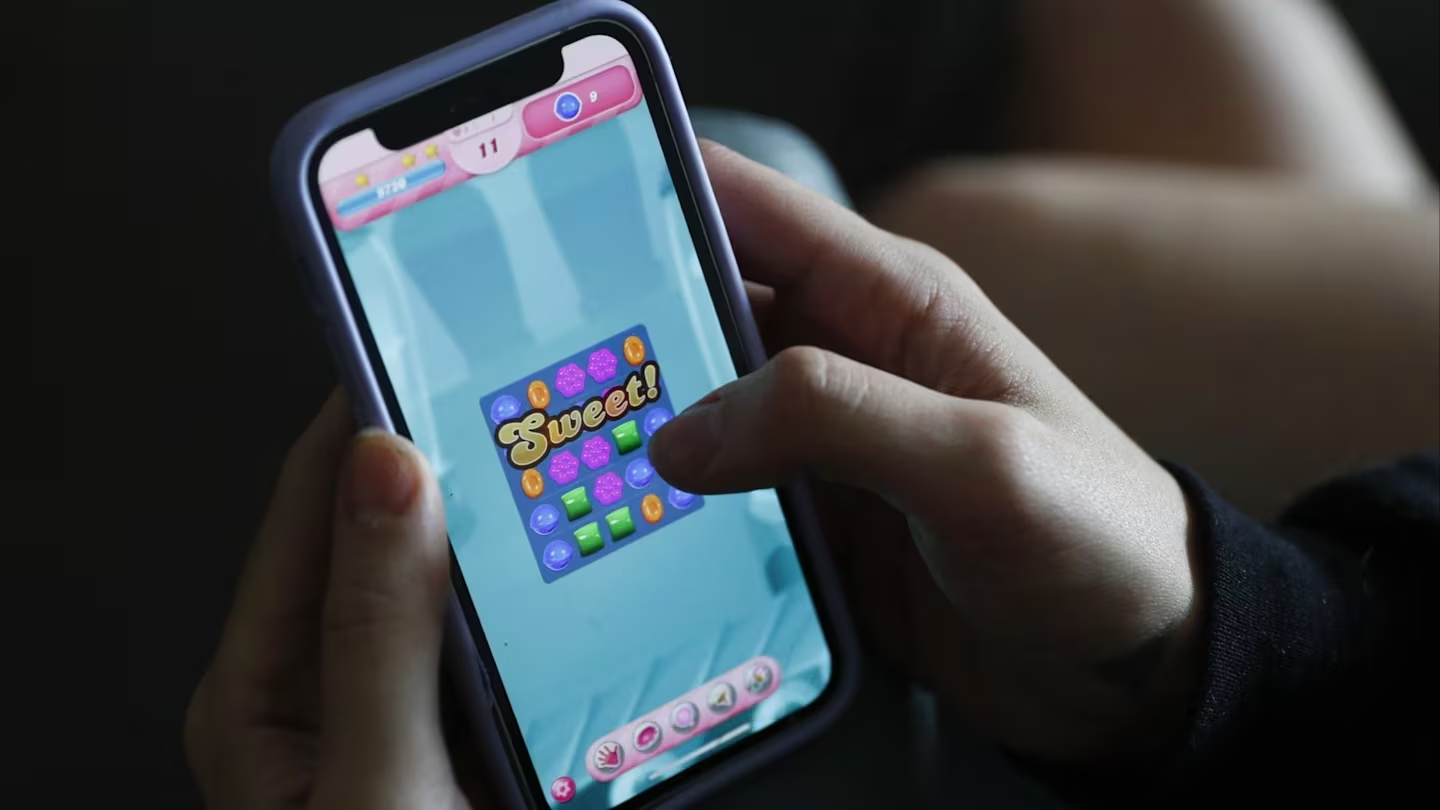
The makers of Clash of Clans, Candy Crush Saga and Subway Surfers have warned that a forthcoming European Commission proposal could force mobile games to display pop-ups and effectively make them “unplayable.” They say it could also weaken one of the few technology sectors in which Europe holds a leading position.
The heads of Finland’s Supercell, Sweden’s King and Denmark’s Sybo said the European Commission’s future initiative would cause serious harm to the mobile gaming industry. Last year, the sector created more than €5 billion in economic value in Europe and generated almost €8 billion in revenue.
“Basically, these games would become unplayable in Europe… Mobile games are one of the very few industries where Europe, and Northern Europe in particular, can claim to be a leader. And this is a genuinely worrying moment if you think about European competitiveness more broadly,” said Ilkka Paananen, chief executive of Supercell, which makes Hay Day, Brawl Stars and Clash of Clans.
The free-to-play model has made Candy Crush, Subway Surfers and Clash of Clans among the most popular games in the world. The vast majority of their hundreds of millions of players do not pay for access to the games themselves.
Some users, however, pay to speed up gameplay, unlock new characters and acquire special designs. Those payments account for a significant share of the companies’ revenue. Last year, Supercell generated €2.9 billion in revenue, €930 million in operating profit and paid €220 million in corporate tax in Finland.
The European Commission’s expected proposal under the Digital Fairness Act could require developers to show players a pop-up every time they use virtual currency for a purchase, if they had previously bought that currency with real money.
Paananen estimated that during a typical short gaming session in a Supercell game, a user could see 40 such notifications—similar in purpose to cookie-consent prompts on websites.
Todd Green, president of King, the maker of Candy Crush, said the proposal requires the real-world value of virtual currencies to be displayed. Many games, he said, have between three and seven different currencies, some of which players cannot buy directly. Displaying their value on a smartphone screen, he argued, would make games “confusing and less engaging.”
Mathias Gredal Nørvig, chief executive of Sybo, the developer of Subway Surfers, said Brussels has a poor understanding of the mobile industry and is relying on outdated stories about parents unexpectedly receiving large bills because of their children’s online purchases.
“Some of the legislative measures now being proposed look more like fear born of misunderstanding than a desire to understand the nuances of what games can actually offer. Because if children play age-appropriate games and parents are involved, the scientific evidence is overwhelmingly positive about the impact of games,” he added.
All three companies said such proposals would merely mean that players in the United States and Asia would receive a far better user experience, while companies from those regions would strengthen their positions.
“It would make Europe… a much smaller market for mobile games,” Paananen said. He added that the new rules would hit European companies disproportionately hard, rather than Chinese players such as Tencent.