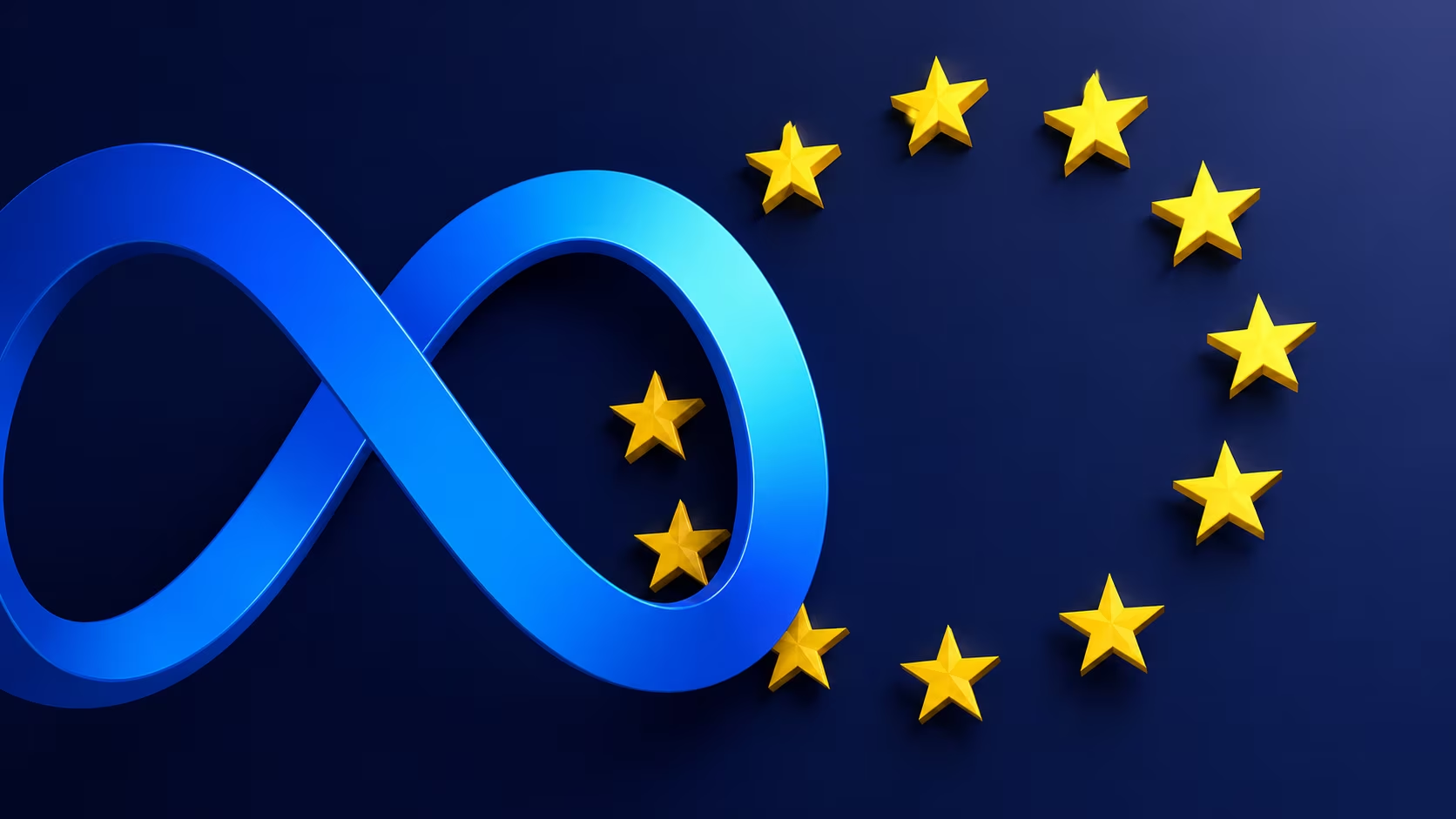
The European Union has moved closer to imposing a fine on Meta after reaching the preliminary conclusion that the company is failing to enforce age restrictions and is allowing children under 13 to use Instagram and Facebook.
The decision was announced nearly two years after the European Commission launched its investigation under the Digital Services Act (DSA), which regulates online content. If the findings are confirmed, the company could face a fine of up to 6% of its global revenue.
Under Meta’s own rules, access to its platforms is permitted only from the age of 13. But Brussels believes the existing enforcement mechanisms are not effective enough and do not prevent younger users from registering for and using the services. The company is also said to be taking insufficient action to remove accounts already identified as belonging to children below the minimum age.
“Instagram and Facebook are doing very little to prevent children below that age from accessing their services,” said Henna Virkkunen, the EU’s technology commissioner. She stressed that the DSA requires platforms not merely to declare rules, but to enforce them in practice—especially when it comes to protecting minors.
Meta said its platforms are designed for users over 13 and that the company uses tools to detect and remove accounts belonging to underage users. “We continue to invest in technology to identify such users and will soon introduce additional measures,” the company said.
The situation is unfolding against a backdrop of broader EU pressure on technology platforms. Other services, including TikTok, remain under scrutiny as well, in part because of concerns about their influence on user behaviour.
At the same time, debate is intensifying within the EU over so-called child protection online. The authorities have developed an age-verification app that allows users to confirm their age without passing personal data to platforms. A tougher option is also under discussion—banning children under 15–16 from using social media, an idea France has been actively promoting.
European Commission president Ursula von der Leyen said the EU intends to “hold online platforms accountable if they do not do enough to protect children” and stressed that the introduction of age-verification mechanisms must be accompanied by strict enforcement.
Donald Trump’s administration, for its part, has sharply criticised the use of the DSA, arguing that the European Union is interfering too heavily in the regulation of digital platforms. After the €120 million fine imposed on X (formerly Twitter), US secretary of state Marco Rubio described such measures as “an attack by foreign governments on American technology companies and the American people”.