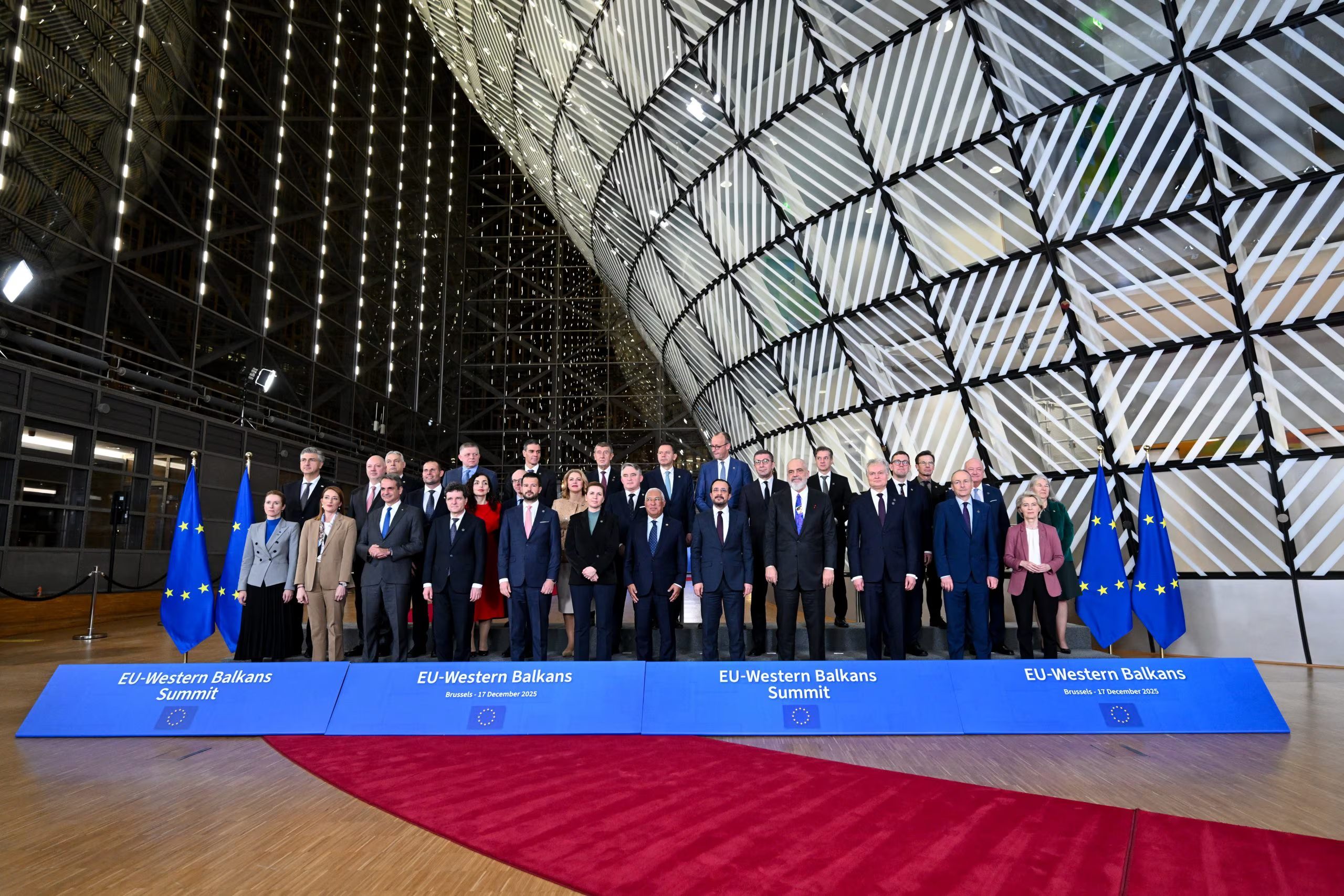
Following the summit, EU leaders agreed to grant Ukraine a €90bn loan, backed by the EU’s own budget and explicitly excluding the use of frozen Russian assets. The announcement was made by European Council President António Costa. According to him, support for 2026–2027 has been approved and the commitments undertaken have been fulfilled. “We have an agreement. The decision to provide Ukraine with €90bn in support for 2026–2027 has been approved. We made commitments—and we have delivered on them,” he wrote on X.
As reported by Politico, Hungary, Slovakia, and the Czech Republic will not take part in the joint borrowing mechanism intended to finance aid to Ukraine—these countries had opposed further support for Kyiv. The issue of using assets of the Russian central bank, frozen in Western jurisdictions after the war began in 2022, was not resolved at the summit. A source cited by Agence France-Presse noted that “after lengthy discussions, it became clear that reparations-based loans would require additional work, as leaders need more time to refine the details.”
Belgian prime minister Bart De Wever, who has consistently opposed the use of Russian assets, said that too many unresolved issues had accumulated around the idea of a “reparations loan,” forcing the EU to “move to plan B.” “Rationality prevailed. The EU avoided chaos and fragmentation and remained united,” he stressed.
Volodymyr Zelensky thanked EU leaders for the decision, describing the loan as a significant form of support. According to him, the assistance strengthens the country’s resilience, while the continued freeze on Russian assets—combined with the approved financing—provides Ukraine with a financial security guarantee for the coming years.
After the war began in 2022, Western countries froze assets of the Russian central bank worth around €260bn, of which approximately €193bn are held at the Belgian depository Euroclear. The European Commission had previously proposed granting Ukraine a so-called reparations loan backed by these funds, to be repaid after the end of the war, when Russia would compensate for the damage inflicted. Belgium, however, opposed the scheme, citing substantial legal risks. Italy, Bulgaria, and Malta later aligned with this position, while Hungary and Slovakia have traditionally criticised EU initiatives involving the use of Russian assets.
On December 12, the European Union, using a special procedure that does not require unanimous approval, approved an indefinite freeze of Russian assets—until the war ends and compensation is paid to Ukraine. In response, the Central Bank of Russia announced that it would file a lawsuit against Euroclear with the Moscow Arbitration Court over plans to use the frozen funds, and warned that it would seek to recover losses from European banks should those assets be put to use.