The European Union is considering lifting sanctions on the only European placed under restrictions for trading Russian oil. The discussions are unfolding in parallel with separate efforts by the president of Turkey, who has been advocating the removal of a Russian oligarch from the sanctions list.
The negotiations come ahead of a Sunday deadline to extend the EU’s sweeping package of Russia-related restrictions. These measures must be renewed every six months with the approval of all 27 member states. In addition, officials are weighing the possible delisting of one Russian national.
The decision, however, is complicated by the position of Hungary and Slovakia. According to several European diplomats and officials, both countries have put forward additional demands—to remove other individuals from the list, including the Russian-Uzbek oligarch Alisher Usmanov. They also said that Turkish president Recep Tayyip Erdogan has separately lobbied for Usmanov to be delisted.
EU ambassadors were due to discuss the extension of the sanctions regime later on Wednesday, and then return to the issue again on Friday.
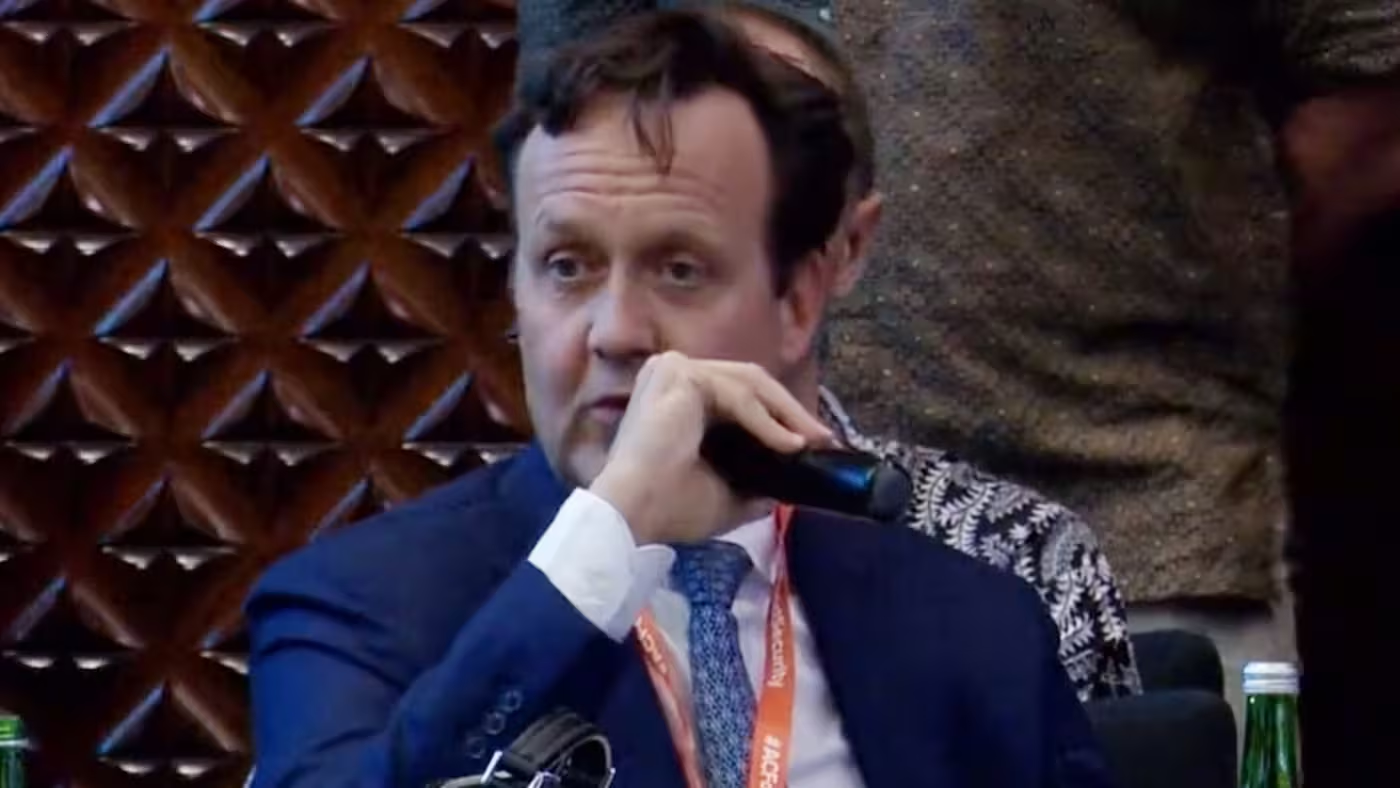
Dutch trader Niels Troost was added to the EU sanctions list in December 2024. He was subjected to a travel ban and an asset freeze after the Financial Times first reported that a Dubai-based subsidiary of his Swiss firm, Paramount Energy and Commodities, had been selling Russian oil at prices above the EU-backed price cap.
Troost’s lawyers argue that UAE-registered subsidiaries of Swiss companies are not required to comply with the price cap. They say the EU’s decision may have been based on disinformation circulated by his former business partner.
Troost, who resides in Switzerland, remains a rare case of the EU imposing sanctions on one of its own citizens. Restrictions against him have also been introduced by the United Kingdom and Switzerland. Last year he challenged the EU’s decision, but his case has not yet been heard in court.
According to a draft regulation that must be approved by Sunday, Troost is one of two individuals the European Union proposes to remove from the sanctions list. The other is Maya Nikolaevna Bolotova, the daughter of Nikolai Tokarev, chief executive of the Russian oil and gas company Transneft.
According to one European diplomat familiar with the matter, Troost and Bolotova “are seen as less politically significant and legally more vulnerable cases.” Another diplomat added: “In this case, the issue truly concerns the legal justification of the sanctions.”
Troost’s lawyers declined to comment. Bolotova could not be reached for comment.
In a letter to Slovak Prime Minister Robert Fico, Erdogan wrote on March 2: “Given Mr. Alisher Usmanov’s sincere efforts to fully cooperate with EU institutions, and taking into account humanitarian considerations, I believe that your support for his removal from the EU sanctions list and the restoration of his violated rights would be extremely valuable.”
Erdogan added that because of the sanctions Usmanov faces “certain difficulties” in his dealings with Turkey—restrictions he is contesting. The Turkish leader called for “an end to this unjust practice toward Mr. Alisher Usmanov.”
European diplomats, however, believe attempts to secure Usmanov’s removal are unlikely to succeed given the weight of the evidence on which his designation was based.
“Regardless of the position of the Turkish president, there are reasons why sanctions are imposed on specific individuals,” one EU diplomat said. “If there are legal grounds to lift them—yes. But if it is a political demand, that is an entirely different matter.”
In its justification for the sanctions, the EU describes Usmanov as “a leading businessman with interests in iron ore mining and steel production, as well as in media, telecommunications and internet companies.” These sectors, it notes, “provide a substantial source of revenue for the government of the Russian Federation.”
The document also states: “He has actively supported or benefited materially or financially from Russian decision-makers responsible for the annexation of Crimea and the destabilisation of Ukraine,” and emphasizes that Usmanov maintains “particularly close ties with the President of the Russian Federation, Vladimir Putin.”
Usmanov has repeatedly challenged the EU sanctions and the evidence on which they are based. He is currently appealing a ruling by the EU’s General Court issued in September, which upheld his inclusion on the sanctions list.