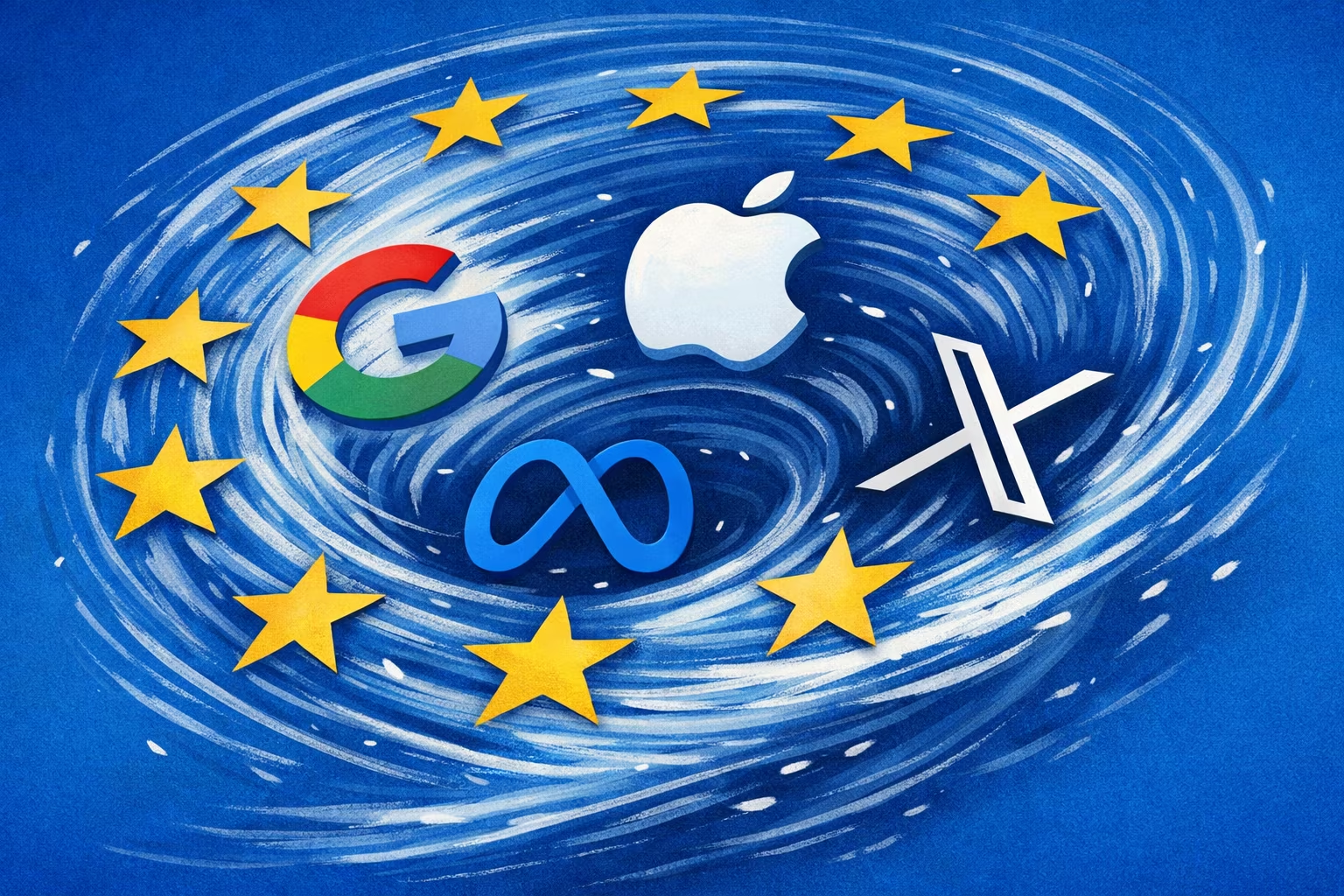
In 2026, the European Union enters the most sensitive phase of its digital policy. After years of negotiations and the adoption of sweeping legislation, Brussels is moving to real-world enforcement against the largest American technology corporations—Google, Meta, Apple and X. This shift is unfolding amid pressure from Donald Trump’s administration, threats of trade retaliation, and intensifying lobbying by big tech, turning enforcement into a test not only of the EU’s antitrust framework but also of its capacity to defend regulatory sovereignty in an era of sharpening geopolitical confrontation.
In 2026, the EU is stepping up pressure on Google, Meta, Apple and Elon Musk’s X. According to assessments by EU officials and lawmakers, Brussels’ regulatory moves are almost certain to trigger a new round of confrontation with American technology groups and US President Donald Trump.
After several years of negotiations and the passage of an expansive digital rulebook, the European Commission is shifting its focus to the practical enforcement of existing provisions. At this stage, however, the EU faces substantial political risks. The Trump administration is demanding a revision of Europe’s digital rules and is threatening trade measures in response to actions taken against companies from Silicon Valley.
Brussels is being forced to tread carefully: on the one hand, it insists on enforcing its own laws; on the other, it seeks to avoid provoking a transatlantic trade conflict and pushing the US president toward closer alignment with Russia amid the war in Ukraine.
“There have been moments when we had to—and when I personally had to—state very clearly: sorry, but we are not going to scrap our regulation simply because you do not like it,” the EU’s competition commissioner, Teresa Ribera, told the Financial Times.
At the core of the strategy is strict adherence to rules already on the books, including the Digital Markets Act, designed to curb the power of large online “gatekeepers,” and the Digital Services Act, which requires internet platforms to take a more active role in tackling illegal content.
Officials involved in implementing these laws stress that priority has always been given to behind-the-scenes work to secure compliance rather than to headline-grabbing fines. Even so, following sanctions imposed in the spring, Apple and Meta have already adjusted their business models to meet EU requirements.
At the same time, the European Union is widening the scope of its oversight. In December, the European Commission opened an investigation into whether Meta is restricting access for rival AI developers to WhatsApp, alongside a review of Google’s use of online content to train its AI models. Parallel inquiries have been launched into competitive conditions in the cloud computing market.
“You proceed calmly, professionally and perhaps a little more quietly than you could, because loud statements offer limited benefit here,” notes Fiona Scott Morton, a professor of antitrust law at Yale University. At the same time, she argues, making progress and delivering outcomes that benefit European citizens and businesses carries real value.
Some cases, however, are bound to attract particular scrutiny. The European Commission must decide how far to push its proceedings against Google over allegations of self-preferencing in search results, including whether to impose substantial fines on its parent company, Alphabet.
Enforcing the Digital Services Act may prove especially challenging. So far, Brussels has focused on the protection of minors, the safety of online marketplaces such as Temu and Shein, and the fight against financial fraud—areas where there is broad consensus on both sides of the Atlantic. That choice, European officials acknowledge, has been driven by the DSA’s geopolitical sensitivity.
In December, however, the European Commission fined X €120 million for breaches of transparency requirements, triggering a sharp backlash in the United States, a wave of anti-European rhetoric and calls by Musk to “abolish the EU”.
In the same month, Washington imposed visa restrictions on former European commissioner Thierry Breton and four others, accusing them of “censorship” and of exerting pressure on American social media platforms. According to the US account, Breton was the architect of the DSA and had demanded that Musk comply with rules on illegal content.
Secretary of State Marco Rubio said the United States was taking steps to “deny entry to leading figures of the global censorship-industrial complex” and stood ready to expand the list if the policy was not revised.
Meanwhile, members of the European parliament and civil society groups are urging Brussels to step up work in more sensitive areas—in particular, investigations into X’s handling of illegal content and TikTok’s potential role in election interference. Lawyers and officials also argue that the EU is capable of taking a far tougher line on competition in the field of artificial intelligence.
However, antitrust lawyer Damien Geradin, who has represented companies in cases against Google and other corporations, notes: “Enforcing the EU’s digital regulations has become significantly more difficult because of the aggressive stance taken by the US administration.”
The geopolitical backdrop, he argues, has emboldened the largest technology companies, which have stepped up their lobbying efforts both in Europe and in the United States.
Google, for its part, said that the EU’s investigation into the company’s AI models “risks stifling innovation in a market that is more competitive today than ever before.”
Apple insists that Brussels should scrap the Digital Markets Act altogether, while Meta claims that the European Commission is seeking to “hobble successful American businesses while allowing Chinese and European companies to operate under different standards”.
Any concessions—whether under internal or external pressure—in the enforcement of these rules would be a “disaster” for the European economy, argues Mario Marinello, a fellow at the Brussels-based think-tank Bruegel. “If you want competitiveness, you need tough and consistent antitrust enforcement,” he said.
Even the current level of enforcement of the EU’s digital laws is “too weak and too late,” says Alexandra Geese, a Green lawmaker in the European parliament.
“We are witnessing an attack on our democracy, led by tech oligarchs through social media, and in effect we are barely defending ourselves,” she said.