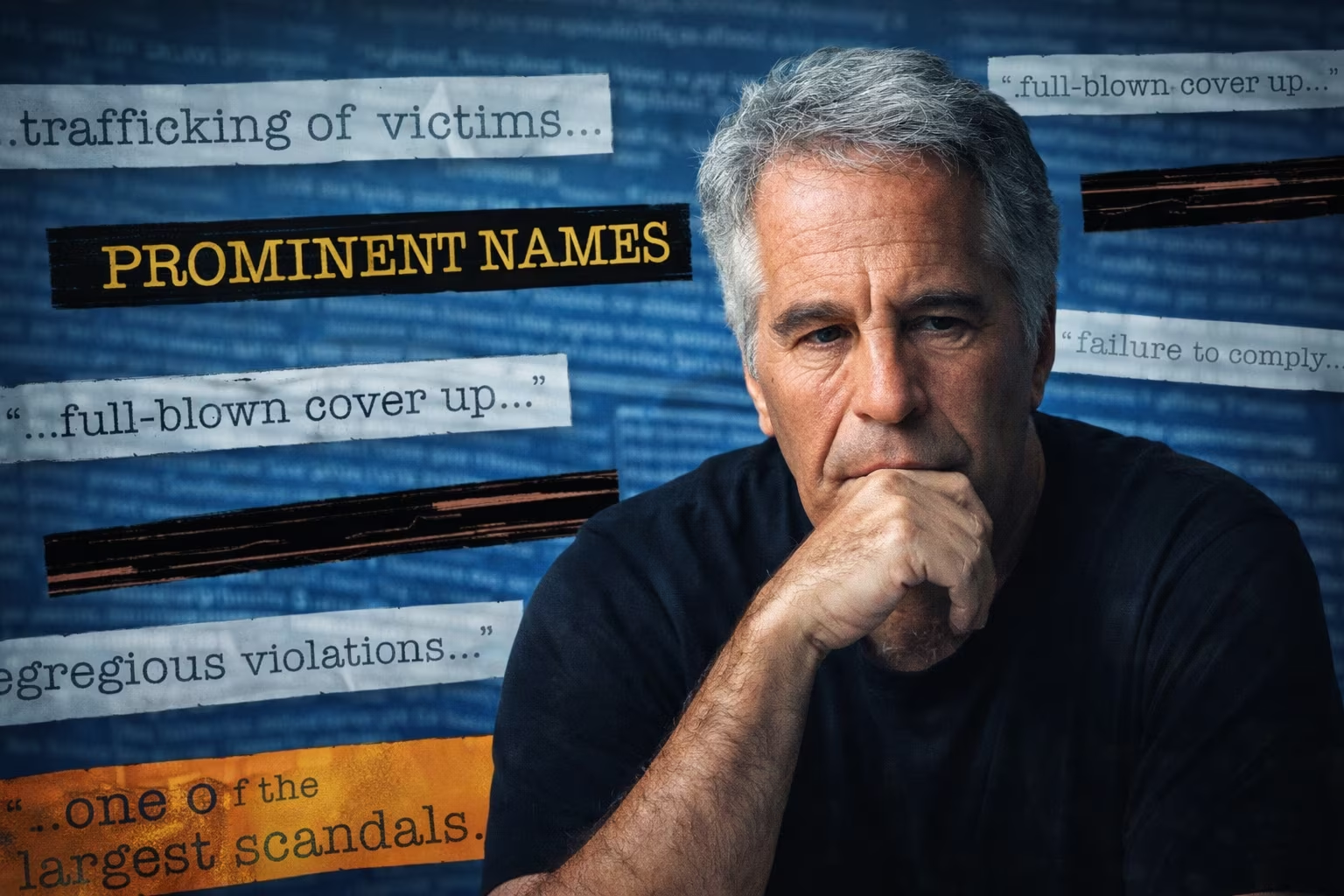
The internet has been flooded with conjecture, suspicion, and outright revulsion following the U.S. Department of Justice’s Friday release of millions of new pages of material in the Jeffrey Epstein case. Few believe the story is anywhere near its conclusion. The final document dump offered fresh, tantalizing hints of Epstein’s ties to elite figures, but delivered neither clarity nor a sense of closure on the core questions that have kept the scandal alive for years. In 2025, this trove of files slipped beyond the Trump administration’s control, and there is still no reason to think public interest will fade in 2026.
The new disclosures have widened the radius of reputational damage. Several figures linked to Epstein are already facing tangible professional and image-related consequences—among them the British political broker Peter Mandelson, Norway’s Crown Princess Mette-Marit, and the celebrity physician Peter Attia. Others, however, including Elon Musk and Commerce Secretary Howard Lutnick, have incurred little apparent cost, despite the release of correspondence that undermines their earlier denials of contact with Epstein after his 2008 conviction for sexual offenses. Supporters of both parties continue to weaponize the case for political ends, accusing President Trump and former President Clinton of crimes for which the published materials offer no substantiated evidence.
The authorities’ declaration of closure has only deepened the rift between the state and the public. The Department of Justice framed the mass release as the conclusion of its review of the Epstein case and gave no indication that further charges were forthcoming—a position unchanged since July of last year. That display of finality was met with a wave of criticism: Democrats accuse the department of withholding up to 50% of the documents after missing the statutory deadline of December 19. Victims voiced outrage that the files, they say, reveal the names of at least 43 survivors and include dozens of unredacted nude images. At the same time, some critics argue that extensive redactions, far from being excessive, instead shield powerful figures from public scrutiny.
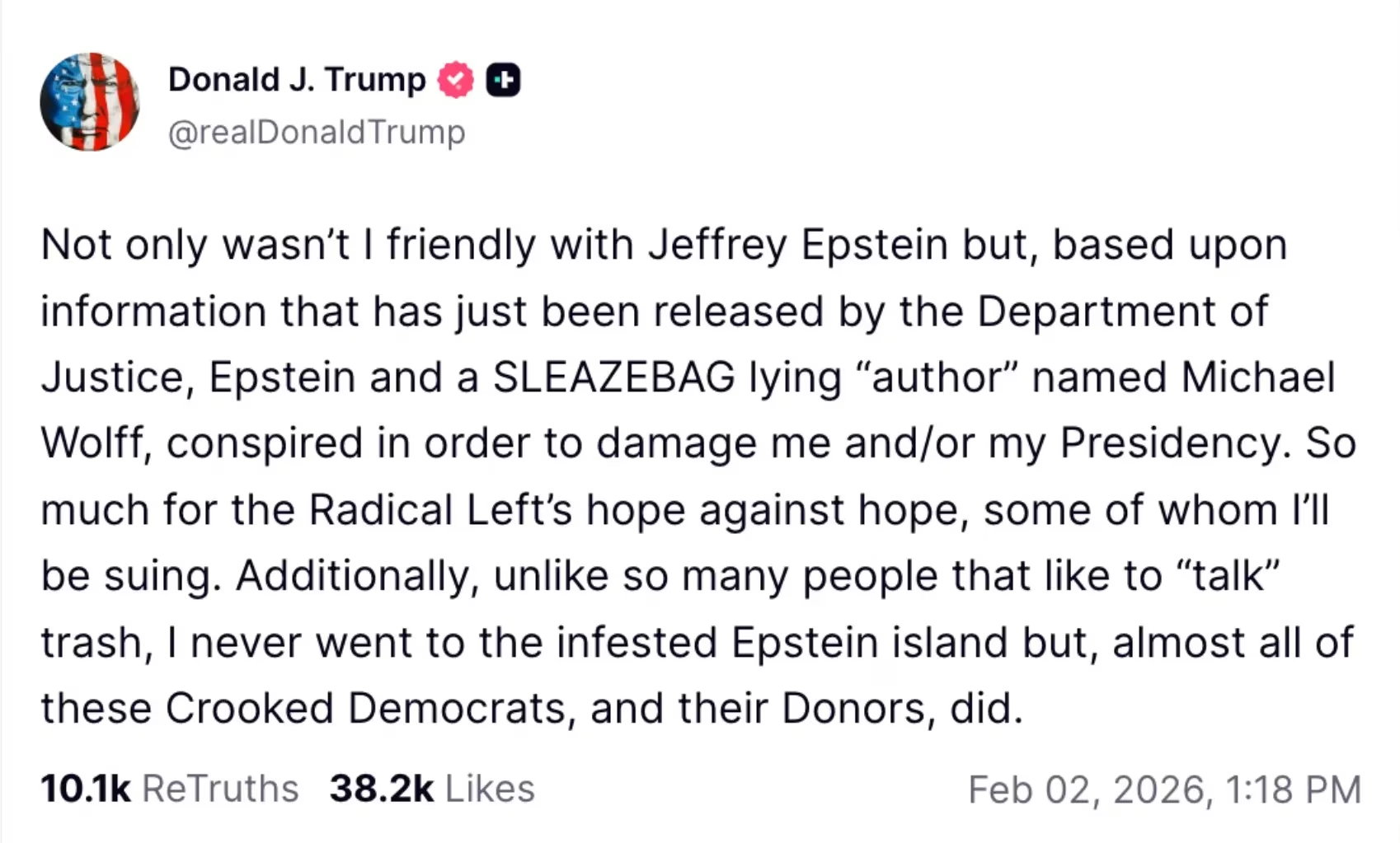
The sheer scale of the Epstein archive all but guarantees an endless stream of interpretations and conjecture. Millions of pages of emails, contact lists, calendars, and recordings will continue to generate fresh storylines and leads—for journalists and conspiracy theorists alike. The correspondence, for example, documents meetings between Epstein and the founder of 4chan around the same time the /pol/ section appeared on the site—the far-right forum where the QAnon movement later took shape. There is no direct evidence that Epstein influenced the platform, but the coincidence alone is already fueling new speculation. FBI source reports and internal emails also contain unverified claims and secondhand suspicions about possible links between Epstein and Mossad or other intelligence services—material that falls well short of proof, yet is more than sufficient to sustain further conjecture.
All of this is spreading in an environment ill-suited to nuance, context, and legal standards—one in which guilt by association has become the default response. The situation is further compounded by AI: fake emails, doctored screenshots, and generated images circulate alongside authentic documents, misleading even seasoned journalists. A telling example is the passing mention of filmmaker Mira Nair’s presence at a party at Ghislaine Maxwell’s home, which has sparked viral conspiracy theories and AI-generated images falsely linking her son, New York City Mayor Zohran Mamdani, to Epstein.
For many, the Epstein case has long since become a symbol of a broader conviction that powerful people play by different rules, and that the system is either unwilling or unable to hold them fully to account. Nowhere is this more evident than in what critics regard as the case’s original sin—the 2008 plea deal, which effectively foreclosed federal prosecution of Epstein’s alleged accomplices. The Trump administration’s delays in releasing the files, its refusal to clearly explain who benefited from the trafficking, and the absence of new cases have only deepened the deficit of trust in institutions.