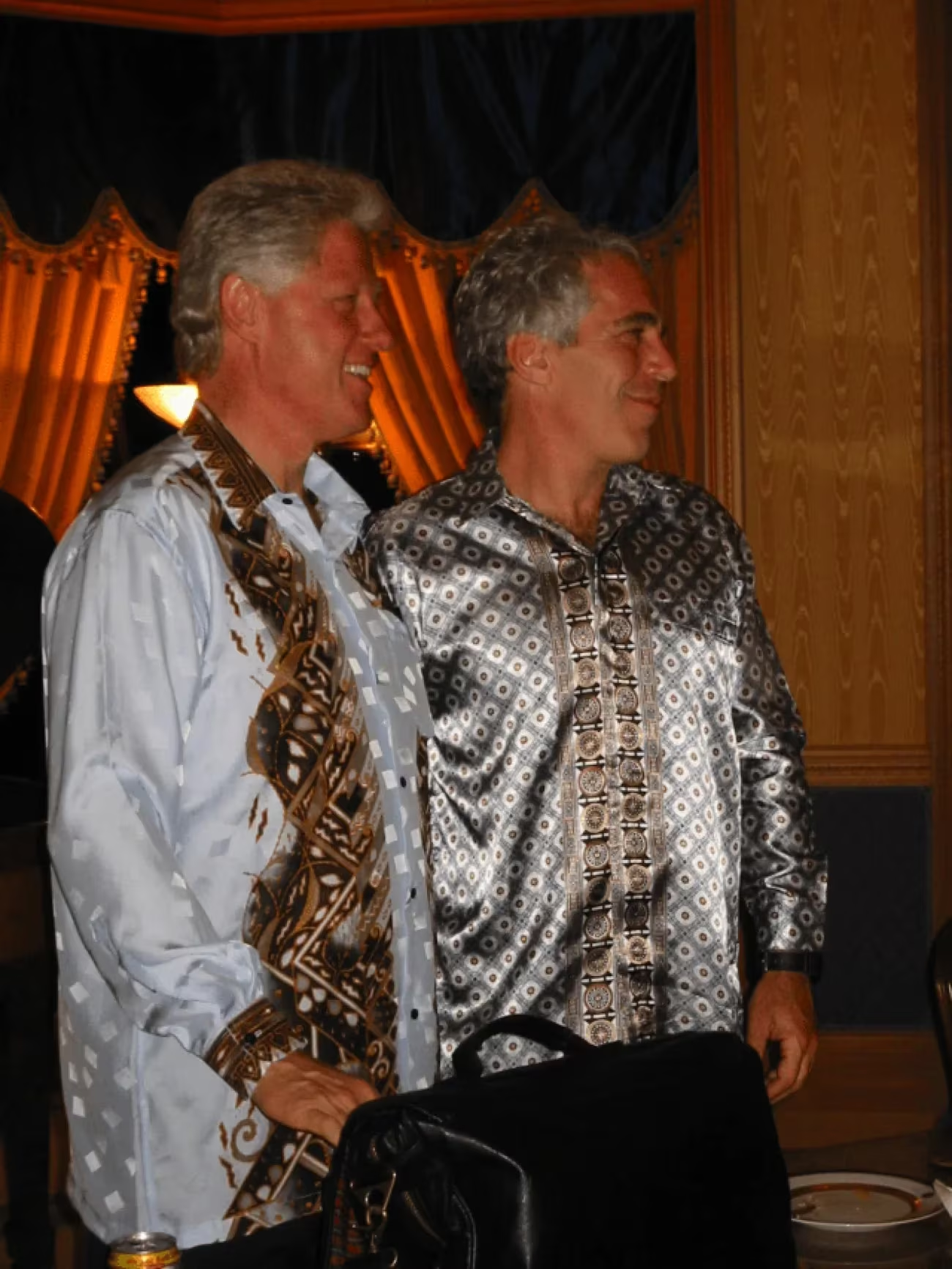
If, as critics contend, Donald Trump sought to use the release of the Epstein archive on Friday, December 20 to divert attention from his own ties to the late sex offender, that strategy may have worked. Following the disclosure of the documents, public attention shifted not to Trump, but to one of his long-standing ideological adversaries—Bill Clinton.
The former US president appears in numerous photographs linked to Jeffrey Epstein and his associate Ghislaine Maxwell, which the Department of Justice released on Friday in accordance with a law signed by Trump a month earlier.
Trump himself—whose friendship with Epstein in the 1990s and early 2000s was widely known and repeatedly covered by the press—had long pressed for these materials to remain classified. Later, however, his team appears to have identified political advantage in their release—an opportunity to strike at the reputation of a powerful Democrat.
Over the weekend, Trump’s supporters across the media and blogosphere swiftly amplified a line of guilt by association, focusing above all on images of Clinton that, in their view, underscored his proximity to Epstein.
The New York Post splashed the headline “Fat Bubba” across its front page, pairing it with a photograph showing Clinton relaxing in a hot tub alongside a woman whose face had been obscured. The subheadline declared: “Bill has a lot to explain.”

“It’s telling how Democrats falsely accused President Trump of pedophilia, only for the Trump Justice Department to release Epstein files showing Bill Clinton skinny-dipping with a pedophile in the pedophile’s own pool,” wrote far-right influencer Laura Loomer on X. “Maybe now the media will stop obsessing over these files.”
The White House press team, for its part, sought to lock in the desired framing. “We did, in fact, see something,” Trump spokeswoman Abigail Jackson wrote on X, accompanying the post with a photograph of Clinton in a hot tub. “Just not what you wanted.”
Aides to the former president said the release of the images was a diversionary tactic designed to shift attention away from Trump’s own ties to Epstein, who died in jail in 2019 while facing federal charges of sex trafficking minors.
“The White House did not keep these files hidden for months only to dump them late on a Friday night to protect Bill Clinton,” said Angel Ureña, Clinton’s deputy chief of staff. “This is about shielding themselves—from what will surface next, or from what they intend to conceal forever.”
The volume of material released underscored how the Epstein case has been transformed into a weapon in America’s ideological war: the left deploys the documents to discredit Trump, while the right uses them to attack his opponents. At the same time, the episode has sharpened accusations from Democrats and their allies that Trump is weaponizing the Department of Justice against political adversaries—an allegation the current president himself repeatedly leveled against the administration of Joe Biden.
In March, Trump’s personal criminal defense lawyer Todd Blanche was appointed deputy attorney general, and since then the Department of Justice has opened criminal cases against several of the president’s most prominent critics—most notably former FBI director James Comey.
Last month, Trump ordered a review of potential ties between Epstein and leading Democrats, including Clinton. Attorney General Pam Bondi subsequently instructed Jay Clayton, the US attorney for the Southern District of New York, to take charge of the inquiry.
The First Batch of Epstein Case Files Has Been Released—13,000 Documents. What Have We Learned?
Trump Discussed a 14-Year-Old Girl With the Financier, and the First Complaint Reached the FBI as Early as 1996—but the Bureau Took No Action
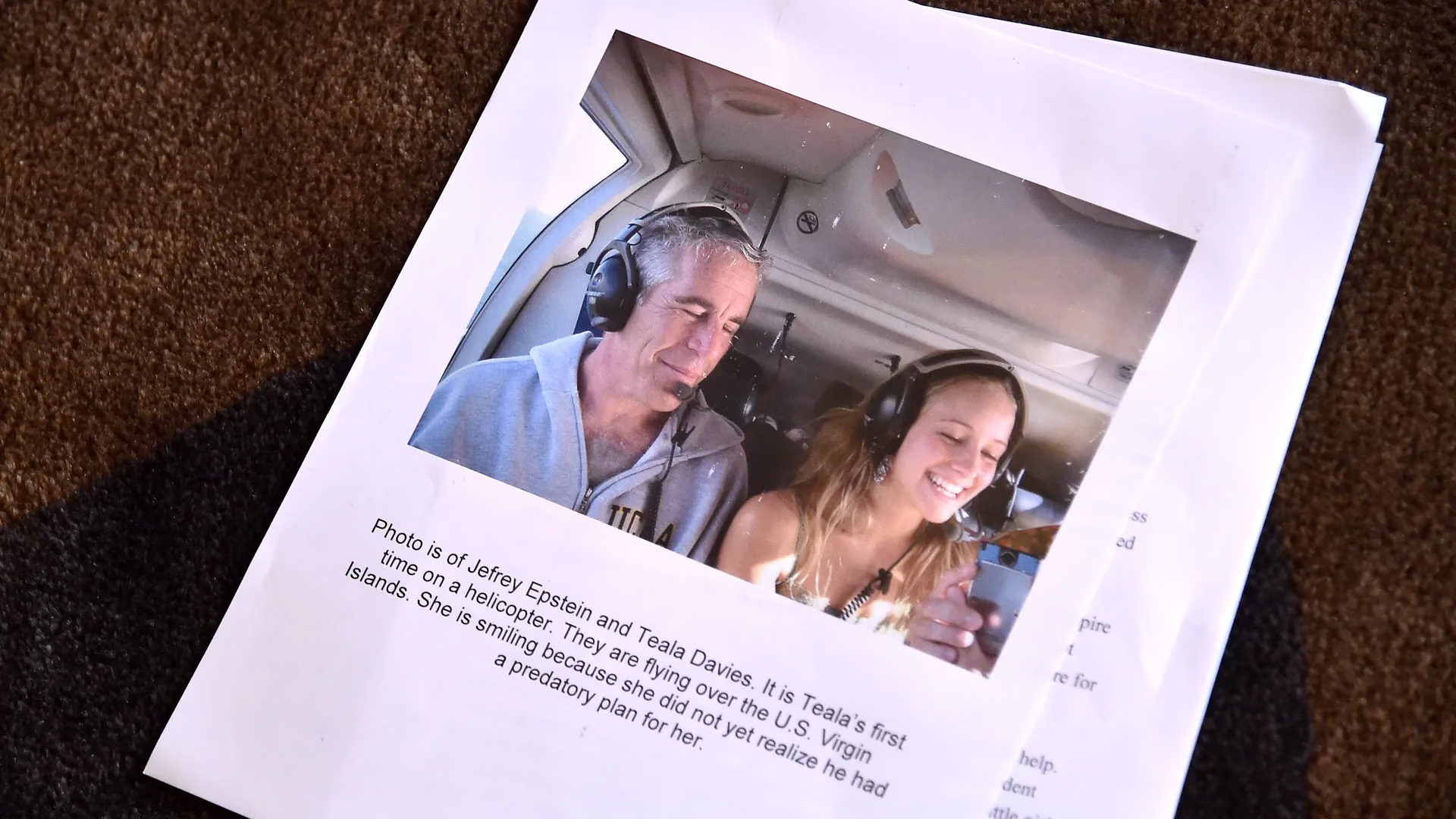
Trump and Epstein: Years of Acquaintance, Joint Parties, and Dozens of Documented Contacts
New Archives and Correspondence Undermine the President’s Attempts to Portray Their Relationship as Fleeting
Responding to the release of the files on Friday, Democrats paid little attention to the numerous photographs of Clinton, focusing instead on something else—the extensive redactions in the documents. Several files running to more than 100 pages were entirely blacked out. Further anger was fueled by the Justice Department’s failure to release the full trove of data. Under a law passed by Congress and signed by Trump a month earlier, Bondi was required within 30 days to publish all non-classified materials, correspondence, and investigative records related to the Epstein case. By the deadline, however, only part of the material had been made public.
Democratic senator from California Adam Schiff wrote on X that the attorney general should be summoned before the Senate Judiciary Committee to explain “this willful violation of the law.” “Trump’s Department of Justice had months to honor its promise and release all of the Epstein files,” he said. “Epstein’s victims and the American public are waiting for answers now.”
A further warning sign for the White House came from parts of the right, where skepticism also surfaced. Right-wing podcaster and former FBI agent Kyle Seraphin reposted a message from Bondi in which she praised Trump for leading “the most transparent administration in US history,” adding: “At this point, it’s starting to feel ironic.”
Clinton was not the only public figure to appear in the released materials. Other photographs feature Mick Jagger, Michael Jackson, Richard Branson, Prince Andrew Mountbatten-Windsor—the second son of Queen Elizabeth II—and the legendary broadcaster Walter Cronkite.
Still, Clinton is by far the most extensively represented. He is shown aboard an aircraft with his hand on Michael Jackson’s shoulder, as Diana Ross looks on; alongside Mick Jagger and an unidentified woman whose face has been blacked out; with actor Kevin Spacey; and in a swimming pool with Ghislaine Maxwell. There is also an image of Clinton seated on a plane, embracing a woman in a white tank top whose face is likewise obscured.
These images, widely circulated across conservative news sites—including Fox News—do not, in themselves, constitute evidence of wrongdoing. Nevertheless, Trump’s supporters seized on them to bolster claims of Democratic hypocrisy.
“This Epstein file dump is utterly damning for Bill Clinton. He’s all over these materials,” conservative commentator Benny Johnson wrote on X.
In response, Ureña stressed that there are two categories of people in the Epstein saga—those who “knew nothing and severed ties with him before his crimes became known,” and those who “continued to maintain contact afterward.” Clinton, he said, belongs to the first group.
“No amount of stalling by people in the second group will change that,” he added. “Everyone—especially MAGA—wants answers, not scapegoats.”