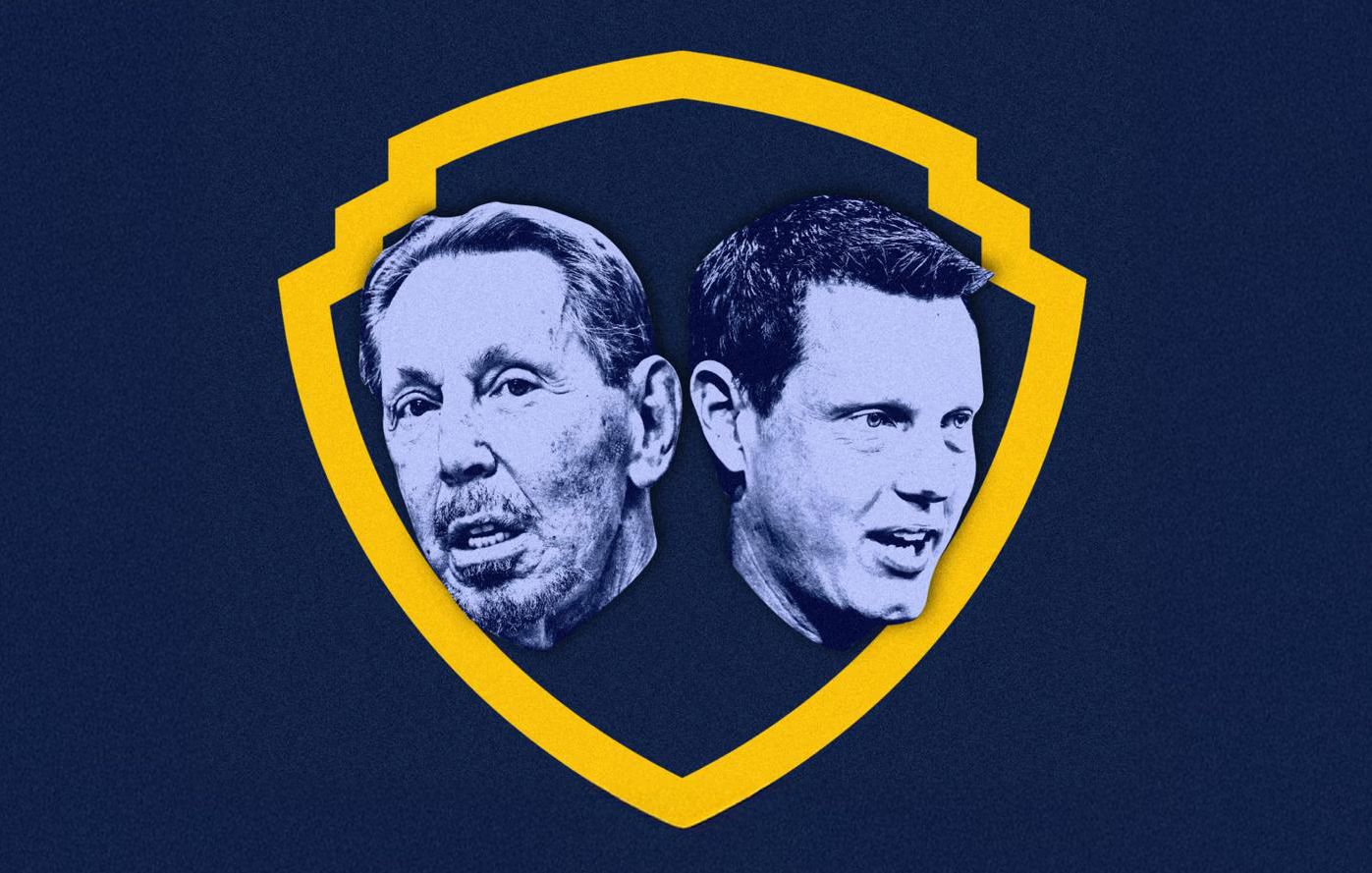
Sensing that a chance to clinch a major deal was slipping away, Paramount chief David Ellison made a last-ditch effort on Thursday afternoon to persuade his counterpart at Warner Bros Discovery, David Zaslav. In a private message, he wrote: “David, I know you’re having a tough day, so I wanted to send a quick note. Despite all the noise over the past 24 hours, I feel nothing but respect and admiration for you and the company. It would be an enormous honor for me to become your partner and the owner of these iconic assets. If we are given the privilege of working together, you’ll see that my father and I are exactly the people you had dinner with.”
But by then the outcome was already set. Just a few hours later, the WBD board voted unanimously to back a rival bid from Netflix to acquire its streaming and studio business—the core of its Hollywood holdings, including Warner Bros and HBO.
The decision, taken early Friday morning, sent a genuine shock through the industry. In the final hours before the vote, Ellison gathered his closest partners and advisers to begin work on a plan B—the launch of one of the most audacious hostile bids in modern corporate history.
In just a few weeks, the fate of one of Hollywood’s storied studios was sealed in an unusually swift and high-velocity process, the details of which emerged from documents released on Monday after Paramount announced its 108 billion-dollar hostile offer for WBD.
The filings showed that the financing structure proposed by Ellison had become the central sticking point: Paramount, with a market capitalization of roughly 12 billion dollars, was attempting to acquire a far larger group.
As the documents show, WBD repeatedly raised concerns about the involvement of investors from outside the United States and the complexity of the combined financing sources. WBD also warned Paramount that the presence of Middle Eastern capital could trigger scrutiny from national-security authorities.
Ellison’s bid was backed by his father, Larry, the Oracle co-founder and one of the wealthiest individuals in the world.
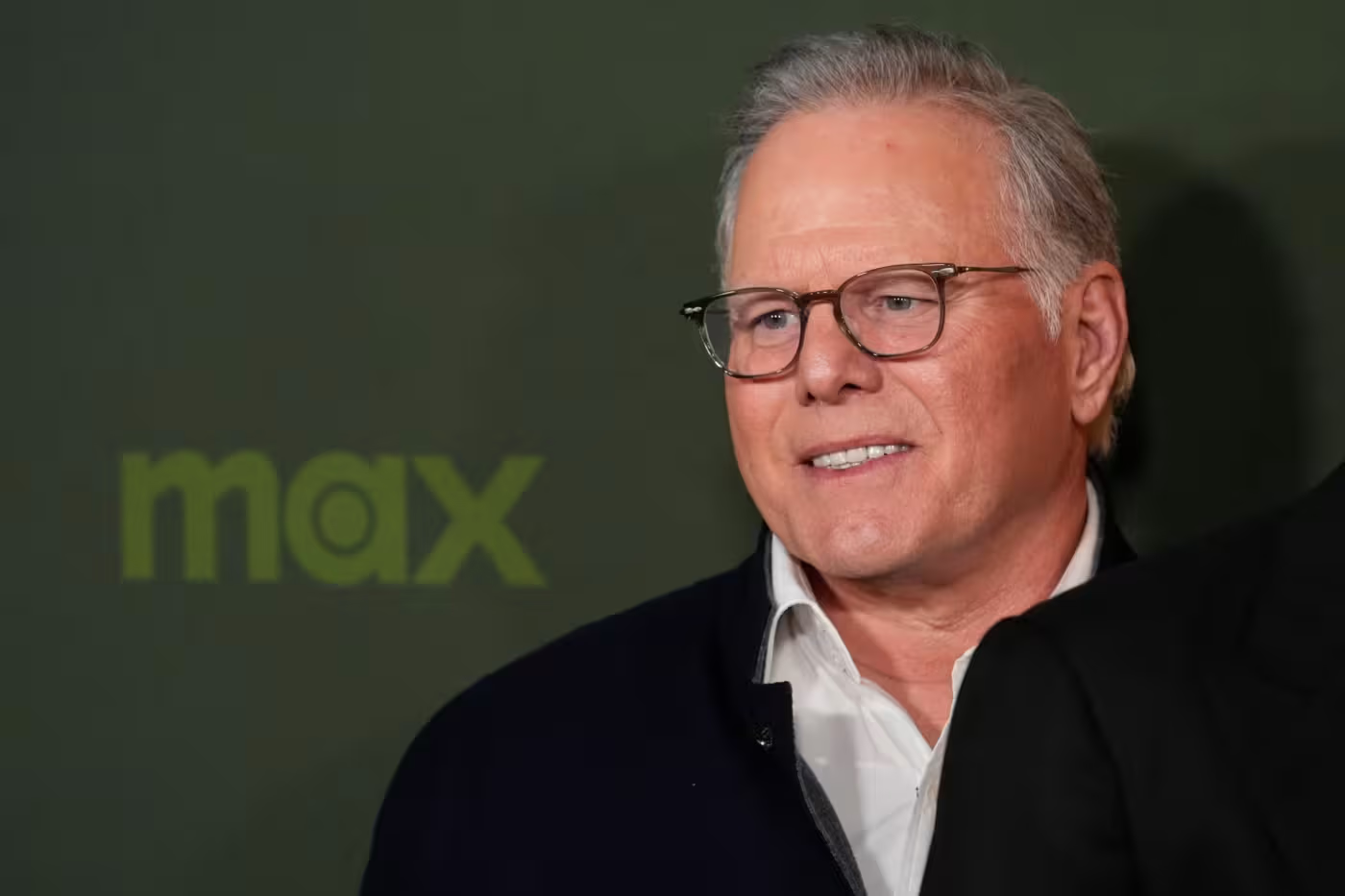
Yet the Ellison family was set to contribute only 12 billion of the 41 billion dollars in equity earmarked for the transaction. Roughly 24 billion dollars was expected to come from Middle Eastern sovereign funds, with the remainder supplied by the U.S. private investment groups RedBird and Affinity Partners, the latter run by former president Donald Trump’s son-in-law, Jared Kushner. An additional 54 billion dollars in debt financing had been lined up from Bank of America, Citigroup and Apollo.
According to Paramount, the company had spent months negotiating with WBD, raising its offers and resorting to personal appeals, including private dinners, only to run into a wall. People familiar with the discussions say Paramount’s leadership felt they were simply being strung along.
“Paramount was gaslit from start to finish,” said a person close to the company. “Whatever answers Paramount provided, Warner invariably found a new reason to say it wasn’t enough—until, at a certain point, they simply stopped responding.”
WBD, in turn, said: “Over the course of several months, the board and the company ran a fully honest and transparent process with all bidders, and the proposals speak for themselves.”
Over 12 weeks, Paramount submitted six offers to the WBD board. The first meetings between the Ellisons and Zaslav took place at his Hollywood home, once owned by legendary Paramount executive Robert Evans, but soon turned into tense bidding rounds that ultimately ended with Netflix winning the deal.
During the talks, Paramount managed to bring in—and then walk away from—financing from China’s Tencent, while also securing commitments from three Middle Eastern sovereign funds and an entity linked to Trump’s son-in-law.
Filings with the Securities and Exchange Commission indicate that bidding for WBD began at 19 dollars per share. Ellison, who had acquired Paramount only in August through his company Skydance, personally delivered that opening offer to Zaslav on September 14 at his Beverly Hills home.
Shortly afterward, Larry Ellison, Zaslav and John Malone, WBD’s honorary chairman and a seasoned negotiator, met to discuss a possible deal.
For two years, Paramount and WBD executives and advisers had periodically explored the possibility of a merger, but fruitless talks led nowhere. Under the Ellison family’s leadership, however, Paramount suddenly had both the financial means—and the resolve—to try to see the deal through.
Paramount’s initial offers were rejected, and the WBD board began weighing the idea of splitting the company into two parts. New bids followed—22 dollars per share, then 23.5—with a proposal for Zaslav to become co–chief executive and co–chair of the merged entity’s board.
But Paramount’s offers prompted Zaslav to open the process to rivals. Netflix moved quickly to seize the opportunity, and Comcast also joined the bidding. The accelerated sale process was structured to ensure a deal could be completed before Christmas.
Netflix Buys Warner Bros Discovery’s Studios and Streaming Service for $83 Billion
The Deal Makes the Company the Largest Player in Hollywood
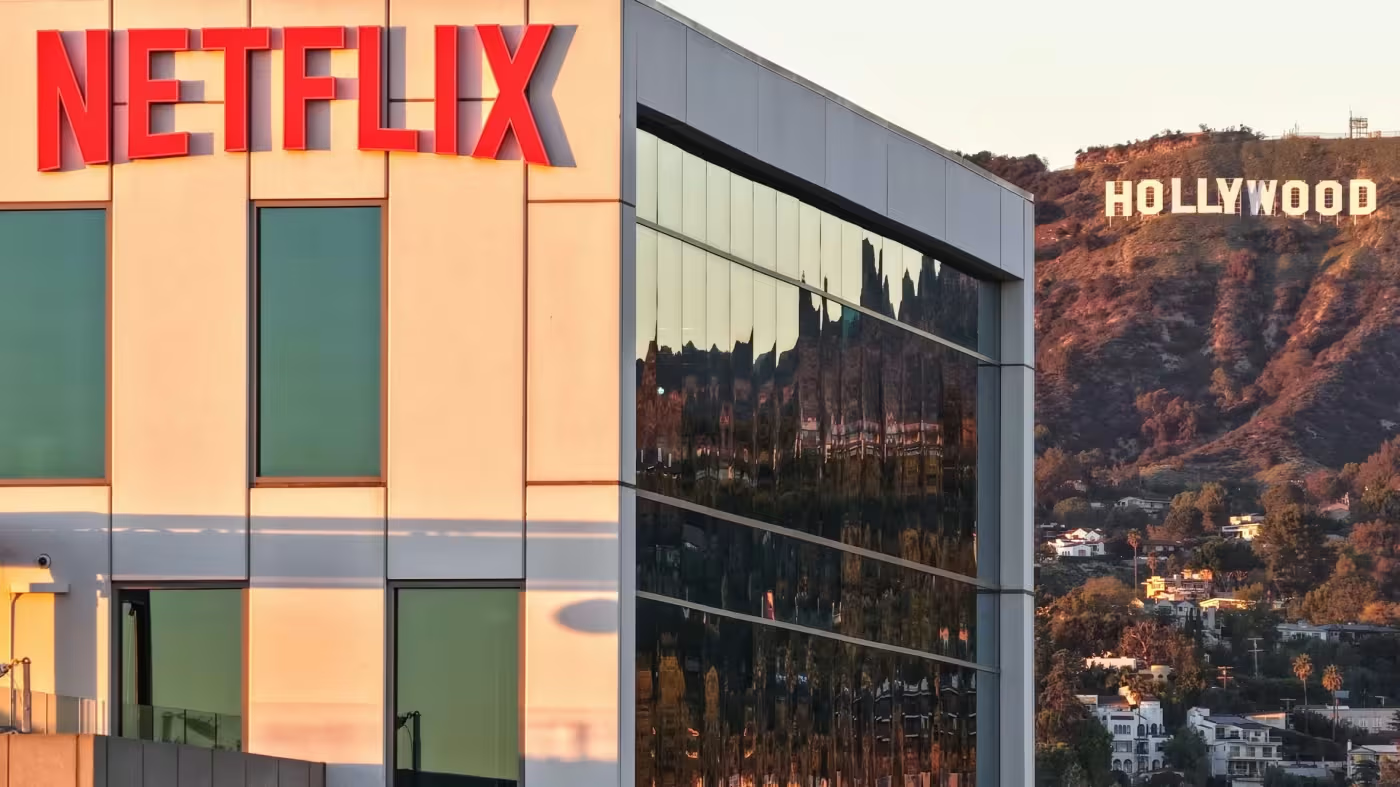
Hollywood Is Troubled by the Consequences of Netflix’s Purchase of Warner Bros
Unions and Theaters Fear Layoffs and a Shrinking Market for Content Buyers
The decisive factor for WBD was confidence that the transaction would actually close. People close to the company acknowledged that price was not the only criterion: the board believed Netflix’s bid offered a more reliable path to completion.
On Friday, one person familiar with the negotiations told the Financial Times: “The board’s priority—more important than valuation itself—was to choose a bidder who could sign immediately, withstand regulatory scrutiny and close the deal on the required terms.”
Amid continuous consultations between the parties and their lawyers, Ellison kept betting on personal contact. On November 17, he met Zaslav for lunch and laid out his vision of a media group—one that could compete more effectively with the largest streaming platforms and big tech. A few days later, the offer was raised to 25.5 dollars per share.
The following week, Ellison met Zaslav again, this time over dinner, after which Paramount returned with a new bid—26.5 dollars per share in cash in early December. By then the financing package was fully assembled: 11.8 billion dollars from the Ellison family, twice that amount from three Gulf sovereign funds, 1 billion dollars from Tencent, and contributions from RedBird Capital Partners and Kushner’s Affinity Partners.
But the discussion did not end there. On December 3, Zaslav phoned Ellison to voice his concerns about the structure of Paramount’s equity financing. WBD relayed to Paramount’s advisers at Centerview that “cash is king.” The board also signaled discontent with Tencent’s involvement.
In addition, the WBD board was troubled by the involvement of Middle Eastern sovereign funds, fearing the deal would face extensive scrutiny from the Committee on Foreign Investment in the United States, which assesses potential national-security risks.
Paramount argued there was no such risk, stressing that the national funds of Saudi Arabia, Abu Dhabi and the UAE, as well as the entity linked to Kushner, had agreed to forgo any governance rights.
“Warner’s concerns about foreign-ownership thresholds, including the much-discussed 15 percent rule, were never viewed as genuine obstacles,” said a person familiar with the negotiations.
On December 4, Paramount believed it had delivered its final, decisive offer: an all-cash deal at 30 dollars per share, fully financed by the Ellison family and RedBird. Tencent was no longer part of the structure, though the Middle Eastern funds remained.
Ellison sent Zaslav another message: “Just tried calling about the new bid we submitted. I’ve heard all your concerns and believe we’ve addressed them in our updated proposal.”
In its final offer, Paramount said it was prepared to sign an agreement immediately, backed by fully committed debt and equity financing.
Yet, according to materials Paramount filed with the SEC, on that pivotal fourth day of December the WBD board “made no attempt to speak with Paramount or its representatives about anything at all.”
One of Paramount’s bankers, Blair Effron, a seasoned dealmaker and co-founder of Centerview Partners, reached out to his colleague and longtime friend Roger Altman of Evercore, which was advising WBD: “Roger, I know you’re incredibly busy. If you can’t call back, please keep this in mind: 1—we’ve sought to provide complete certainty, 2—we’ve offered a high cash valuation, 3—we’ve guaranteed a fast closing. And, more importantly, we did not include a ‘best and final’ provision in our proposal. Much thanks, b.”
The message was meant to signal that Paramount was willing to take any step necessary to beat the competing bid. But that same evening in New York, the board convened and voted in favor of Netflix’s offer.
Paramount has now shifted to a hostile course, appealing directly to WBD’s shareholders. The company is bracing for a fierce confrontation.
The outcome may ultimately be decided by a shareholder vote rather than an exchange of messages between Zaslav and Ellison.
“We’re here to see this through,” Ellison said on CNBC on Monday morning. “We’ve brought the company to market.”