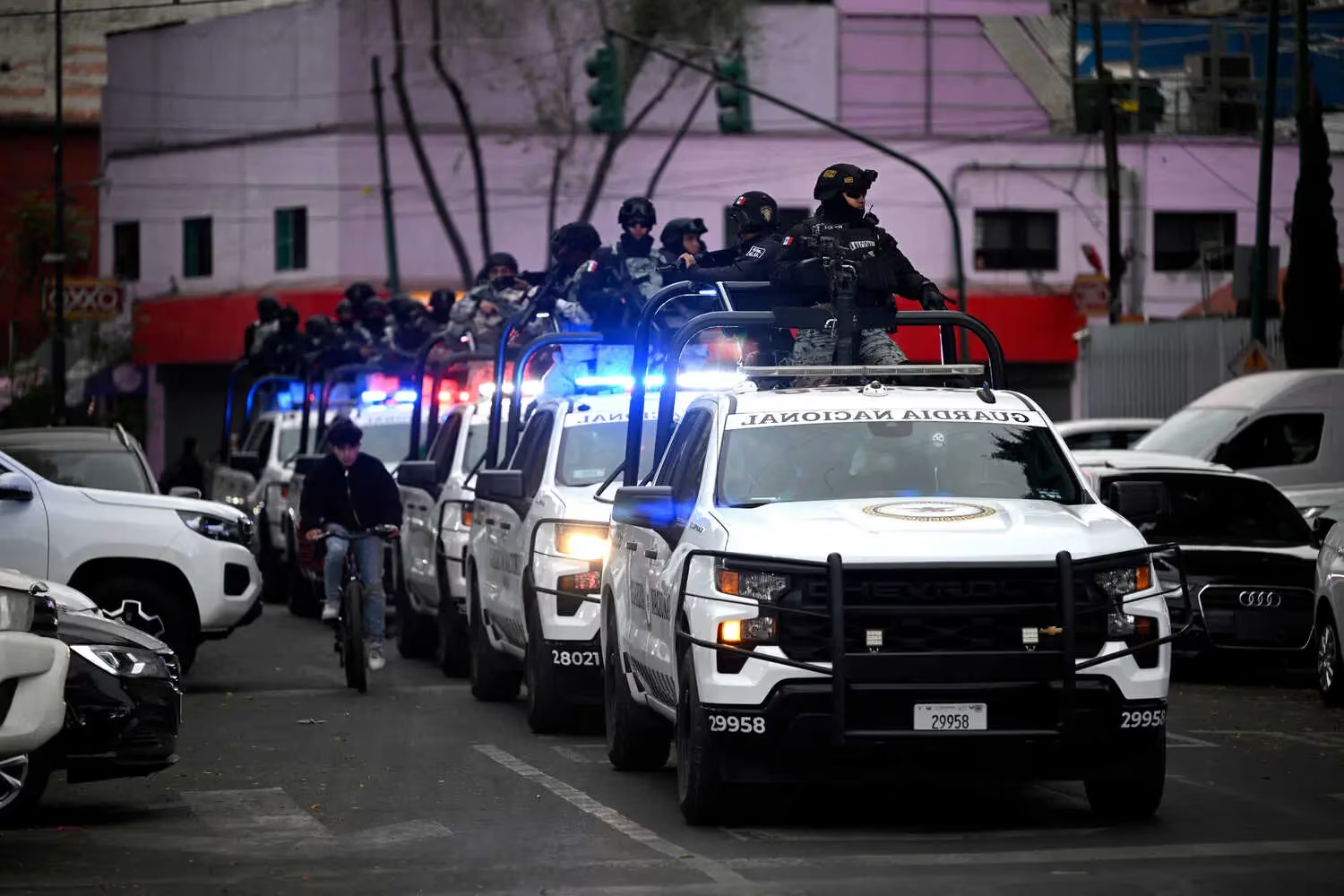
On February 22, Nemesio Oseguera Cervantes, 59, better known as El Mencho—the leader of the Jalisco New Generation Cartel, one of the country’s most powerful criminal organizations—was killed in Mexico. The drug lord died during an operation by Mexico’s military special forces in the city of Tapalpa, in the state of Jalisco, where a key base of his network was located. During the firefight, Oseguera Cervantes was wounded and died en route to hospital. His death triggered a wave of unrest across the country; nevertheless, for Mexican authorities the outcome still marked a significant success in the long-running fight against organized crime.
Who Is El Mencho
Nemesio Oseguera Cervantes grew up in a poor family in the state of Michoacan, neighboring Jalisco. He dropped out of school after the fifth grade and began working on a farm where his relatives grew avocados. In the 1980s, Oseguera Cervantes illegally moved to California, where he became involved in drug trafficking and was convicted—serving nearly three years in prison. After his release, he was deported to Mexico. Back home, he briefly served as a police officer, but soon crossed to the other side of the law, joining the influential Milenio Cartel in the 1990s. In 1996, El Mencho married Rosalinda Gonzalez Valencia, the niece of the cartel’s founder, who became not only his wife but also his business partner in the drug trade.
The Jalisco New Generation Cartel took shape between 2009 and 2011 from the remnants of the Milenio organization, which had previously been linked to the far more powerful Sinaloa group. At first, CJNG cooperated with former allies, but it soon shifted to open rivalry. Under El Mencho’s leadership, the cartel built cocaine and fentanyl supply routes to virtually every US state and expanded its operations to another 40 countries. Estimates put CJNG’s current strength at between 15,000 and 20,000 members. Beyond drug trafficking, the organization is involved in kidnappings, illegal mining, and migrant smuggling. The US Drug Enforcement Administration ranks CJNG alongside Sinaloa among Latin America’s largest cartels.
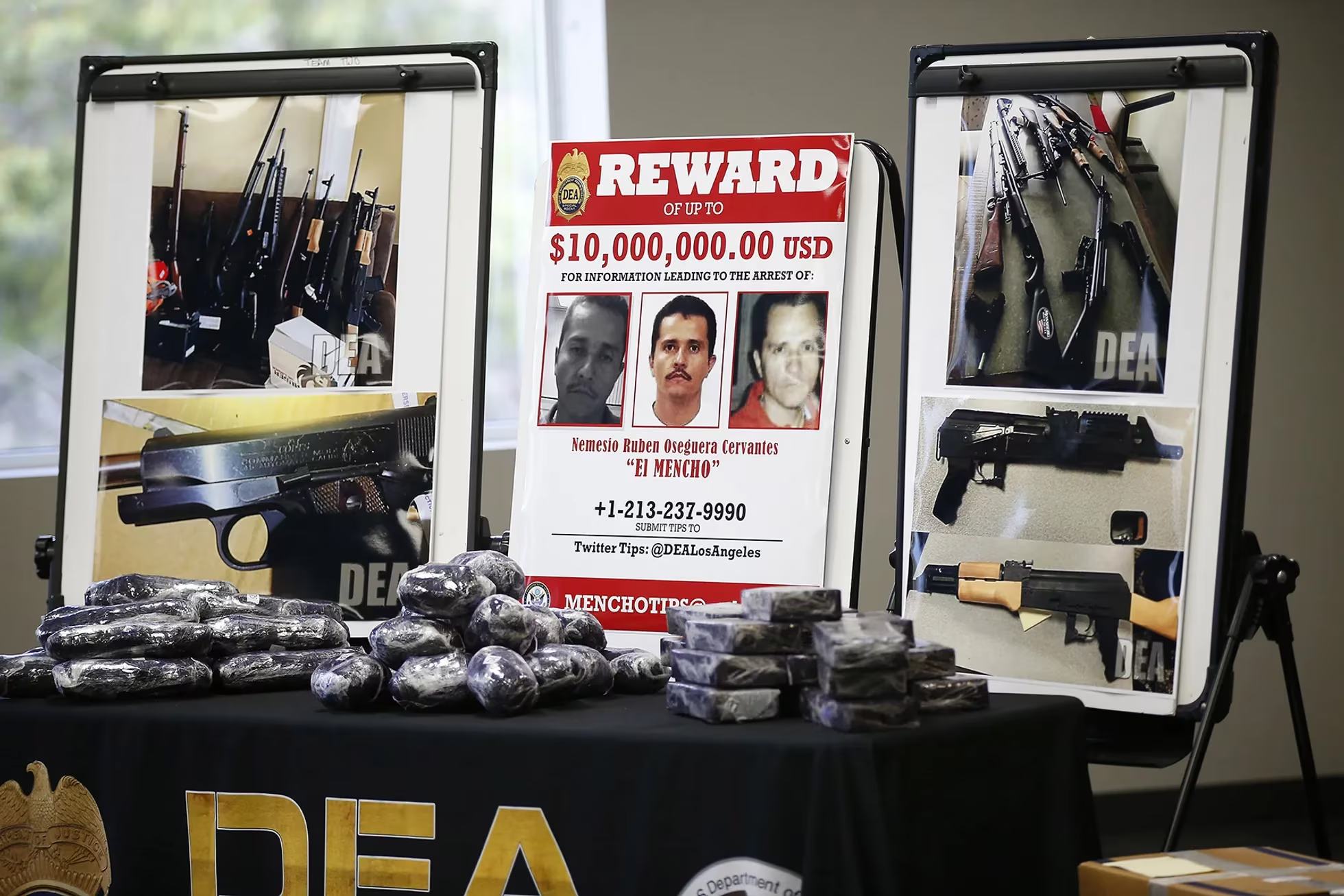
In 2024, the US Drug Enforcement Administration announced a $15 million reward for information leading to the capture of El Mencho.
For many years, El Mencho remained in the shadows, constantly changing locations and moving between the states of Michoacan and Jalisco under the protection of a large and heavily armed security detail. Mexican security forces made at least five attempts to detain him, yet each time the drug lord managed to evade arrest. The most notorious episode occurred in 2015, when cartel gunmen used a rocket launcher against a military helicopter. Eight servicemen were killed in the attack.
How The Cartel Responded To His Killing
El Mencho’s death triggered a wave of unrest across Mexico. For cartels, such reactions have become a familiar response to the arrest or killing of a leader—a show of force aimed both at the authorities and at rivals. CJNG gunmen carried out dozens of attacks on shops and bank branches, blocked roads in 20 states, set vehicles on fire, and clashed with police. In many cities, banks and retail outlets closed, public transport was suspended, and schools and universities canceled classes. For a time, the port of Manzanillo—the country’s largest on the Pacific coast—also halted operations.
The unrest hit Guadalajara—the capital of Jalisco state—particularly hard. One local resident said she had gone out for a walk with her husband and child, only to encounter a cartel checkpoint and see another family by the roadside with wounded members. Videos from Guadalajara’s airport also circulated on social media, showing passengers scrambling to take cover in panic amid fears of a possible militant attack.
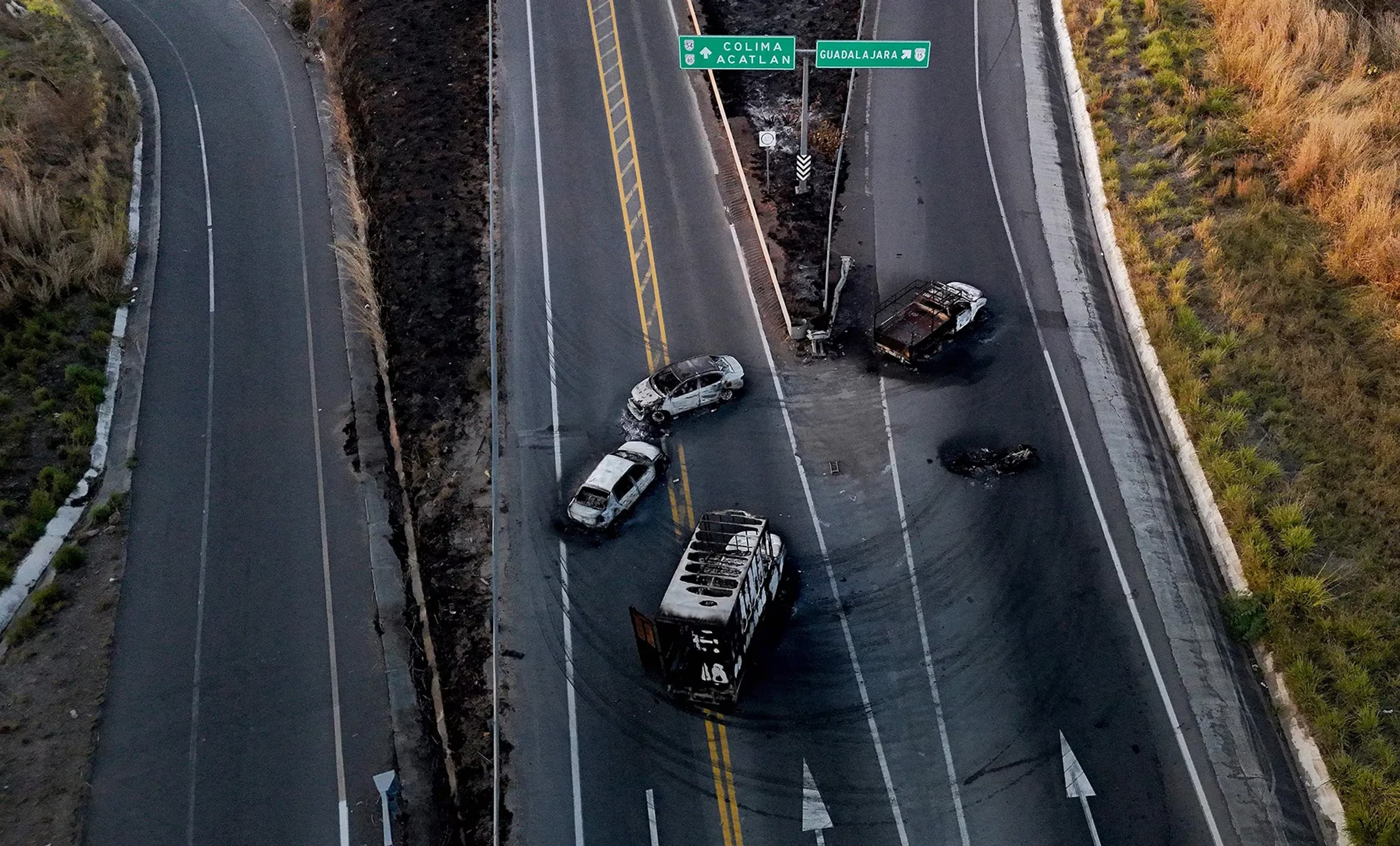
Burned-out vehicles on a highway in Mexico.
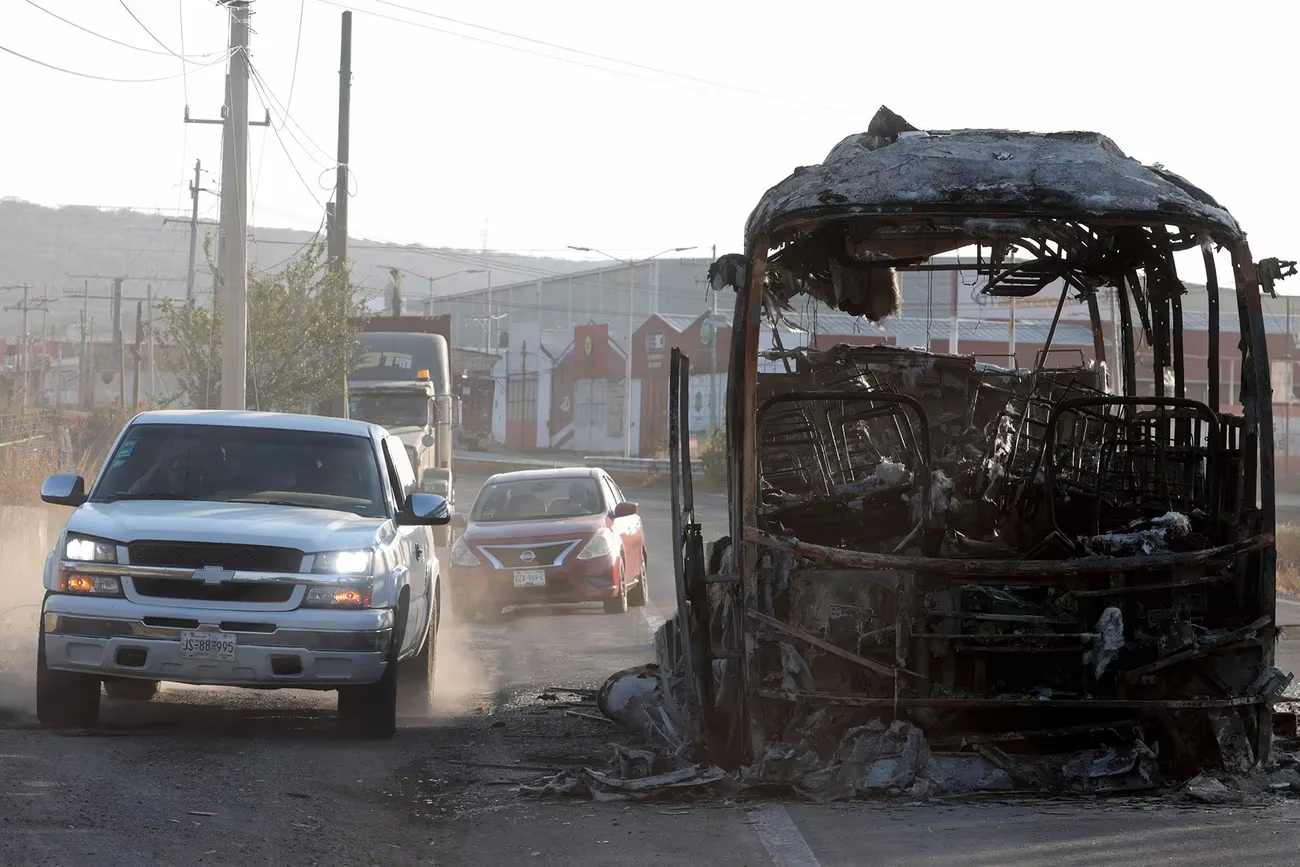
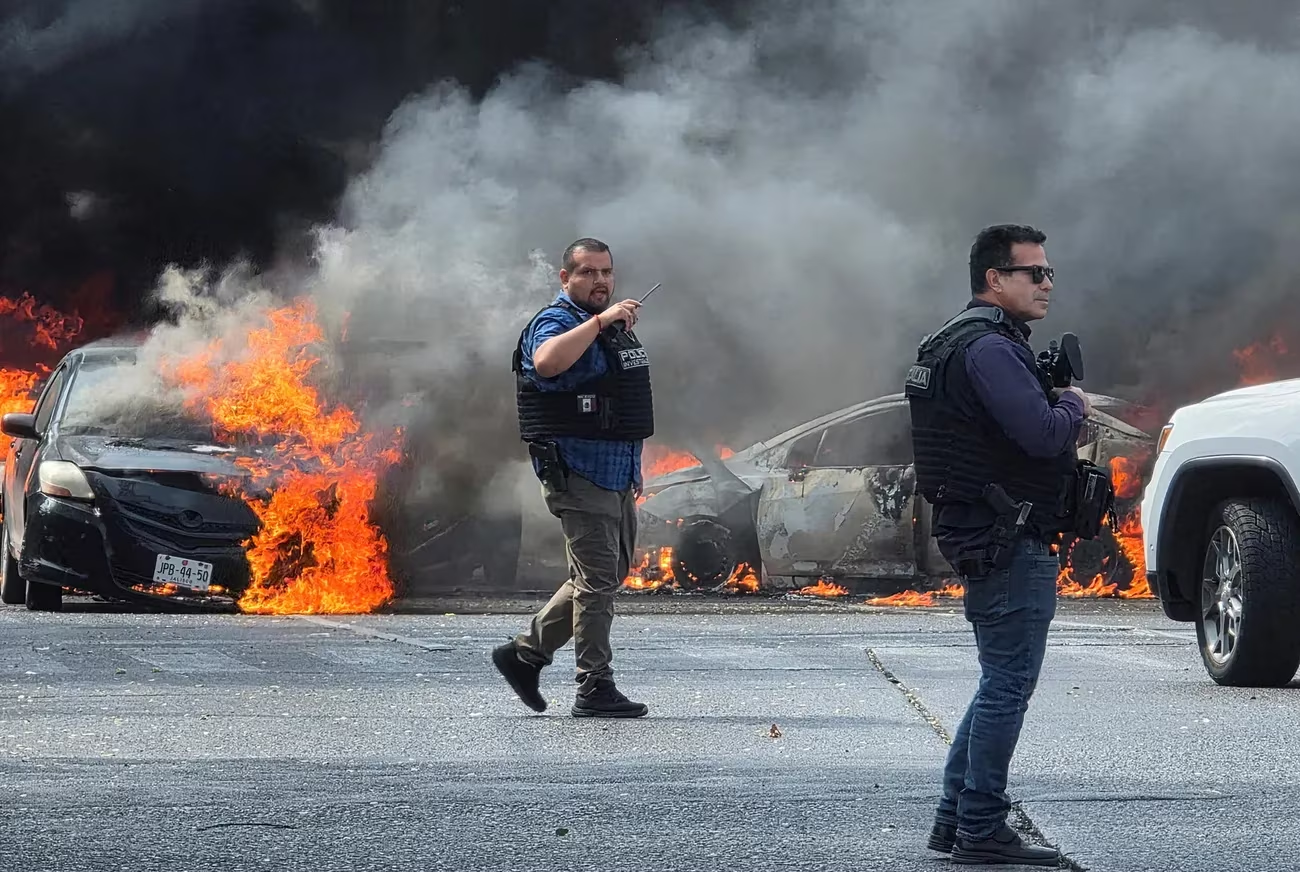
Police at the scene of one of the cartel attacks.
The wave of violence also reached some of the country’s key tourist hubs, including Cancun on the Caribbean coast and Puerto Vallarta on the Pacific. An American who lives permanently in Puerto Vallarta said he saw burned vehicles while driving home. Another local resident reported witnessing a group of armed men stop a bus, force the driver off, and set the vehicle on fire.
In just three states—Jalisco, Michoacan, and Guanajuato—11 people were killed during the unrest. Another 22 were detained.
Why The Killing Of El Mencho Is A Success For Mexico’s Authorities—And One That Could Improve Relations With The US
In Mexico City, El Mencho’s death is being described as a success for the authorities, who in recent years have intensified pressure on the cartels under persistent demands from the United States. Donald Trump repeatedly urged Mexico’s president, Claudia Sheinbaum, to allow US forces to conduct unilateral operations against drug cartels without Mexican participation, proposals she consistently rejected. According to officials in the capital, the operation against El Mencho was carried out by the Mexican army using intelligence provided by the United States. A source cited by The Washington Post уточнил, that the actions involved, among others, a joint US-Mexican task force.
Wanda Felbab-Brown, an analyst at the Brookings Institution in Washington, told The New York Times that in terms of its scale, the killing of El Mencho is comparable to the arrest of Sinaloa cartel leaders—Joaquin Guzman, known as El Chapo, in 2016, and his son and presumed successor, Ovidio Guzman Lopez, in 2023. Both are being held in US custody: El Chapo is already serving a life sentence, while his son is awaiting sentencing. The arrest of Ovidio Guzman Lopez, however, did not come easily—in 2019, Sinaloa gunmen forced his release, effectively laying siege to an entire city.
The unrest that erupted after El Mencho’s death closely echoes those events. According to Felbab-Brown, its duration will largely depend on whether CJNG’s leadership can swiftly identify a successor capable of preserving the organization’s cohesion. If not, the power vacuum left by El Mencho’s death could trigger a split within the cartel and a new cycle of internal violence.
El Mencho’s death does not mean the collapse of CJNG, but it will seriously weaken its operations for a time, a source in US law enforcement told The Washington Post. “For how long? No one knows,” he added.