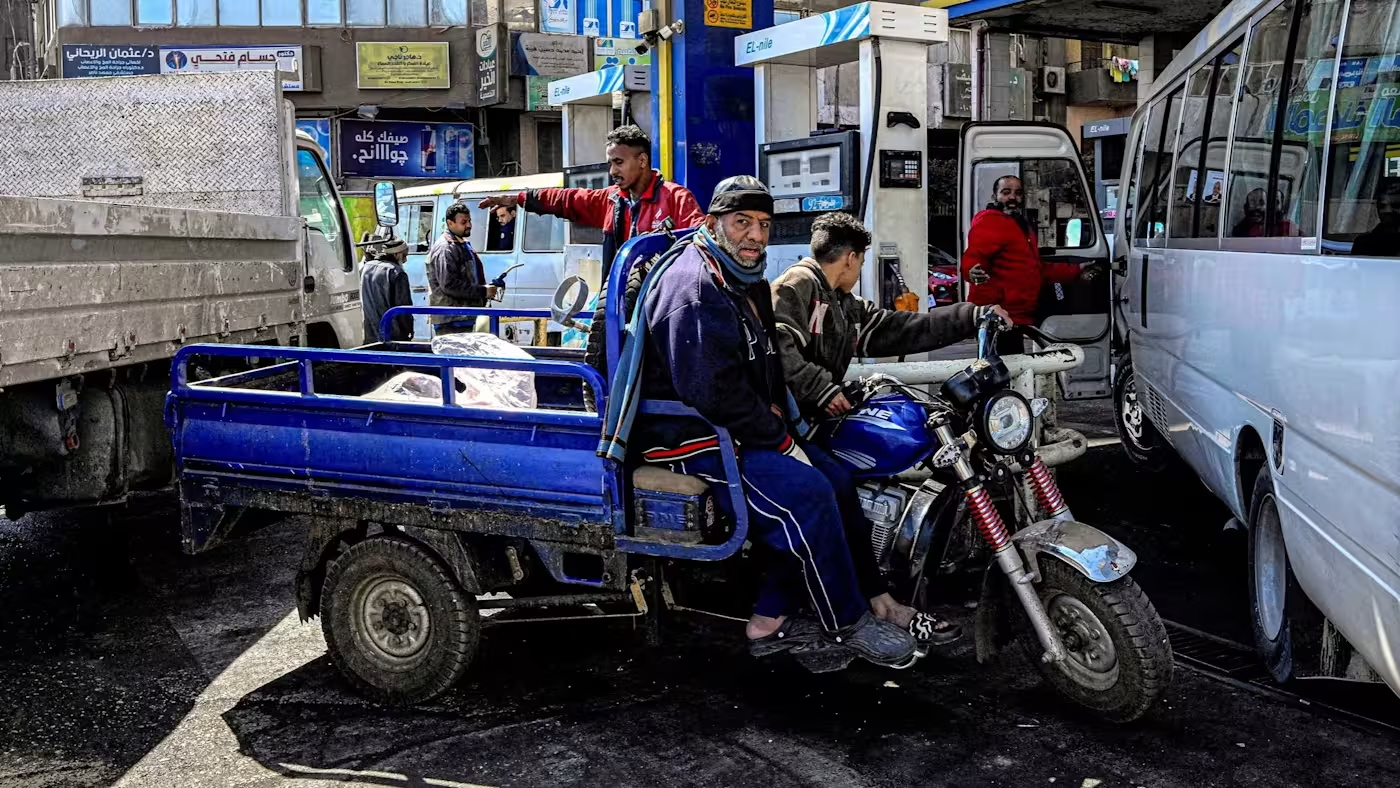
Egypt is introducing energy-saving measures—cutting street lighting and requiring shops and cafes to close earlier—as fuel prices rise amid the US and Israeli war against Iran.
In Cairo—a city long known for never sleeping—most retailers and venues have been ordered to close at 9:00 PM five days a week starting Saturday. Illuminated billboards are being switched off, government offices are ending the workday earlier than usual, and some infrastructure projects with heavy diesel consumption are being postponed.
Prime Minister Mostafa Madbouly said the country’s monthly bill for natural gas imports had tripled—from $560 million to $1.65 billion. The authorities are also considering allowing some employees to work remotely one or two days a week.
“There is no clarity whatsoever about how long this war will last—and that is the main problem,” he said.
As prices rise and fuel shortages deepen because Iran—in response to US and Israeli strikes—has largely choked off the strategically vital Strait of Hormuz, a number of oil and gas-importing countries across Africa and Asia have also begun to curb energy consumption.
Egypt, which is involved in mediation efforts to end the war alongside Pakistan and Turkey, remains highly vulnerable to external shocks because it depends heavily on imports of both food and natural gas, economists note.
Despite having gas resources of its own, a decline in domestic production in recent years, combined with rising demand, has forced the country to increase purchases of liquefied natural gas, including from the United States and Qatar. Egypt also receives gas by pipeline from Israel—last year, the two sides signed a new $35 billion contract running through 2040.
The current turmoil has dealt a double blow to an already fragile financial system. Beyond the rise in gas prices, foreign portfolio investors have pulled about $8 billion out of the government debt market.
The capital flight has weakened the Egyptian pound, which has fallen by roughly 10% against the dollar—from 47 pounds to 52 pounds per dollar—hitting a record low.
This raises the risk of another inflationary surge and adds to the pressure on millions of Egyptians whose incomes have failed to keep pace with repeated devaluations and years of rising prices.
At the same time, economists argue that the impact on the heavily indebted economy will be partly cushioned by reforms carried out over the past two years under an IMF program that followed a $57 billion support package led by the United Arab Emirates.
IMF spokesperson Julie Kozack said the exchange-rate flexibility introduced in 2024 had acted as a “shock absorber,” helping preserve reserves and foreign-currency holdings after the war began.
Farouk Soussa, Goldman Sachs’s senior economist for the Middle East and North Africa, described Egypt’s commitment to a flexible exchange rate as “unexpected and extremely positive.”
“It sends a signal that the authorities intend to prioritize preserving foreign-exchange reserves and ensuring the availability of currency liquidity at home, so that people have no incentive to rush into buying dollars on the black market,” he said.
The government has also raised subsidized fuel prices by 12% to 22% in an effort to ease pressure on the budget.
After Russia’s full-scale invasion of Ukraine in February 2022, Egypt had already gone through a currency crisis—investors pulled out about $23 billion, draining banks of dollar liquidity. This time, analysts believe a repeat of that scenario can be avoided because of the pound’s depreciation.
Even in an adverse scenario, the country’s foreign-exchange reserves are sufficient to cover Egypt’s 2026 external financing gap of $6.5 billion, Soussa argues. Tourism revenues—a key source of hard currency—are expected to remain at about $20 billion a year. Tourist areas have been exempted from energy-consumption restrictions, along with pharmacies and supermarkets.
Moataz Sedky, general manager of Travco Holidays, whose company operates dozens of hotels and Nile cruise vessels, said the industry had so far faced only minimal disruption.
“We are operating as normal—Red Sea destinations and the traditional cultural circuit remain resilient,” he said. “That said, we are seeing clear caution in new bookings, particularly for medium and long-haul travel: clients and tour operators are postponing final decisions while waiting for greater clarity on security and the stability of air connections.”