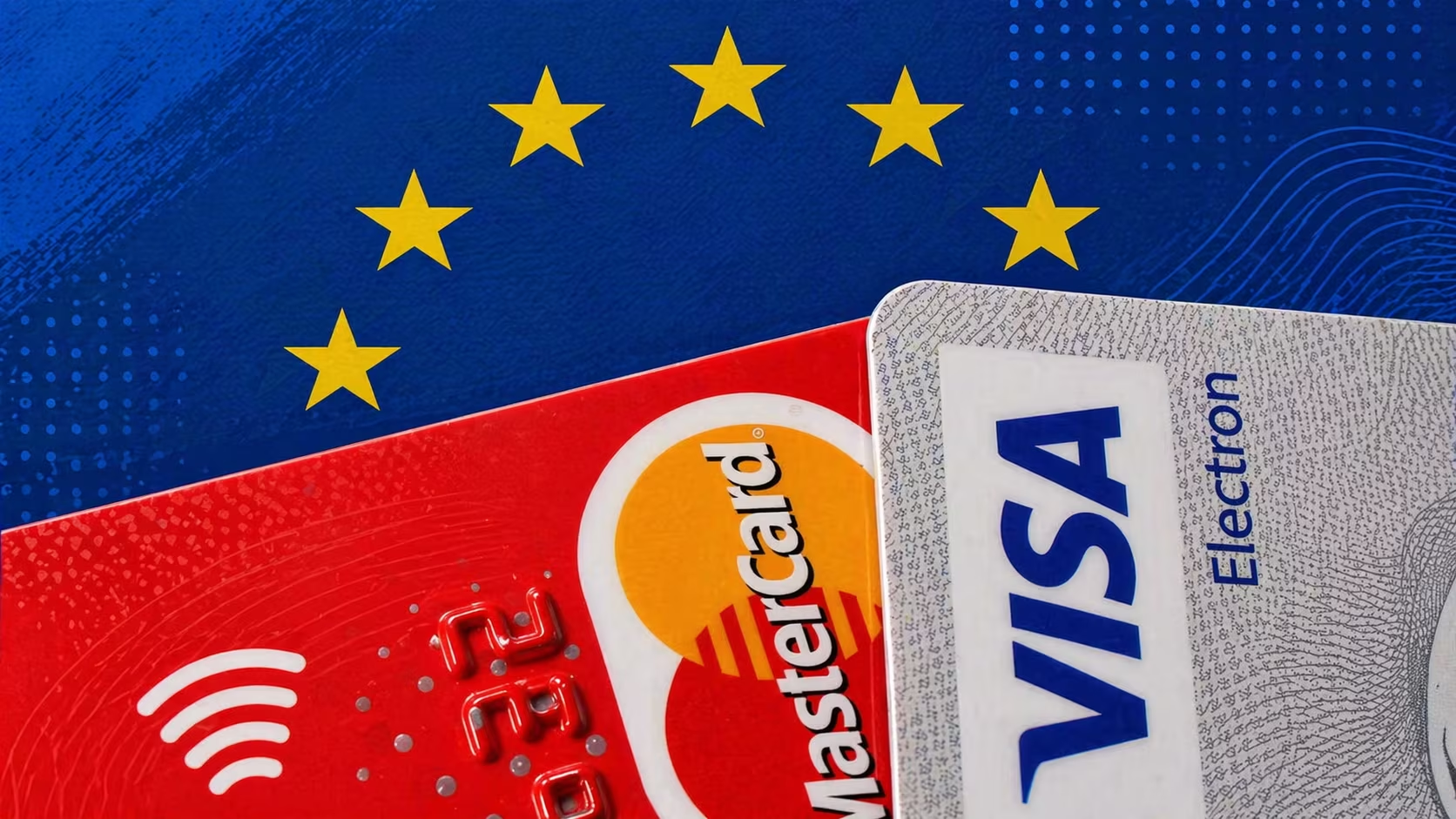
The European Central Bank is stepping up pressure on American payment systems such as Visa and Mastercard by agreeing on technological rules meant to lay the groundwork for the introduction of a digital euro.
The regulator has reached agreements with three European organizations, setting standards that will ensure compatibility between bank cards and payment terminals across the European Union once the new currency is launched. That means any card will be able to work with any payment-acceptance device within the bloc.
The ECB aims to introduce a digital form of the euro, to be used alongside cash and granted legal-tender status, by 2029. One of the project’s goals is to reduce the dominance of American companies in digital payments.
At present, about two-thirds of card transactions in the eurozone are processed by international systems largely controlled by the United States, while many EU countries lack domestic alternatives of their own.
If the digital euro is granted official status, private payment operators will be required to implement ECB-approved standards in terminals and other infrastructure, which is meant to ensure its broad use across the eurozone’s 21 countries.
The new rules are intended to compete with existing standards developed by a group of American companies, including Visa and Mastercard, whose systems involve fees. The European alternative is expected to be free for users.
The decision marks an important step toward the launch of the digital euro, but the necessary legislation is still under discussion, with a key vote in the European Parliament expected this summer.
ECB Executive Board member Piero Cipollone said: “The digital euro’s open standards will offer a European free-of-charge alternative to existing proprietary solutions,” stressing that the new system will be compatible with European standards already in place and available to the private sector as well.
At present, card-payment standards in Europe are largely set by EMVCo, a California-based consortium controlled by six international schemes—American Express, Discover, JCB, Mastercard, UnionPay, and Visa. As an alternative, European regulators have chosen solutions developed by the European Card Payment Cooperation, nexo standards, and the Berlin Group.
According to the ECB, these are “open technical standards” already in use in several countries. In particular, Germany’s Girocard system and France’s Carte Bancaire are already moving to ECPC protocols.
Despite support for the initiative from the European Commission and EU governments, the project is facing serious controversy in the European Parliament, whose approval is essential for it to move forward.
Skepticism is also being voiced by Europe’s largest banks and payment companies, which believe the digital euro would bring limited benefits and could undermine private initiatives such as Wero, which is likewise aimed at competing with Visa and Mastercard.
If the legislative framework is approved this summer, the document will move into negotiations with EU member states, with a final agreement expected by the end of this year or in early 2027.