Immediately after announcing plans to purchase billions of dollars’ worth of American weaponry, Taiwan’s president, Lai Ching-te, last week dined in Taipei with the head of the US diplomatic mission and raised a toast to “friendship, cooperation, and a stronger, more prosperous world” between the United States and Taiwan.
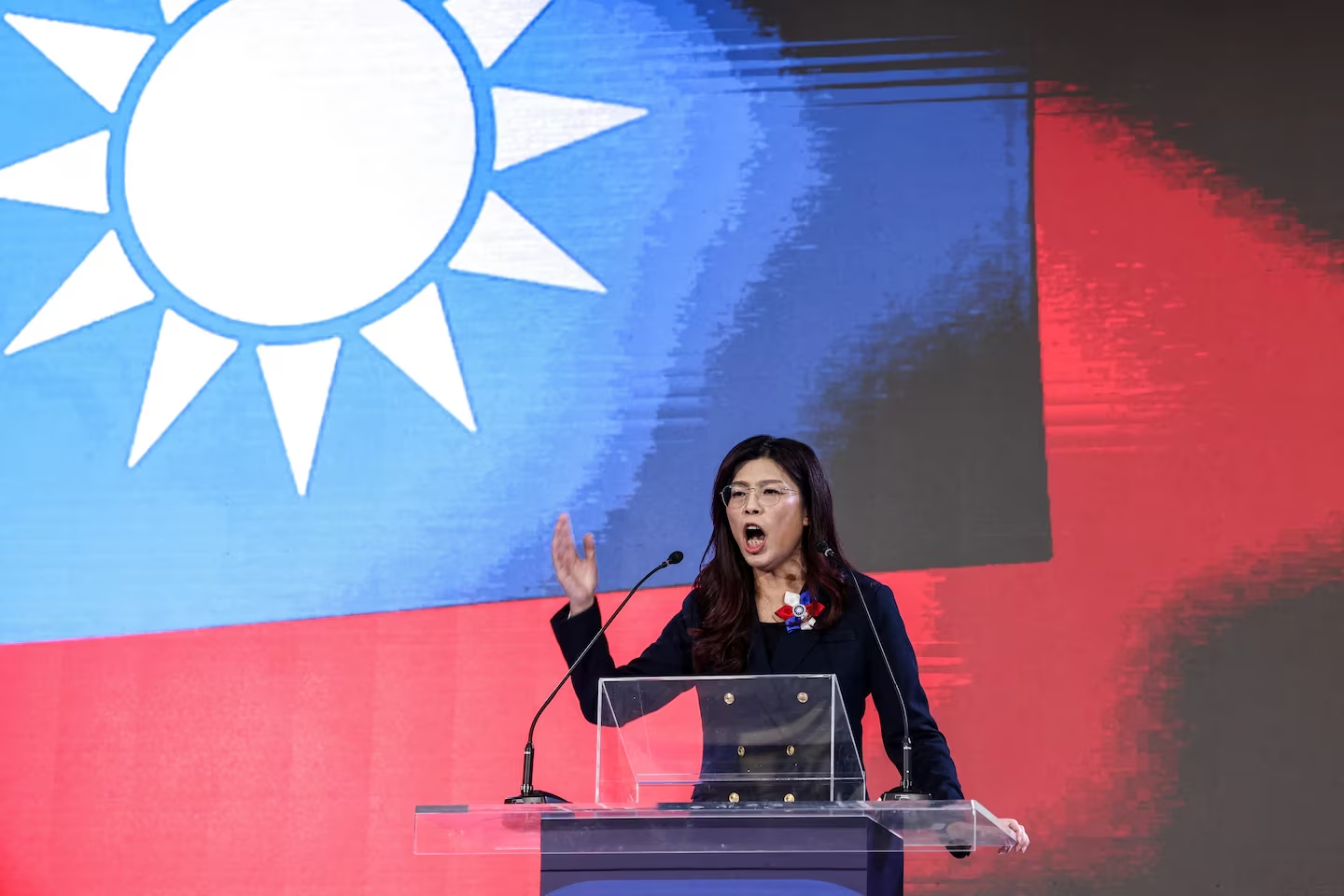
At the same time, the new leader of the island’s main opposition force—the Kuomintang—was pursuing a markedly different campaign of outreach. Since her unexpected election as party chair in October, Cheng Li-wen has said she is ready to meet China’s leader, Xi Jinping, urged Taiwan’s residents to see themselves as Chinese, and sharply criticized the new defense budget. Those moves have already had consequences: the Kuomintang blocked a defense funding bill at the earliest stage of consideration.
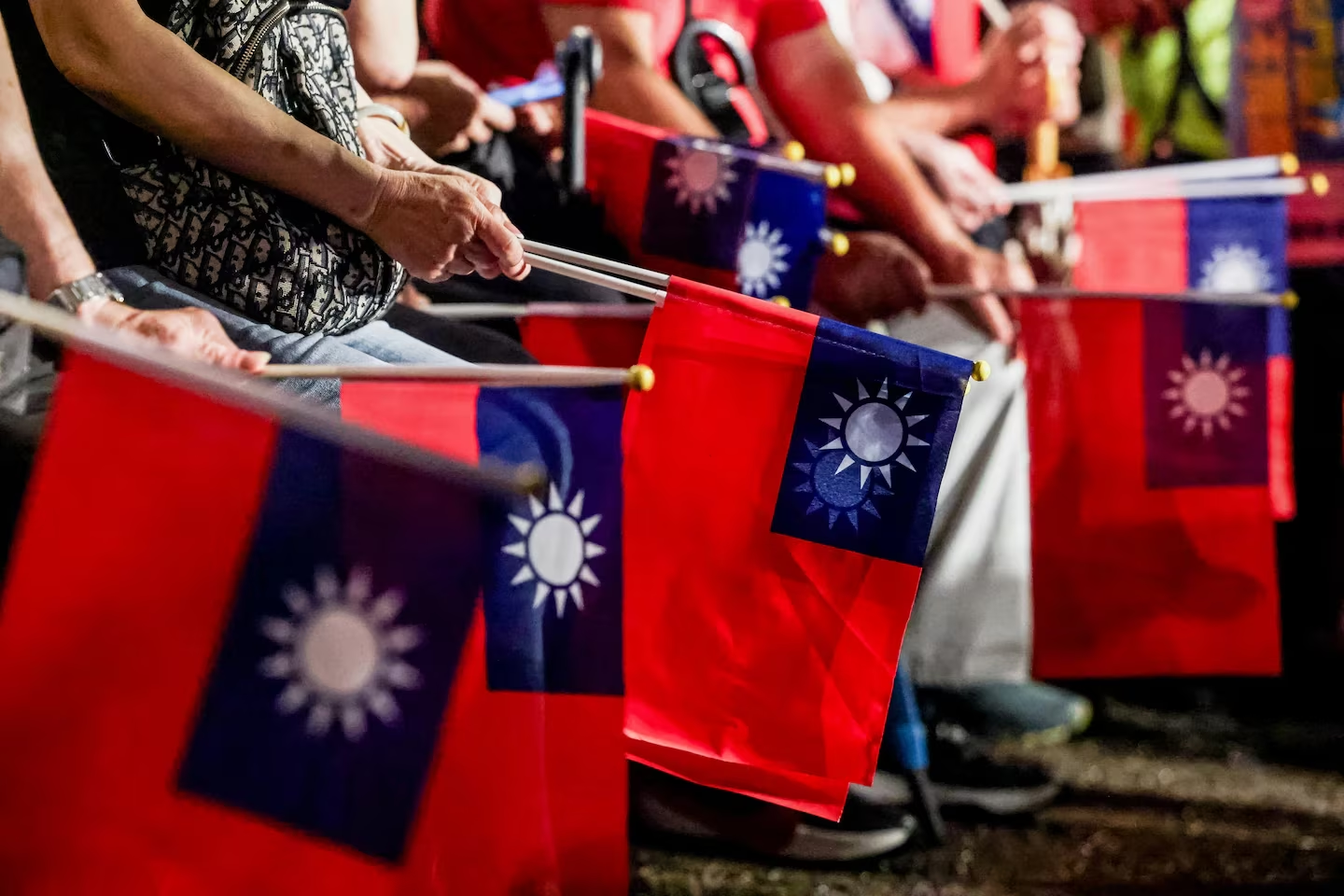
Supporters of Taiwan’s Kuomintang party rally in Taipei. July 2025.
This contrast between the two politicians lays bare a widening rift within Taiwanese society. While Lai’s ruling party is seeking to secure the backing of Donald Trump’s administration amid intensifying military pressure from China, figures such as Cheng argue for closer ties with Beijing. Their stance is fueled by fears that Lai’s policies are courting conflict, as well as by growing skepticism about whether the United States would truly come to Taiwan’s aid.
“Although Lai Ching-te appears eager to please the United States, it has brought Taiwan neither benefits nor respect,” Cheng said in an interview at the Kuomintang’s headquarters in Taipei. “Many Taiwanese are anxious,” she added—“they fear that we will be the first to provoke a crisis, that the United States will play the ‘Taiwan card’ in its dealings with Beijing, and then simply sell us out.”
Xi Jinping has repeatedly stressed his intention to achieve “reunification” with Taiwan—a self-governing democratic territory about 100 miles off China’s coast that has never been ruled by the Chinese Communist Party—and has not ruled out the use of force. Chinese military aircraft and naval vessels are routinely sent into the area around the island, signaling pressure on both politicians and the public. Tensions rose further last month after Japan’s prime minister said Tokyo could intervene in the event of a war over Taiwan, prompting a sharp response from Beijing.
Under these conditions, Taiwan relies on unofficial support from the United States. Washington supplies the island with weapons under a policy of “strategic ambiguity,” deliberately leaving unclear whether the US would intervene directly in the event of an armed conflict with China. Donald Trump’s second term, however, has injected additional uncertainty into Taipei’s already fragile balancing act between the two superpowers.
Trump has imposed tariffs on Taiwanese exports and pushed for parts of production by the leading chipmaker TSMC to be relocated to the United States. His efforts to pressure Ukraine into a peace deal have stirred unease in Taiwan, where many draw parallels with a potential Chinese attempt to seize the island. Others fear that support for Taiwan could be scaled back in exchange for a trade deal with Beijing. According to an October survey by the Taiwan Public Opinion Foundation, nearly 45 percent of the island’s residents believe that Trump would not stand in the way if a Chinese military invasion were to occur.
According to a Brookings Institution survey, in the first months of Trump’s second term the share of Taiwanese who view the United States as an unreliable ally rose from 24 percent in July 2024 to 38 percent in April. The combination of tariffs, the relocation of TSMC production to America, and the war in Ukraine “adds extra fuel to [anti-]American skepticism, turning it into a full-blown bonfire,” said Weiting Yen, a political scientist at Academia Sinica.
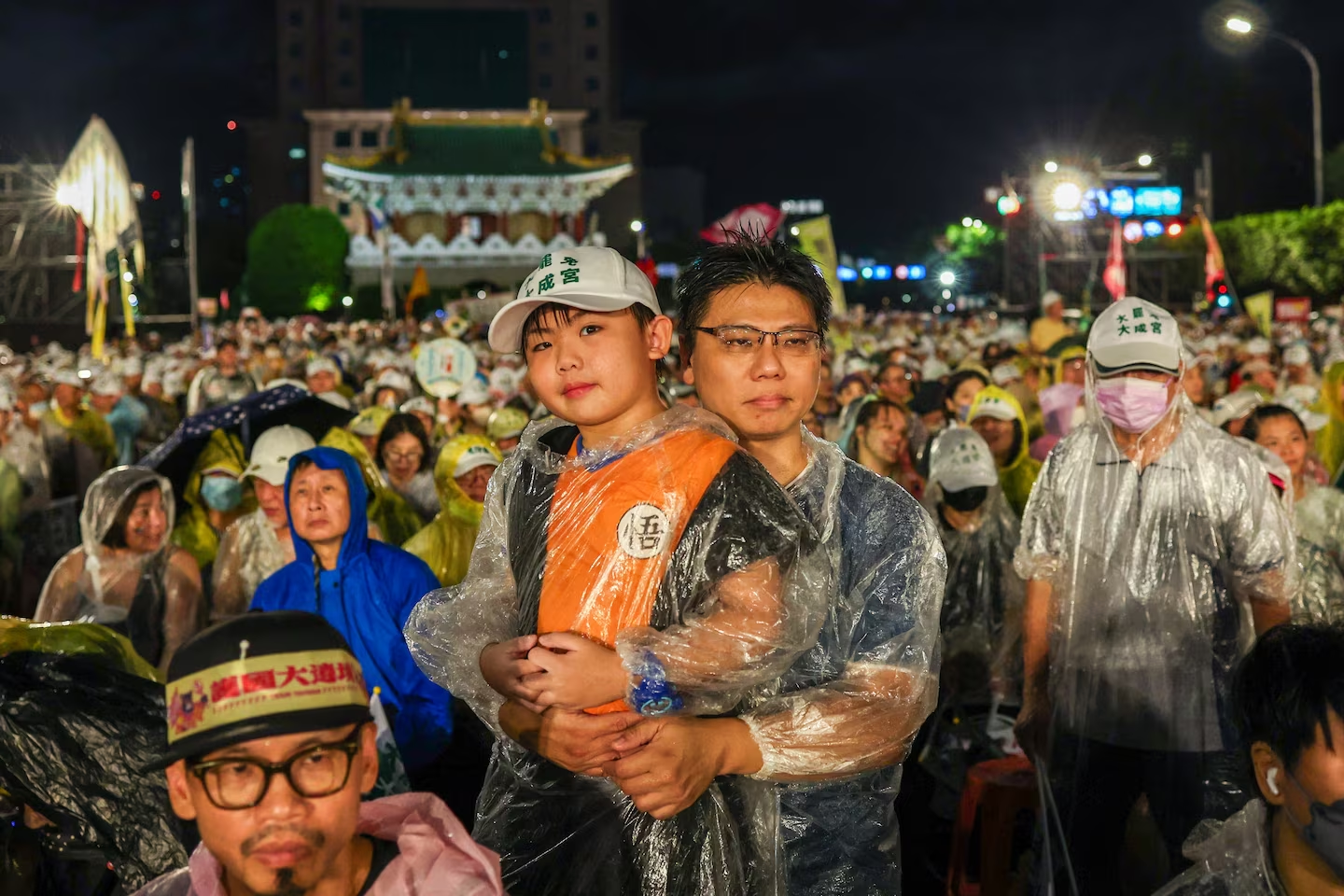
Supporters of the Kuomintang party at a rally in Taipei. July 2025.
In his view, Cheng, as leader of the Kuomintang, largely embodies these sentiments. Party supporters, as well as people over the age of 45, are more likely—according to an October survey—to doubt Trump’s willingness to defend Taiwan. Cheng, 56, was educated in the United States and the United Kingdom, began her political career in the 1990s within the Democratic Progressive Party, later defected to the Kuomintang, and steadily climbed the party ranks. She is now tasked with revitalizing a party that has struggled to attract younger voters and has lost the past three presidential elections.
Although the Kuomintang has traditionally been associated with a softer stance toward China, analysts note that Cheng stands out for the sharpness of her rhetoric. Her unexpected ascent—she defeated five men—dealt a blow to the party’s old guard, which had largely backed higher defense spending. Cheng is also known for provocative remarks. Asked about her claim that Vladimir Putin was democratically elected and therefore not a dictator, she told The Washington Post that she saw no need to criticize world leaders, adding that “Lai Ching-te also has authoritarian tendencies.”
In Cheng’s view, dialogue and cooperation with Beijing offer the best way to reduce tensions between China and Taiwan—responsibility for which she places largely on the Democratic Progressive Party. Xi Jinping has already sent her a congratulatory message.
Although the Kuomintang is traditionally seen as a party more favorably disposed toward China, analysts say Cheng is notable for the sharpness of her statements. Her unexpected rise—she beat five men in the leadership contest—was a blow to the party’s old elite, which had generally been more inclined to support higher defense spending. Cheng is also known for a penchant for controversial remarks. Commenting on her assertion that Vladimir Putin was democratically elected and therefore not a dictator, she told The Washington Post that she saw no need to criticize world leaders, adding: “Lai Ching-te also has authoritarian tendencies.”
In Cheng’s view, communication and cooperation with Beijing offer the best way to reduce tensions between China and Taiwan—responsibility for which she largely places on the Democratic Progressive Party. Xi Jinping has already sent her a congratulatory message.
“For me, the most important thing is to rein in the ominous spiral of tensions on both sides of the strait and steer the situation onto a new path—toward reconciliation and peace,” she said. “I hope we can rebuild mutual trust and resume dialogue and exchanges.” At the same time, Cheng stressed that the Kuomintang “values” its relationship with Washington and would like to preserve it as a partnership “based on shared values,” adding that she sees no evidence that Trump, in his tariff negotiations with Xi Jinping, is already “trading away” Taiwan.
Cheng’s rise to the party leadership has sharpened the confrontation over the defense budget, whose expansion Trump has actively championed. Last month, Lai unveiled a $40bn supplemental budget that includes purchases of American weaponry, following a pledge to raise military spending to 5 percent of GDP. But in the Kuomintang-controlled legislature, the proposal has met stiff resistance—the opposition has already twice this month blocked even its consideration.
Although Cheng says the Kuomintang has historically supported defense spending, she declined to specify what level of budget increases she now considers acceptable. In her view, Lai’s proposals are unaffordable for the economy and “provoke tensions,” creating an “environment for conflict.” “How can we write the United States a blank check that we are unable to cash?” she asked.
Hsiao-ting Lin, a Taiwan expert at Stanford University, argues that such rhetoric reflects “naivety” about Taiwan’s relationship with Washington, which expects the island to show a willingness to invest in its own defense. “At its core, this is about the US–Taiwan relationship,” he said. The Trump administration’s National Security Strategy, published last week, explicitly underscores a push for partners such as Taiwan to “spend more on their own defense.”
Washington’s semiconductor policy has also heightened unease. After Trump accused Taiwan of “stealing” America’s semiconductor industry, TSMC announced plans to invest $100bn in US manufacturing over the next four years. “From Taiwan’s perspective, we spent all these years building TSMC, and now you are effectively just giving it away—this is deeply irresponsible [on Lai’s part],” Cheng said. “If you cannot geopolitically protect TSMC, then what exactly is Taiwan’s ‘silicon shield’?” she added, referring to the theory that the island’s dominance in chipmaking deters a potential Chinese attack.
A spokesperson for Lai’s administration said that higher defense spending represents “investing in security and peace,” while TSMC’s expansion promotes “prosperity and progress” for Taiwan and the world at large. The de facto US embassy in Taiwan did not respond to a request for comment by the deadline.
Despite the polarizing effect of Cheng’s rise, she is beginning to attract support beyond her own party. Kuo Li-hsin, an adjunct professor at National Chengchi University in Taipei who has voted for the Democratic Progressive Party for decades, said he was drawn to Cheng’s efforts to dial down tensions and prioritize peace over the purchase of American weapons. “Taiwanese people, shaped by government propaganda and popular culture, have long seen America as friendly and benevolent—a global defender of democracy,” he said. Now, however, “more and more Taiwanese are starting to have doubts.”
The rise in anti-American sentiment may not be entirely organic. Disinformation experts argue that Beijing is actively pushing such narratives on Taiwanese social media. According to a report by the Taiwan Information Environment Research Center, Chinese state media have amplified existing online skepticism toward the United States, including around TSMC’s expansion in America and the US withdrawal from Afghanistan in 2021.
If Taiwanese society is persuaded that the island has no future outside China, that could prove dangerous, said Bonnie Glaser, head of the Indo-Pacific program at the German Marshall Fund. “There is a risk that Taiwan could be pushed into negotiations with Beijing on terms that are unfavorable to Taiwan,” she warned.
Cheng herself dismissed accusations of Chinese interference in Taiwan’s domestic politics, including claims by some Kuomintang politicians that Beijing had helped engineer her victory. “China’s political influence over Taiwan is very limited. It is nowhere near as serious as outside observers suggest,” she said. “US influence is far deeper and more pervasive—it is American influence that is truly extensive.”
A spokesperson for Lai’s administration told The Post that higher defense spending represents “investing in security and peace,” while TSMC’s expansion promotes “prosperity and progress” for Taiwan and the world. The de facto US embassy in Taiwan did not respond to a request for comment by the deadline.
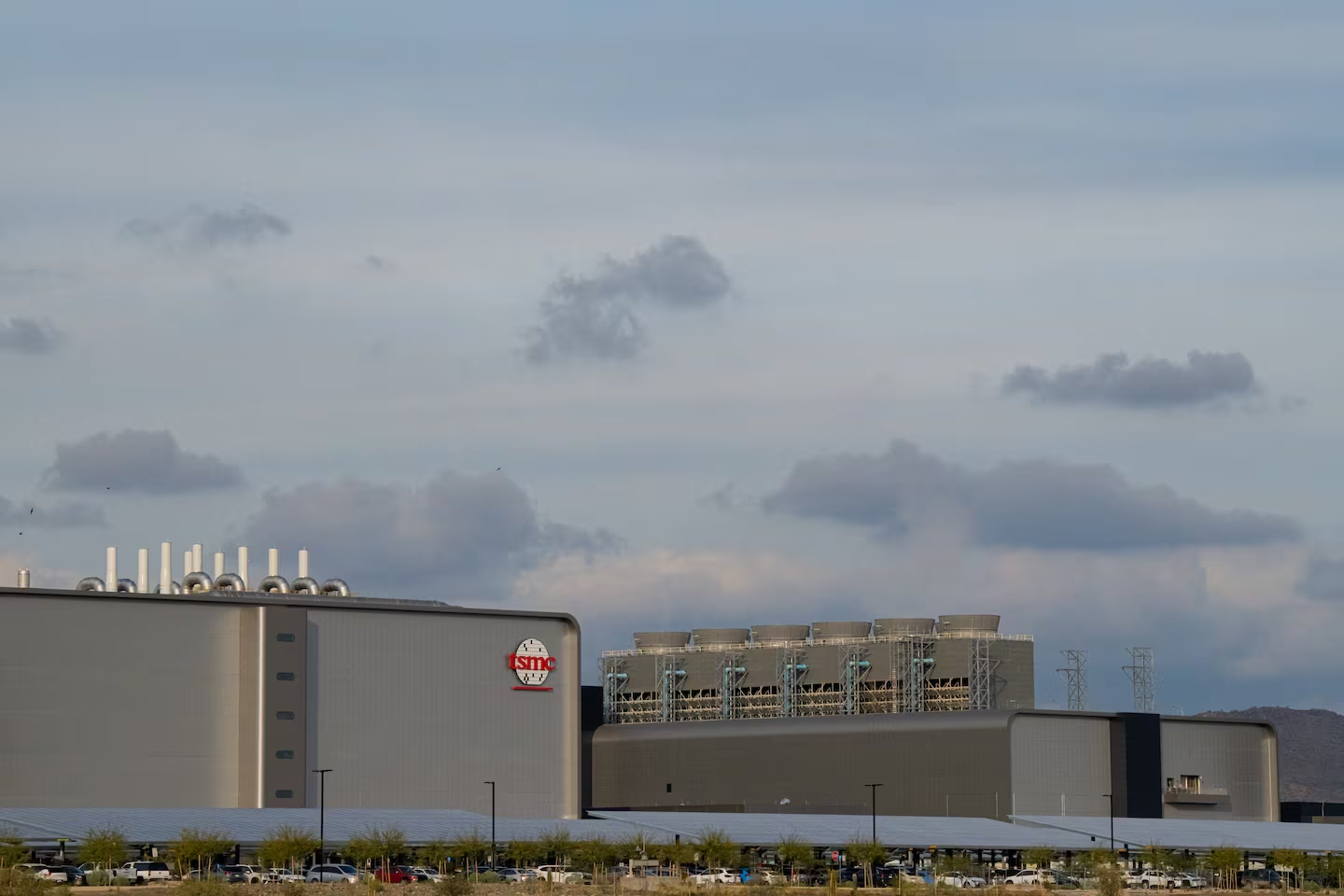
A TSMC manufacturing facility in Phoenix. 2023.
Despite becoming a deeply polarizing figure, Cheng is beginning to draw support beyond her own party. Kuo Li-hsin, an adjunct lecturer at National Chengchi University in Taipei, said that although he has voted for the Democratic Progressive Party for decades, he is attracted to Cheng’s efforts to ease tensions and to place peace above the purchase of American weapons. “Taiwanese people, shaped by government propaganda and various forms of popular culture, have come to see America as a friendly and benevolent country, a global defender of democracy,” he said. Now, however, “more and more Taiwanese are starting to have doubts.”
The growing anti-American mood, however, may not be entirely spontaneous. Disinformation experts say Beijing is deliberately promoting such narratives on Taiwanese social media. A report by the Taiwan Information Environment Research Center finds that Chinese state media are amplifying existing online skepticism toward the United States, including around TSMC’s expansion in America and the US withdrawal from Afghanistan in 2021.
If Taiwan’s population is persuaded that the island has no future outside China, that could prove dangerous, said Bonnie Glaser, who leads the Indo-Pacific program at the German Marshall Fund. “There is a risk that Taiwan could be pushed into negotiations with Beijing on terms that are unfavorable to Taiwan,” she said.
Cheng herself rejected claims of Chinese interference in Taiwan’s domestic politics, including allegations by some Kuomintang politicians that Beijing had helped secure her victory. “China’s political influence over Taiwan is extremely limited. It is nowhere near as extensive as outside observers suggest,” she said. “The United States is far more deeply involved—American influence is profound and all-encompassing.”