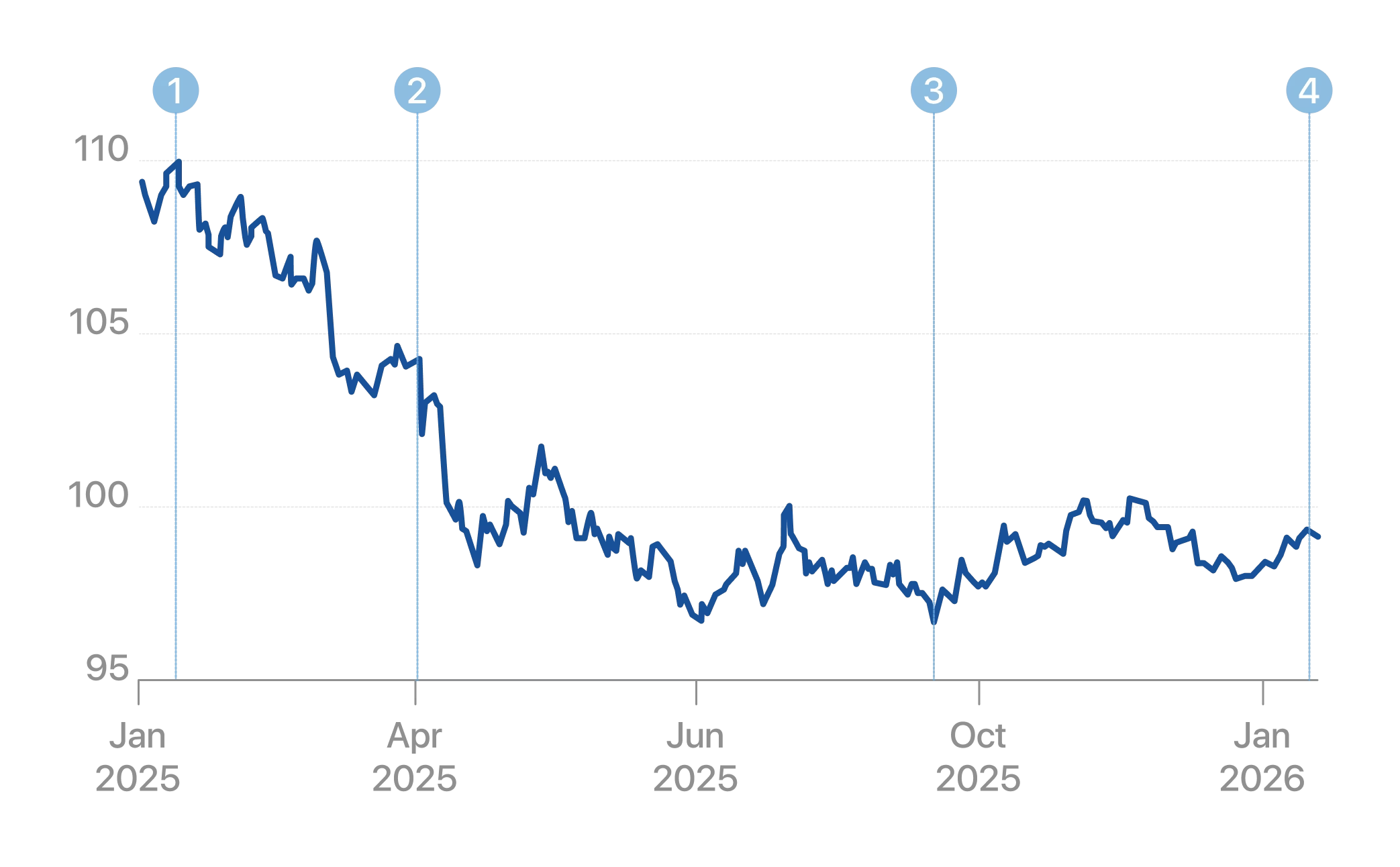
On Monday, January 19, the dollar fell after Donald Trump threatened European allies with tariffs as part of his campaign to assert control over Greenland. The return of trade tensions once again prompted global investors to reassess the extent of their reliance on US assets.
The euro and the pound rose by 0.3 percent against the dollar, while equity markets on both sides of the Atlantic slipped into negative territory. Fund managers link the weakening of the US currency to concerns that another escalation of Trump’s trade war could push investors to sell or hedge US assets—reviving a trend that last year drove the dollar down by 9 percent.
“This is another blow to confidence in American institutions,” said Altaf Kassam, head of investment strategy for Europe at State Street Investment Management, adding that he expects the dollar to weaken further this year.
The Swiss franc, traditionally seen as a safe-haven currency, emerged as one of the day’s main beneficiaries, rising by 0.6 percent and approaching its strongest levels against the dollar since 2015.
Trump’s announcement in April last year of sweeping tariffs against US trading partners, alongside his attacks on the Federal Reserve, triggered turbulence across global markets. Although US equities later recovered their losses, the dollar remained weak as foreign investors actively hedged currency risk amid the prospect of renewed volatility.
US Dollar Index Dynamics Amid Donald Trump’s Trade Statements, US Dollar Index
Some fund managers said that the return of tariff-driven turbulence could revive the “sell America” strategy that defined 2025, when the dollar, US equities, and government bonds fell simultaneously after Trump’s global tariff campaign rattled foreign investors.
This move “heightens concerns that the conduct of the US administration is eroding the privileges granted to it by markets,” said Jason Borbora-Shin, a portfolio manager at Ninety One.
The Stoxx Europe 600 index fell by 1.1 percent on Monday, while Wall Street futures pointed to a comparable decline in the S&P 500 when US trading resumed on Tuesday after the holiday.
Several analysts noted that the large volumes of US assets held on European investors’ balance sheets give Europe leverage in a potential trade conflict with Trump. “Europe is America’s largest creditor,” wrote Deutsche Bank analyst George Saravelos in a note on Sunday, pointing to $8 trillion in US bonds and equities owned by European investors. “At a time when the geoeconomic stability of the western alliance is facing an existential challenge, it is not obvious why Europeans should continue to play this role so willingly.”
Christian Schulz, chief economist at Allianz Global Investors, noted that “the euro could benefit if European investors begin to repatriate capital from the US,” adding that this could also hit US Treasuries—“and thus increase pressure on the US administration as well.”
These assessments echo the position of bond giant Pimco, which said last week that it is in a “multi-year period of partial diversification” away from US assets, citing in part the unpredictability of policy decisions in Washington.
At the same time, bond markets largely took the weekend’s developments in stride: yields on 10-year German bonds held at 2.83 percent, while UK gilts of the same maturity were little changed, hovering around 4.41 percent.
According to some investors, the lack of broader market repercussions reflects expectations that Trump may soften his rhetoric on Greenland or reach some form of compromise during meetings of the world’s political and economic elite in Davos this week. “We’ve seen plenty of headline-grabbing statements from Trump before,” said Mark Dowding, chief investment officer for fixed income at RBC BlueBay Asset Management, adding that investors should “wait and see what actually gets implemented.”