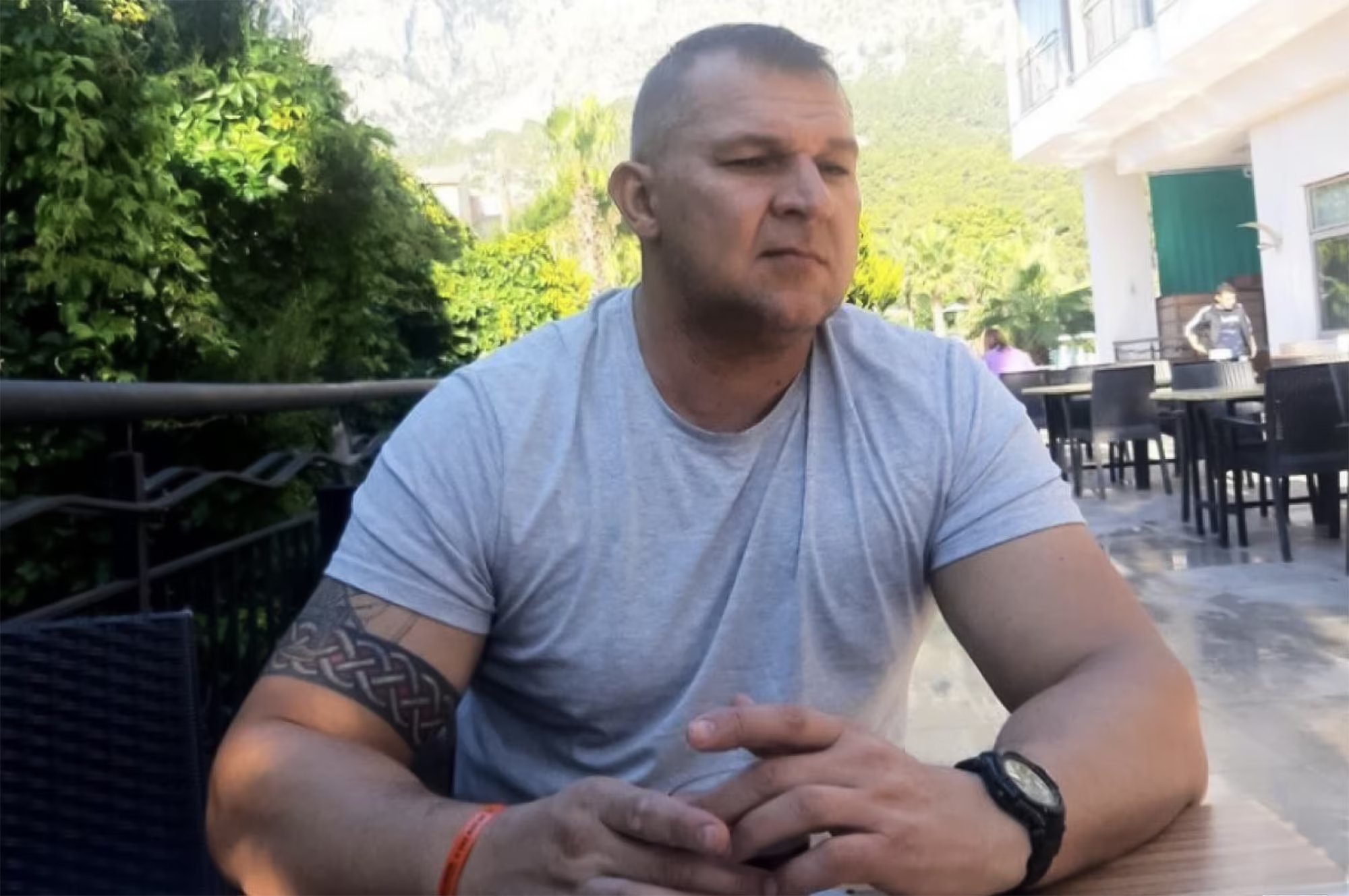
Oleh was 55 years old. He lived in Dnipro, had previously served in law enforcement, and lived with his 18-year-old daughter. On the evening of February 6, he left home to walk his dog and never returned.
As reported by the Dnipropetrovsk regional police, a report of the death of the 55-year-old man was received shortly after midnight on February 7. According to preliminary forensic findings, he died from a head injury.
Law enforcement officials said they examined the scene, seized physical evidence, and impounded a vehicle bearing traces of the victim’s blood. According to police, witnesses and eyewitnesses were questioned during the investigation, after which the involvement of three TCC servicemen was established. They have been detained, and a pretrial investigation is ongoing.
The victim’s relatives said they searched for Oleh by reviewing CCTV footage. According to a family member, the video shows a black car (a Kia) driving past, then stopping, after which people in TCC uniforms run toward the area where Oleh was, and later a van appears with its doors open. At the same time, the relatives say, the actual altercation is not visible in the footage due to the late hour and poor visibility.
The Dnipropetrovsk Regional TCC and SP said a pretrial investigation is ongoing and urged the media and the public not to draw conclusions until it is completed, adding that the center’s personnel are cooperating with investigators.
On February 10, a court in Dnipro set preventive measures for the suspects. According to media reports, one of the defendants was placed in pretrial detention without the option of bail, another was remanded in custody for 60 days without bail being set, while proceedings concerning a third suspect were adjourned until February 10.
The incident occurred against the backdrop of the practice of forced street mobilization in Ukraine, carried out by TCC personnel without police involvement. Under the law, only the police have the authority to detain civilians; in practice, however, TCC representatives regularly carry out forceful street detentions, using vans and physical coercion. Fatal incidents and severe injuries following such encounters have been recorded with increasing frequency in recent months, but in most cases they have not received a systematic assessment from the state or law enforcement agencies.
The case in Dnipro unfolded amid a sharp rise in complaints about the actions of territorial recruitment centers. Two days after the death of the 55-year-old man, Ukraine’s Parliamentary Commissioner for Human Rights, Dmytro Lubinets, issued a series of public statements that effectively describe systemic violations in the mobilization process.
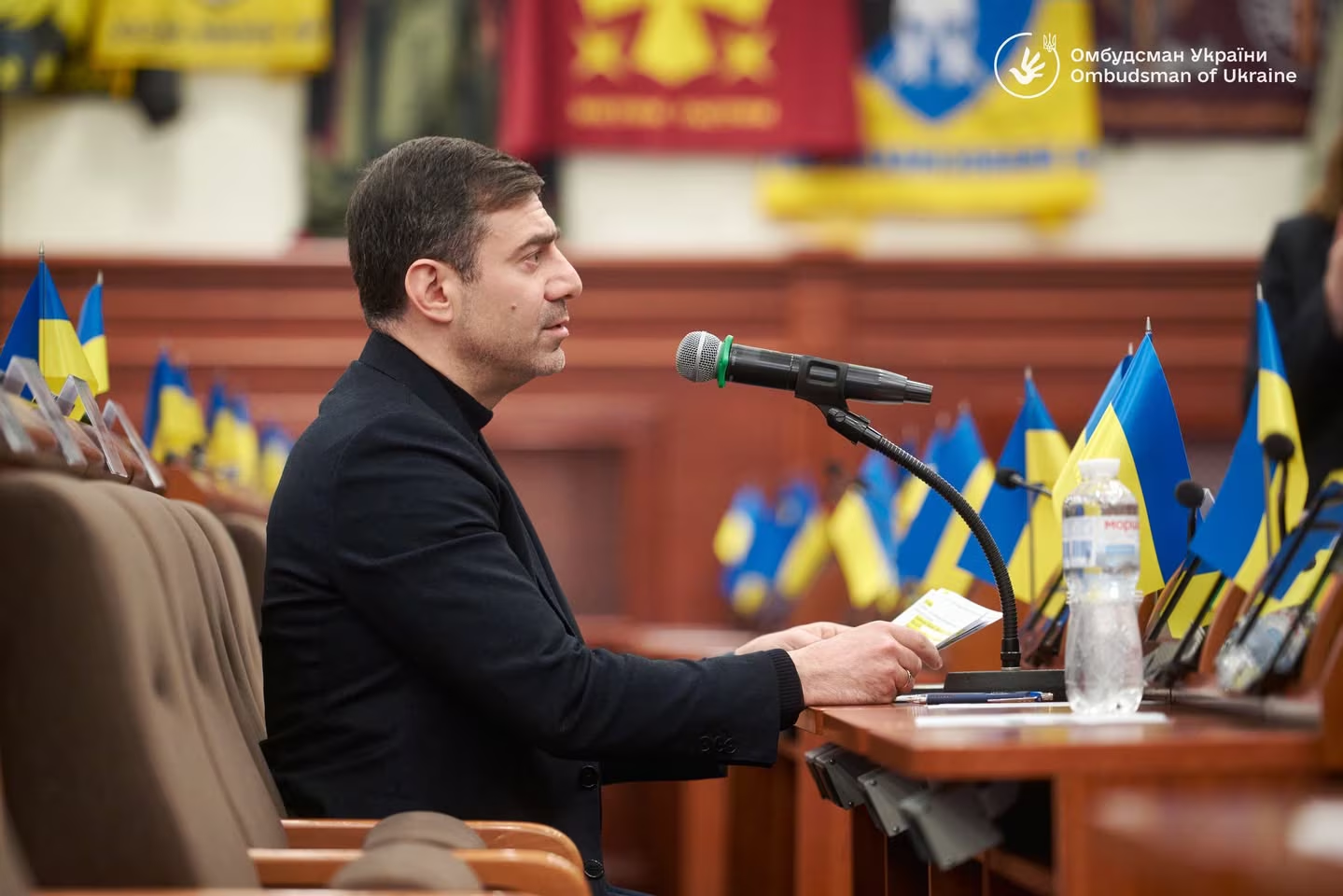
Dmytro Lubinets during a briefing in the Verkhovna Rada. February 9, 2025.
According to the ombudsman, the number of citizen complaints regarding the actions of TCCs has increased severalfold over the past year. In 2022, the commissioner’s office received 18 complaints; in 2023, 514; in 2024, 3,312; and in 2025, 6,127.
Lubinets separately stressed that TCC personnel have no right to detain, arrest, or hold citizens. Such actions, he said, constitute a violation of Ukraine’s Constitution.
The ombudsman also reported specific incidents. In the Kharkiv region, TCC personnel, he said, broke an attorney’s leg. In the Volyn region, representatives of the ombudsman’s office who arrived to investigate complaints were held locked inside for an hour by TCC staff. Cases of the unlawful seizure of personal belongings, including mobile phones, were also documented.
Lubinets separately stated that TCC personnel often operate without identification insignia and cover their faces, which constitutes a violation and makes it impossible to identify those responsible for violations of citizens’ rights.
According to him, the highest number of complaints concerns the Ternopil Regional TCC, while the lowest concerns Khmelnytskyi. He also reported that an experimental format was launched in the Ternopil region, under which servicemen from combat units were allowed to carry out mobilization activities independently. Following this, the ombudsman noted, the number of complaints from citizens rose sharply.
Lubinets also described cases in which mobilized individuals were declared fit for service after military medical commissions, despite serious spinal conditions that left them unable even to put on body armor. In some instances, he said, such individuals were assigned to assault units.
The ombudsman separately spoke of documented cases of deaths following the use of physical violence: “Unfortunately, we have cases in which Ukrainian citizens are subjected to physical violence that results in death. We have documented cases. The most recent case is Dnipro. Before that, another case that I am personally overseeing: a young man was detained by TCC personnel and said he was being taken to a TCC. The next day, neither his family nor his lawyer could gain access to him. Instead, the family received a call from a hospital—his skull had been trepanned. The man died. This incident occurred in Kyiv,” Lubinets said.
The ombudsman’s statements came two days after the man’s death in Dnipro and effectively confirm that this is not a series of isolated incidents, but a systemic practice marked by violence, abuse of authority, and the absence of effective oversight.