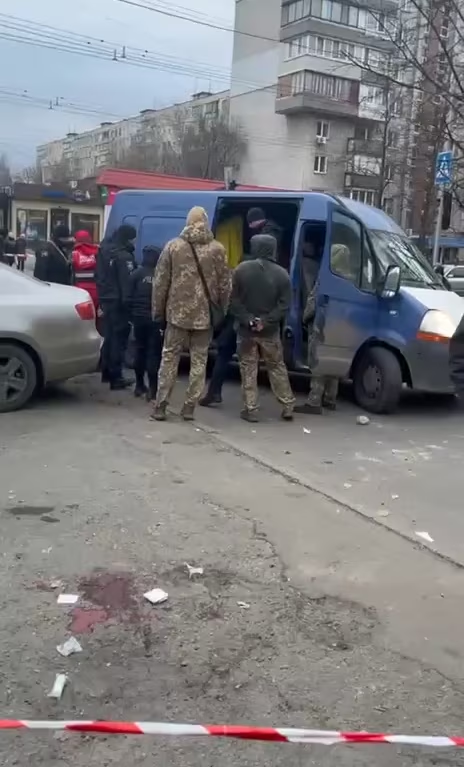
An incident involving staff of the territorial recruitment center(TCC) occurred in Dnipro. Witnesses say that during a confrontation a man attacked TCC representatives with a knife, after which they opened fire.
According to witnesses, the shooting was in response to the attack. The exact circumstances of the incident and the sequence of actions by those involved remain unclear.
Later, the Dnipropetrovsk regional police issued an official statement. According to law enforcement, at around 2:40 p.m., during notification activities, a man inflicted knife wounds on two TCC employees. Both victims were hospitalized.
The video shows a wounded TCC employee walking on his own toward an ambulance, as bystanders shout “Shame!”
Police also said that to detain the attacker, one of the officers fired several shots into the air. This information has been officially confirmed; the police provided no further details on the use of firearms.
The incident fits into a broader pattern of systemic lawlessness surrounding the work of territorial recruitment centers. For months, numerous cases have been documented of serious violations of lawful mobilization procedures: illegal street detentions, the use of physical force, beatings, threats, and coercion to undergo immediate military medical examinations without access to legal counsel and without proper documentation.
The incident fits into a broader context of systemic lawlessness surrounding the work of territorial recruitment centers. For months, numerous cases have been documented of serious violations of lawful mobilization procedures: illegal street detentions, the use of physical force, beatings, threats, and coercion to undergo immediate military medical examinations without access to legal counsel and without proper documentation.
These episodes are not isolated. They are regularly corroborated by video footage, testimonies from those affected, reports by regional media, and statements from human rights advocates. In some cases, law enforcement agencies have acknowledged abuses of authority by TCC staff, yet the practice of forceful notification persists.
In effect, this is not about “communication problems” or “isolated violations,” but about an entrenched model of coercion in which lawful procedures are replaced by force. This creates a situation in which citizens are stripped of basic rights, making confrontations between TCC representatives and the public inevitable and increasingly violent.
Against this backdrop, any incident involving violence—including the use of firearms or knives—is not an aberration but a direct consequence of the erosion of the legal framework governing mobilization. Until this practice is brought back into compliance with the law, such confrontations will continue to recur.