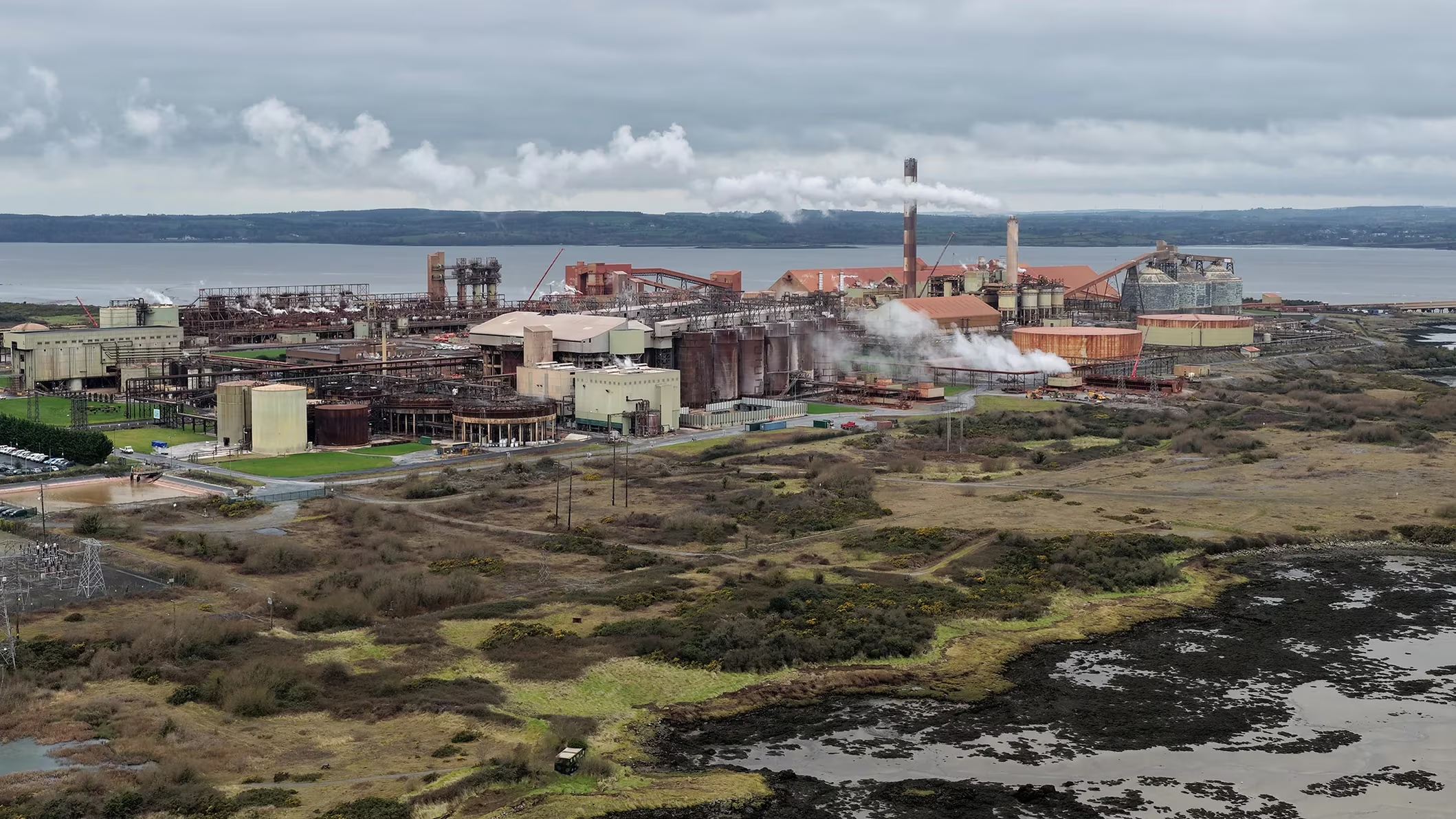
Europe’s largest alumina producer—a key input for aluminium smelting—is embedded in the supply chain of Russia’s military industry. Shipments originate from the Aughinish refinery in Ireland, owned by Rusal. Rusal’s founder, Oleg Deripaska, is under US and EU sanctions, but he relinquished his stake in parent company En+ in 2018 after being sanctioned by Washington—bringing both companies out from under restrictions.
Aluminium, valued for its strength and corrosion resistance, is critical for military production. So much so that the European Commission has advised member states to stockpile alumina as a strategic material for the defence sector.
Aughinish is a significant part of Europe’s industrial base. “It supplies up to 30% of the alumina needed for construction, aviation, and automotive manufacturing across the continent…and is in no way connected to the (Russian) war machine,” Patrick O’Donovan, a representative for Limerick—where the plant is located—told parliament.
Contrary to those claims, shipments of alumina from the Irish facility to Russia have more than doubled during the war. At parliamentary hearings in summer 2023, lawmaker Réada Cronin asked the minister for enterprise, trade and employment why Russia remained the primary market for Irish alumina, given the risk that the material could be used in the war in Ukraine. The answer was straightforward: existing sanctions do not prohibit it.
Formally, that is correct: the European Union has not banned exports of alumina to Russia. In February 2025, the EU closed its own market to Russian alumina—to avoid financing the war. In the opposite direction, however, no such restrictions apply.
As part of a joint investigation, journalists from OCCRP, Important Stories, The Irish Times and other partners traced the downstream flow of the Irish material. Alumina is shipped to Rusal’s aluminium plants in Russia, and from there—to weapons manufacturers.
From Guinea to Siberia
The raw bauxite processed at Aughinish largely comes from Rusal-owned mines in Guinea. According to the group’s 2024 annual report, these deposits are its main raw material base, accounting for more than half of total bauxite output.
The processed material is then shipped onward—primarily to Russia: up to 50% of Aughinish exports go to Rusal’s domestic plants. Customs data show that in 2024, alumina imports from Ireland to plants in Krasnoyarsk and Sayanogorsk exceeded $400 million. These two Siberian facilities produce more than a third of Rusal’s total aluminium output.
From there, the trail of the aluminium becomes opaque. Rusal has never publicly acknowledged supplying military enterprises in Russia.
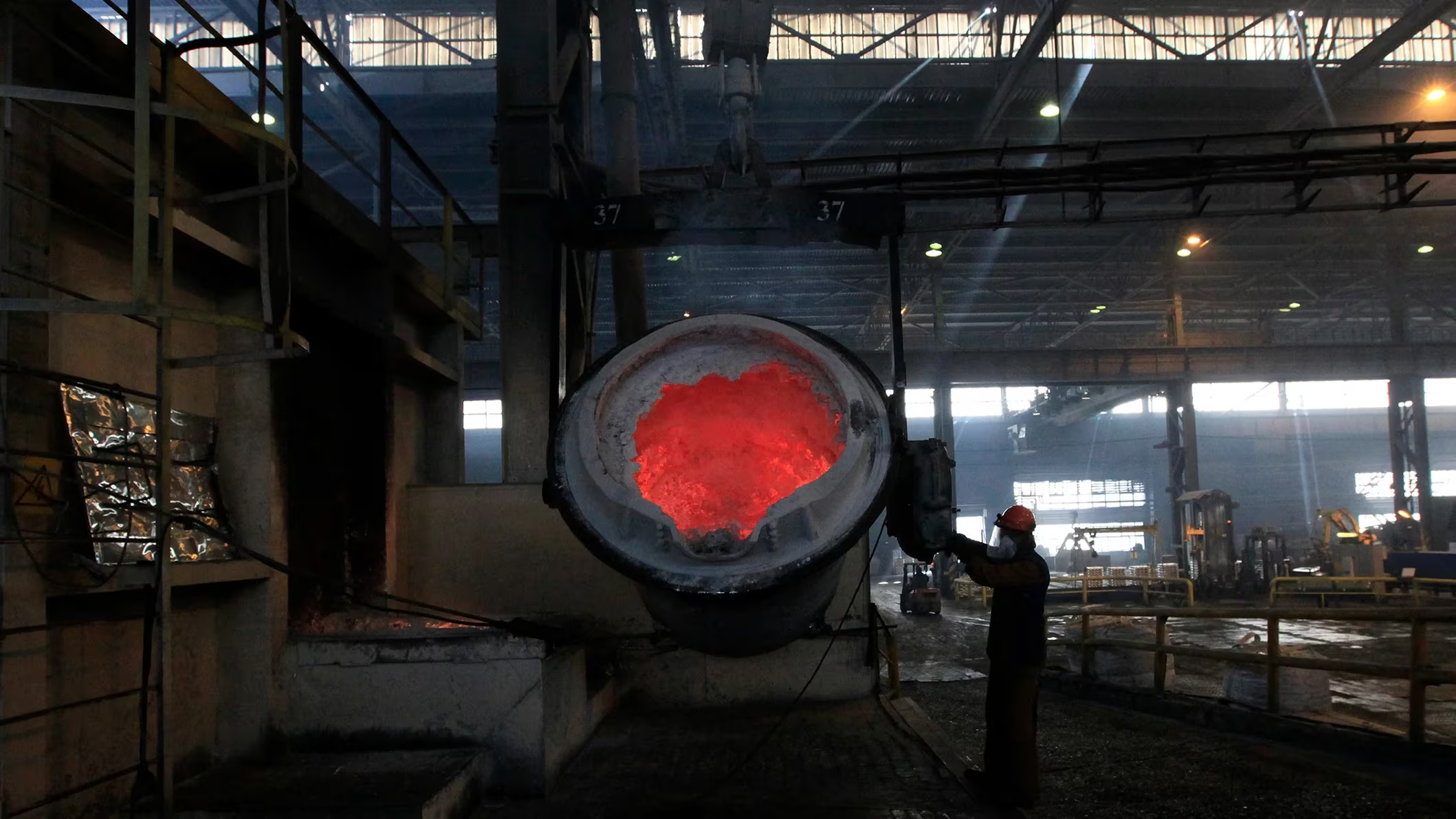
A Rusal plant in Sayanogorsk.
An opaque intermediary
Journalists identified that supplies to defence plants are routed through a company formally unaffiliated with Rusal, known as ASK.
In 2022–2024, ASK paid more than 50 billion roubles to Rusal’s trading arm for aluminium. Based on leaked financial data and journalists’ calculations, more than a third of the aluminium purchased by ASK came from the main Russian importers of Aughinish output—the Krasnoyarsk and Sayanogorsk plants.
ASK then resells the aluminium—including to companies fulfilling state defence orders. According to the company, between 2022 and 2024 it received 28.5 billion roubles under “defence” contracts—around a third of its total revenue. Its clients include the Arzamas Instrument-Building Plant, which produces the Kh-101 cruise missile, and the Votkinsk Plant, which manufactures Iskander-M ballistic missiles. Aluminium sourced via ASK is also used in engines for Russian tanks.
Formally, ASK acts as a посредник between Rusal and these plants. In practice, its links to Deripaska-linked structures appear significantly deeper.
According to leaked data, more than 20 ASK employees previously worked within Rusal structures, including two former owners of ASK. In several Russian regions, ASK and Rusal subsidiaries are registered at the same addresses. ASK also owned real estate now listed under Rusal. A former ASK owner, Natalya Kalgashkina, currently owns the company Arsenal, which, according to Verstka, held a business jet used by Deripaska.
Gaps in oversight
Shipments of EU-produced alumina to Russia “could undermine NATO’s stated objectives of supporting Ukraine and deterring Russia”, said Oleksandr Danyliuk, a former Ukrainian defence ministry official and fellow at the Royal United Services Institute in London.
“Even if these shipments are technically legal, they highlight gaps in European sanctions enforcement,” he said.
According to him, any effort to disrupt Rusal’s operations could have a significant impact. The company is so embedded in Russia’s military-industrial complex that “restrictions on its activities could potentially lead to shortages of aluminium materials and alloys needed for the production of high-tech weapons in Russia”.
A spokesperson for Aughinish told reporters that the plant operates fully in line with EU law and has implemented sanctions compliance and due diligence systems across its supply chain. He did not answer specific questions about the use of its products in Russian weapons.
Ireland’s Department of Foreign Affairs and Trade said in response to an inquiry that alumina “is not a sanctioned good”, and therefore its export to other countries, including Russia, is not restricted. According to the department, available data are insufficient to determine the origin of materials used in Russian weapons production. Ireland, the spokesperson added, “continues to unequivocally support Ukraine in light of Russia’s unjustified invasion”.
Rusal and En+, ASK, and Russia’s defence ministry did not respond to journalists’ questions.