British Prime Minister Keir Starmer is facing the prospect of political collapse. On the eve of the latest escalation, he refused to resign despite mounting pressure following publications linked to the Epstein case, which critics argue could destabilize the entire government.
Less than two years have passed since the Labour Party’s decisive election victory, yet according to The Economist, Starmer has already become the most unpopular prime minister in the country’s history. At the same time, new Morning Consult data show that even against this backdrop he is not the most unpopular leader in Europe.
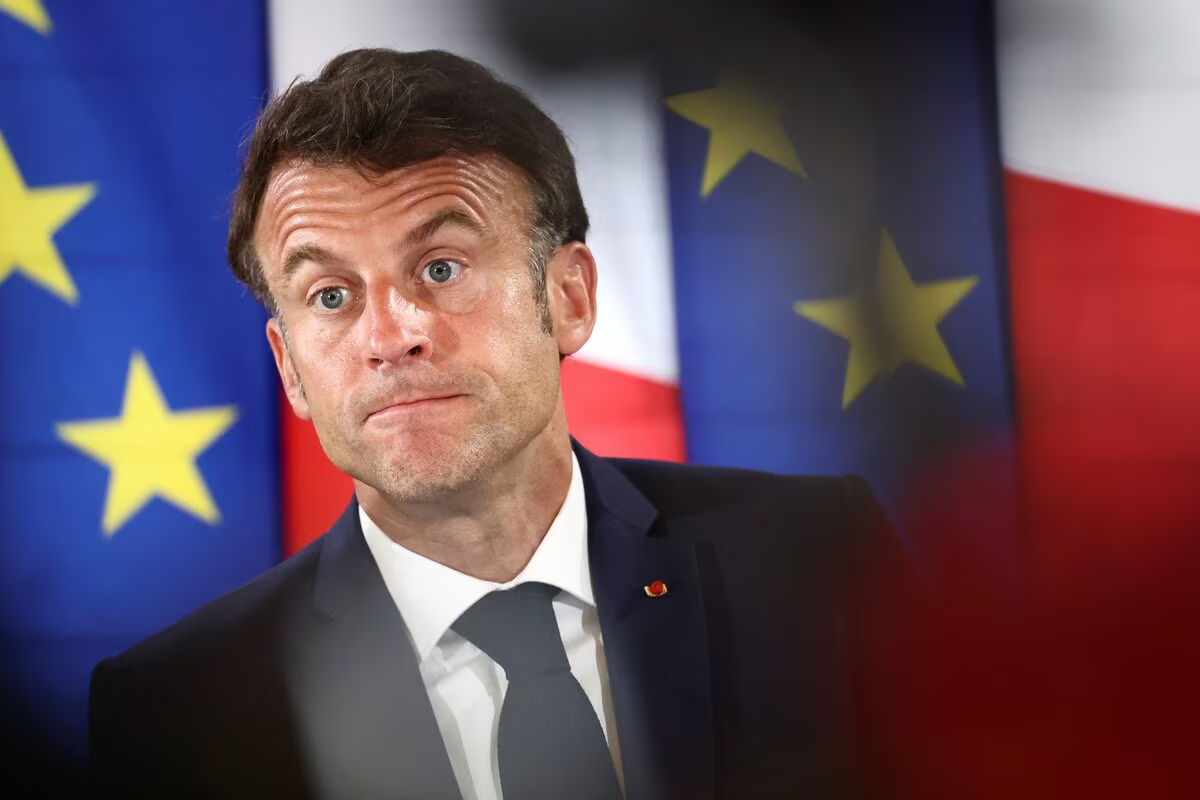
In France, President Emmanuel Macron’s approval rating has fallen to 16%, creating conditions for a victory by the far-right National Rally in next year’s presidential election. In Germany, Chancellor Friedrich Merz is also confronting a sharp drop in public support. This trajectory reflects a broader European shift against incumbent authorities amid inflation, economic stagnation, and migration pressures.
Aware of his extremely low level of public support, on February 10 Macron sharply escalated his public rhetoric about threats emanating from the Trump administration. He argued that the period of relative calm in US-EU relations should not be mistaken for something durable, and warned of potential pressure from Washington—above all in the areas of digital regulation and economic policy. In France, the president’s critics interpret these remarks as an attempt to shift attention away from the domestic agenda and his own political crisis toward an external threat around which public opinion is easier to mobilize.
Macron’s position, however, appears contradictory. Alongside his tough statements toward the United States, he is urging Europeans to resume dialogue with Russia and to build a new European security architecture with Moscow’s participation, arguing that geographic and political realities will not change. This combination—confrontational rhetoric toward Washington paired with a willingness to negotiate with the Kremlin—has drawn criticism within the EU and deepened doubts about the coherence of France’s president’s foreign-policy line.