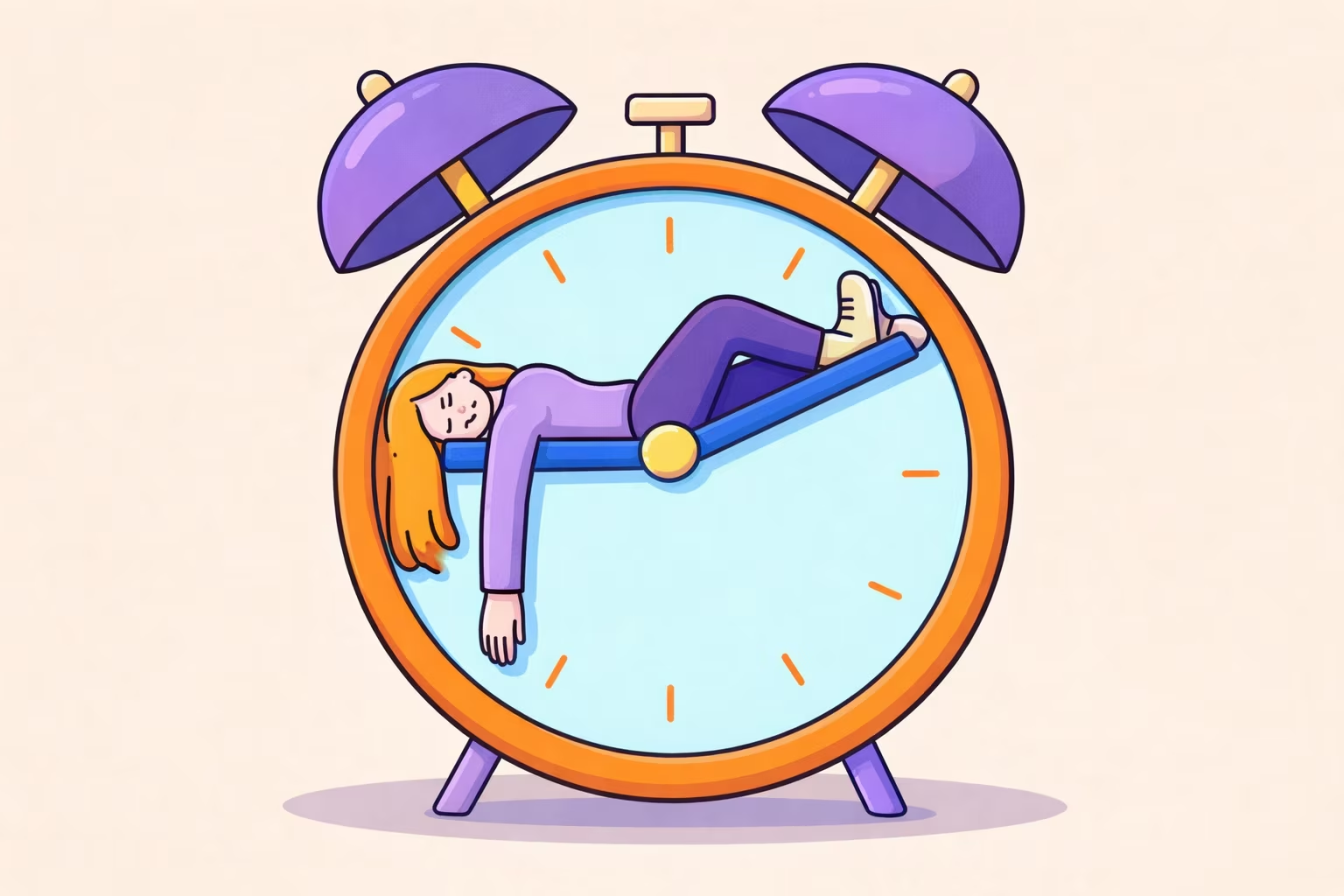
Winston Churchill was a committed advocate of the daytime nap. After a heavy lunch accompanied by alcohol and a cigar, the former British prime minister would retire upstairs to sleep briefly. That element of his routine may be worth emulating.
Daytime sleep is usually associated with shift work or feline habits. Yet scientific evidence suggests it can benefit office workers, too. A randomized controlled trial in 2023 found that participants who napped during the day reported improvements in mood, alertness, and memory. Making room for regular daytime rest may also be sensible. A 2007 study by the Harvard School of Public Health showed that healthy adults who habitually slept during the day had a 37% lower risk of dying from cardiovascular disease than those who did not. And a 2003 paper published in Sleep Health suggested that habitual napping might even extend life by slowing age-related shrinkage of the brain.
Duration is crucial. Most sleep scientists agree that a short “power” nap lasting between ten and 30 minutes is optimal. In 1994, NASA found that a 26-minute nap improved pilots’ physiological alertness and performance. Longer rest pushes the body into the deeper phases of the 90-minute sleep cycle, after which waking is accompanied by grogginess. It can also make it harder to fall asleep at night.
Regular, prolonged daytime naps can also have negative consequences. A 2016 meta-analysis found that sleeping for more than an hour every day increases the risk of diabetes and related cardiovascular problems. A study involving 1,400 people, published in 2023, identified a link between frequent long daytime naps and a higher risk of Alzheimer’s disease. For those concerned about their health, an alarm clock becomes an essential tool.
Some specialists argue that the inclination to nap during the day is rooted in human biology. They point to the natural dip in alertness after midday, linked to fluctuations in circadian rhythms. Studies showing that short daytime naps do not disrupt night-time sleep also lend support to the idea of a biphasic sleep pattern. In cultures where this practice is common, however, it is still recommended to get at least seven hours of sleep at night.
The consequences of abandoning biphasic sleep—the practice of dividing daily rest into two periods—are examined by the neuroscientist Matthew Walker in his book “Why We Sleep”. Almost everyone is familiar with the feeling of post-lunch lethargy, yet few allow themselves to give in to it. In modern conditions, falling asleep during the day is often simply impossible—workers rarely have the option to interrupt wakefulness voluntarily. Some resort to micro-naps, but studies show that the benefits of rest lasting less than five minutes fade quickly.
Coffee remains a popular remedy for daytime drowsiness. But the so-called “nappuccino” may be more effective. A 2008 study found that a short nap outperformed caffeine in improving attention and memory. And research published last year suggested that daytime dozing might even partially offset the effects of poor sleep at night.
“Rest and the enchantment of sleep in the middle of the day,” Churchill wrote in his autobiography, “refresh the human body far more than a long night’s sleep.” Modern sleep specialists would be unlikely to endorse that claim without qualifications. But if there is room in the schedule for a Churchillian nap, it can indeed be beneficial—provided the alarm is set.