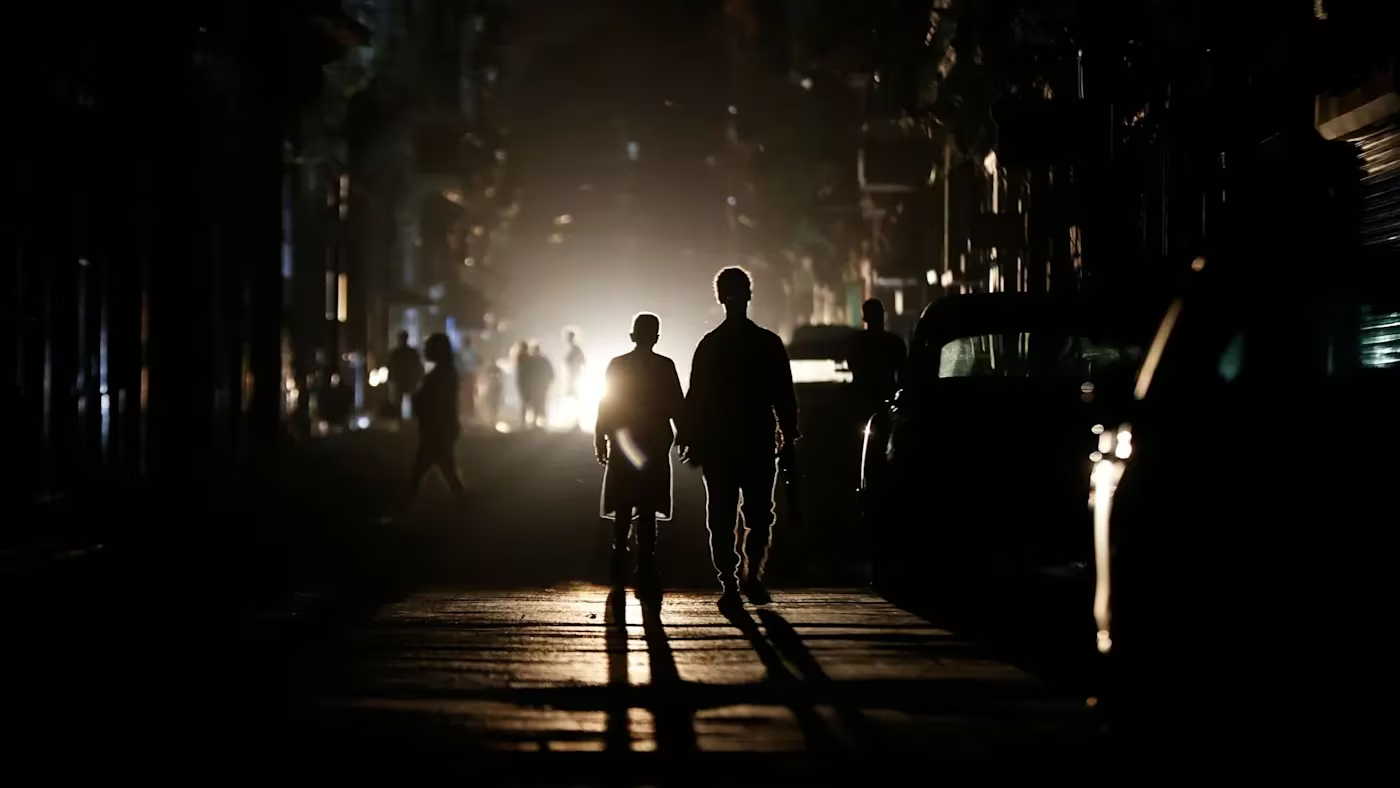
Cuba is attempting to restore power after its second nationwide blackout in a week, as mounting pressure from the United States constrains oil and fuel supplies to the resource-strapped communist regime.
The country’s energy ministry confirmed that the grid collapsed entirely on Saturday. The failure came just days after a vessel carrying Russian fuel—expected to arrive on the island this week despite US restrictions—changed course.
The country, heavily reliant on imported energy, has received no oil or fuel shipments since January 9 and is in talks with the United States in an effort to secure relief from the blockade. US President Donald Trump has threatened to impose tariffs on countries that continue supplying the Cuban leadership.
The Hong Kong-flagged vessel Sea Horse, carrying around 27,000 tonnes of Russian gas and bound for Cuba with an expected arrival on Monday, was set to be one of two such shipments. However, according to Samir Madani, co-founder of TankerTrackers.com, the ship changed course on March 19 and is now heading toward Venezuela.
The second vessel—the Russian tanker Anatoly Kolodkin—carrying between 725,000 and 728,000 barrels of oil, depending on its grade, remains in the Atlantic and continues its voyage toward Cuba. It is expected to arrive on March 30.
Even before the latest outage, authorities had managed to partially restore electricity following a failure on Monday, but demand on the island regularly exceeds available capacity.
Last week, Trump said it would be “an honour” to “take Cuba—in one form or another”.
“Whether I liberate it or simply take control—frankly, I think I can do whatever I want with it. Right now, it is a very weakened country,” he told reporters.
Cuban President Miguel Díaz-Canel did not immediately comment on the latest blackout, limiting himself to congratulating athlete Leyanis Pérez Hernández on X for defending her indoor world title in the triple jump in Poland.
On the same day, Díaz-Canel met with international left-wing politicians, including former UK Labour leader Jeremy Corbyn, who arrived in Cuba as part of a humanitarian mission.
Cubans have long endured extended power outages, but living conditions have deteriorated markedly in recent weeks: uncollected garbage is piling up in the streets, food shortages are worsening, and hospitals face a lack of medical supplies. Airlines, deprived of fuel, are suspending flights.
The energy disruptions have starkly exposed the vulnerability of the country’s infrastructure and fueled speculation that the Trump administration is seeking to force Díaz-Canel from power.
Earlier this month, the Cuban leader confirmed that Havana is in talks with Washington in an effort to secure an end to the energy blockade. The island lies just 145 kilometers from the Florida Keys.
“The situation was already extremely difficult, and now it has become even worse,” said Michael Bustamante, an associate professor at the University of Miami and a Cuba specialist. “At what point does the deterioration reach a level that produces blowback for the United States—through migration or other forms of instability the Trump administration would prefer to avoid?”
Díaz-Canel, for his part, blamed the United States, saying that “they are trying to strangle us in order to bring about our defeat”.
Against this backdrop, the authorities are attempting to revive the private sector by inviting the Cuban diaspora to invest in and own businesses on the island. However, the sweeping US embargo—traditionally backed by a significant share of the exile community—continues to block broader opportunities for trade and investment.