The US crypto industry has been hit by an unexpected crisis surrounding a bill that until recently was seen as its biggest political victory. A sweeping effort to regulate digital assets has stalled in the Senate after internal industry disputes intensified and the largest players began to distance themselves from the initiative. A clash with the banking lobby, rushed amendments, and the approach of congressional elections have left the bill’s fate uncertain.
Major players in the crypto market have come out against a key bill to regulate digital assets—legislation that industry lobbyists had previously tried to fast-track, hoping to lock in favorable rules ahead of the midterm elections.
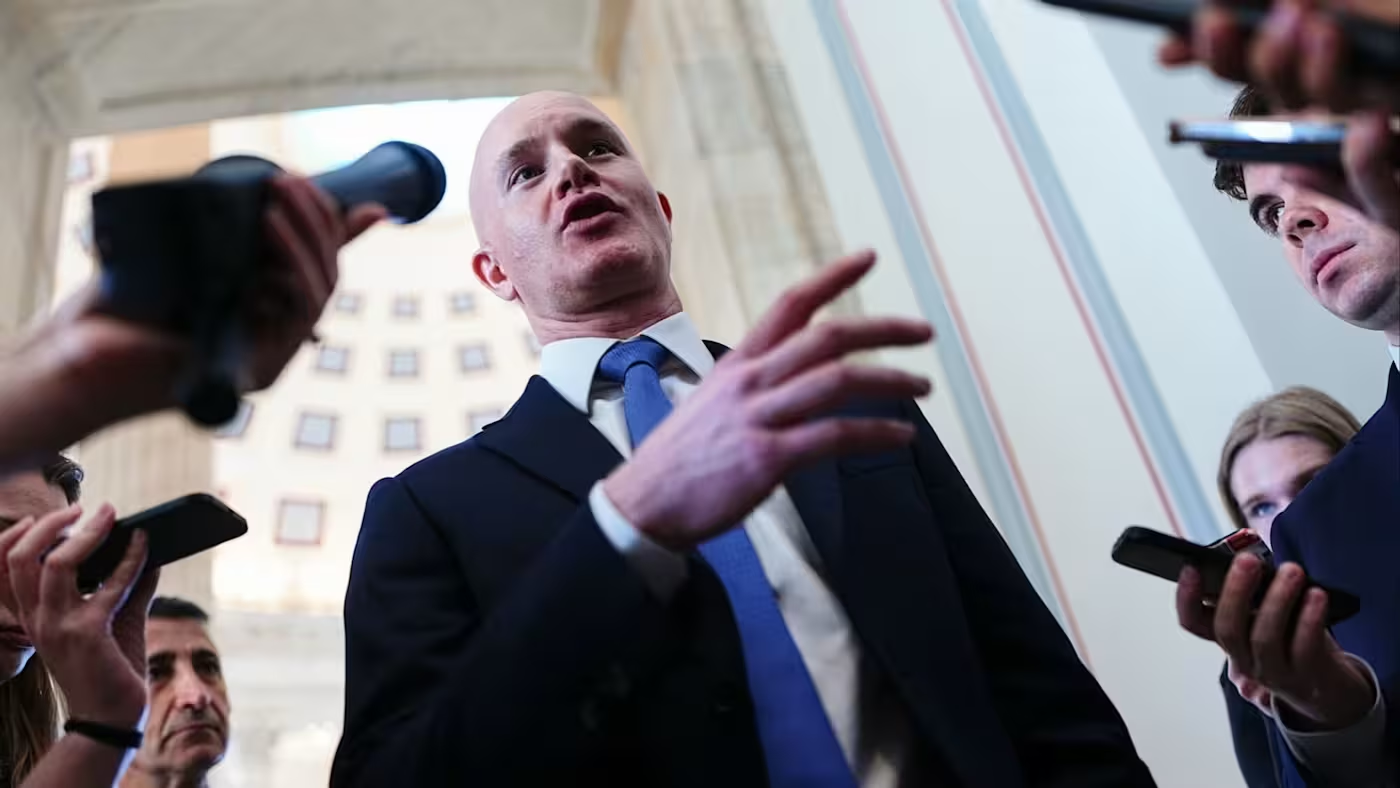
At issue is the so-called Clarity Act—a far-reaching initiative intended to establish a unified framework for the US crypto sector, worth tens of billions of dollars. This week, progress on the bill in the Senate was halted after Coinbase chief executive Brian Armstrong publicly withdrew his support.
Internal divisions over the bill, a version of which was approved by the House of Representatives in July with strong backing from crypto lobbyists, are now threatening efforts to push it through the Senate before lawmakers shift their focus to preparations for the fall congressional elections.
“There is a widespread assumption that after the midterms Congress will be less friendly to the crypto industry,” said Gabe Rosenberg, a partner at the law firm Davis Polk. “This is the only window.”
The backlash marked the first major political setback for the US crypto industry since Donald Trump’s return to the White House.
His administration made cryptocurrencies a national priority, pushed for more accommodating regulation, granted pardons to several prominent figures in the crypto market, and signed the so-called Genius Act, which governs the circulation of stablecoins.
The Clarity Act proposes a comprehensive oversight regime for digital assets—from bitcoin to niche derivatives—and spells out which of the agencies overseeing securities markets and commodity futures should be responsible for regulation.
During deliberations over the bill, crypto companies ran into resistance from the banking lobby. The central dispute concerns rewards paid to holders of stablecoins—digital tokens pegged to the US dollar.
Banks are pushing to cap such payments, arguing that the ability to earn more on dollar-denominated tokens than on bank deposits would trigger a “deposit flight” and undermine lending.
Bank of America chief executive Brian Moynihan said this week during an investor conference call that an outflow of funds from the traditional banking system would “reduce banks’ lending capacity, hitting small and medium-sized businesses especially hard,” while large borrowers have access to alternative sources of financing.
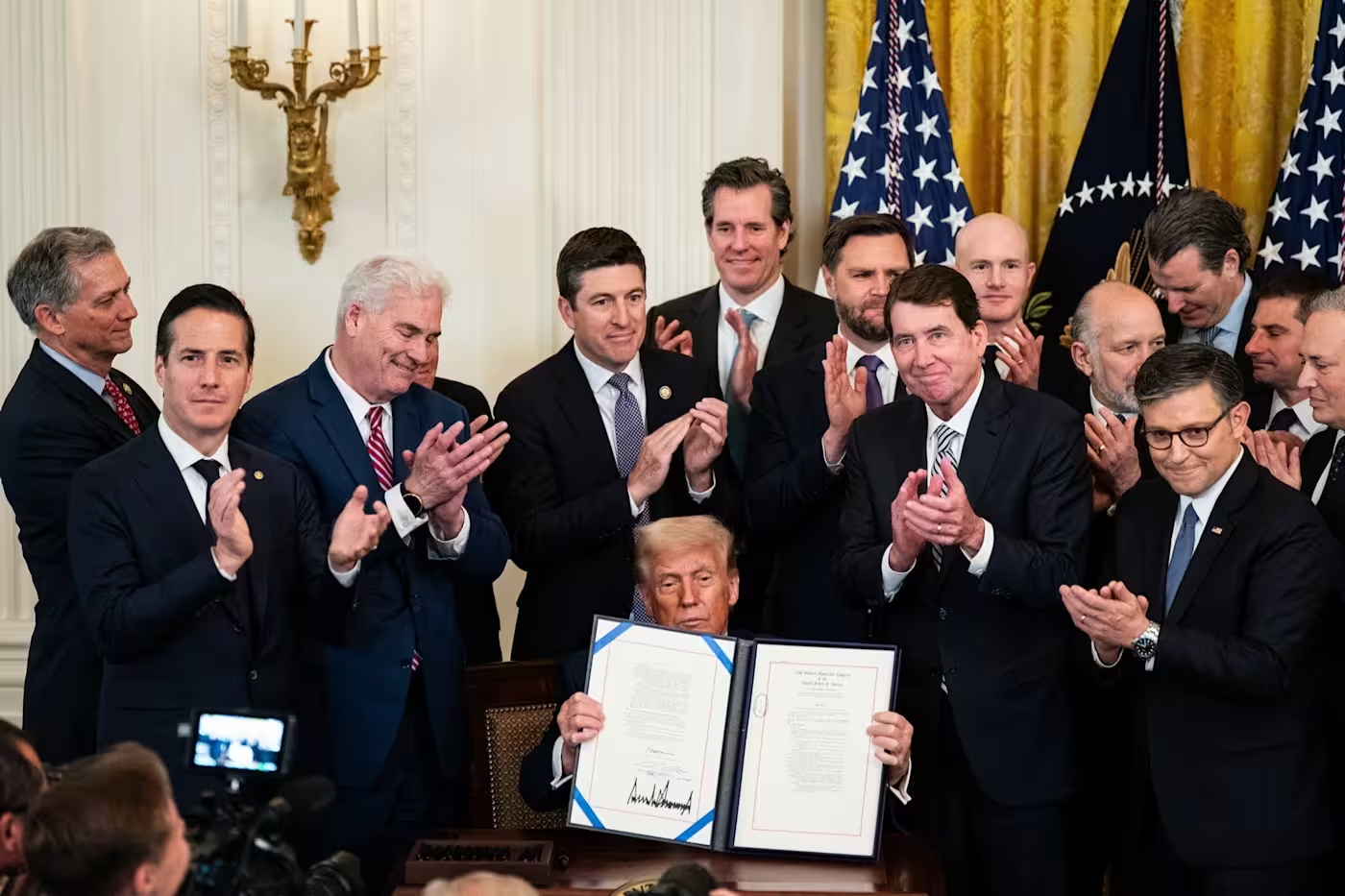
Donald Trump declared cryptocurrency a national priority, including by signing the so-called Genius Act aimed at regulating stablecoins.
US banks, according to Geoff Kendrick, global head of digital assets research at Standard Chartered, are “spending enormous sums in Washington” lobbying for a ban on crypto companies paying interest. In his words, banks “fully understand that they have a problem” when it comes to competition.
Another flashpoint has been tokens that represent ownership rights in equities. Crypto industry representatives are angered that last-minute language was added to the bill that makes it harder to obtain approval for trading such instruments.
Jonathan Jachim, global head of policy and government relations at the crypto exchange Kraken, said the changes had “created unnecessary friction and distracted attention.”
At the same time, participants in the decentralized finance sector are clashing with policymakers and traditional market-makers over anti-money-laundering requirements and other control mechanisms. They argue that such rules make it harder to build crypto systems without centralized governance and therefore slow innovation.
Taken together, these conflicts prompted Coinbase to reverse its position at the last minute, while a Senate committee session to consider amendments—the so-called mark-up—was cancelled overnight, on the eve of the meeting.
“There are multiple forces at play here, and all of them converged at the last minute around a bill that was still being negotiated literally hours before the session itself,” said Ron Hammond, head of policy and advocacy at Wintermute.
Democrats, for their part, are pressing for restrictions on public officials who profit from ties to the crypto business—a move partly aimed at the Trump family’s extensive crypto interests.
Crypto lobbyists fear that if Democrats expand their representation after the November midterm elections or gain control of even one chamber of Congress, the digital-asset sector will find itself in a far more skeptical political environment.
The fate of the nearly 300-page bill remains uncertain—the Senate has gone into recess, and no date has yet been set for a renewed committee vote.
“It still has momentum, and that is what matters most here—the factor that either kills an initiative or pushes it forward,” Hammond said. “The moment the bill loses political momentum, I will consider it dead. But for now it is still being sustained by significant external pressure, including from the White House.”