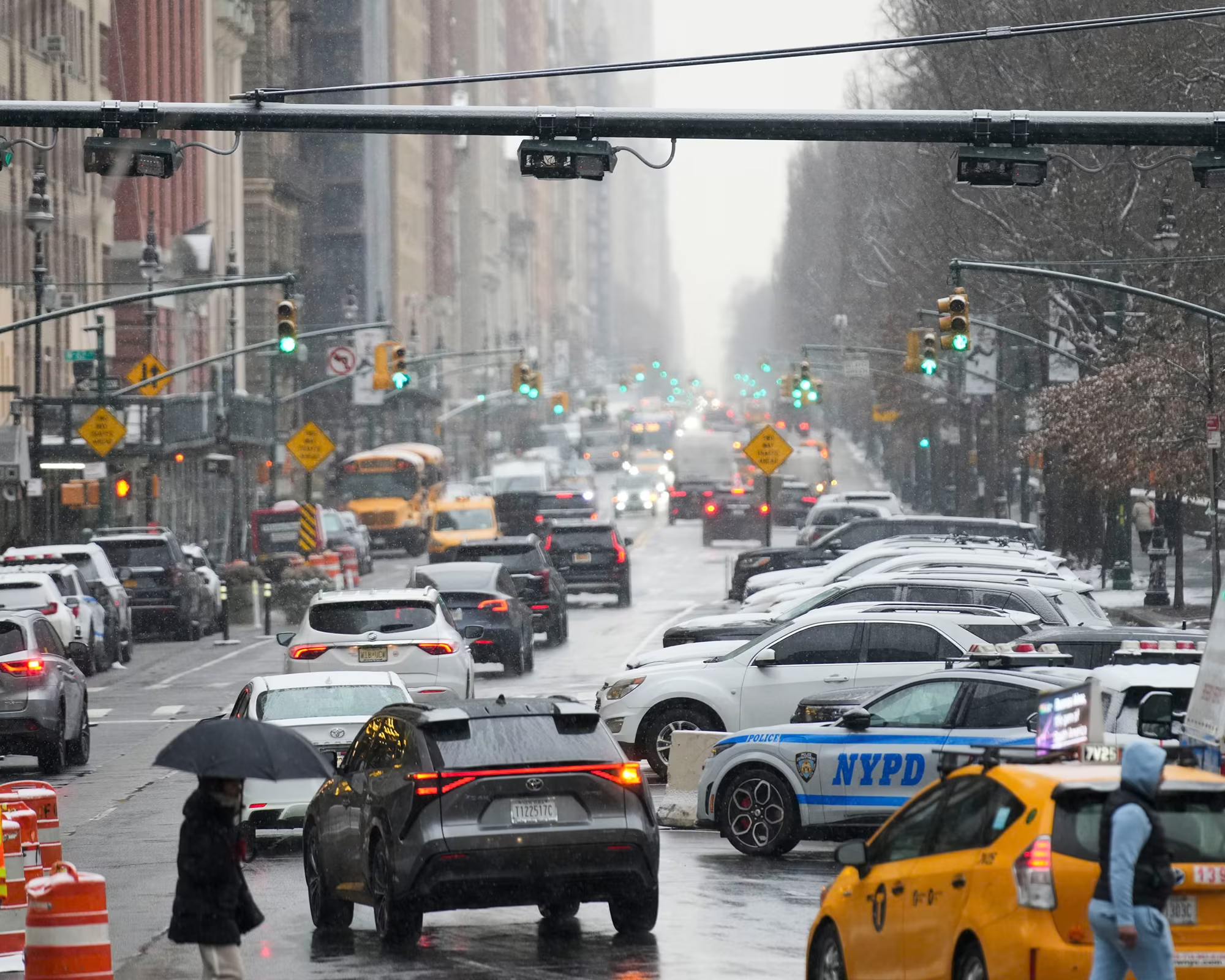
A federal judge has blocked efforts by the Donald Trump administration to halt New York’s congestion charge— the first policy of its kind in the United States—introduced to reduce traffic in the city’s most crowded districts and generate funding to modernize its aging transit system.
On March 3, US District Judge Lewis Liman ruled that the Department of Transportation lacked the authority to unilaterally revoke approval for the $9 toll, which had originally been authorized during Joe Biden’s presidency.
The court sided with the Metropolitan Transportation Authority, which argued that the department’s decision to rescind its approval was “arbitrary and capricious”, as the agency failed to provide an adequate explanation for its actions.
In a 149-page ruling, Liman noted that the congestion pricing law had been passed by the New York State legislature, signed by the governor, and had received all required federal approvals before the program was launched.
“The democratic process worked,” the judge wrote, while emphasizing that the decision does not prevent future attempts by Donald Trump and other opponents of the program to seek its cancellation. The congestion charge took effect on January 5, 2025.
New York Governor Kathy Hochul said the court’s decision confirms the success of the program, which she described as a “historic initiative” that has already delivered “significant benefits” in its first year—including reduced traffic congestion and the creation of critically needed funding for public transit.
“The judge’s decision makes one thing clear: Donald Trump’s unlawful attempts to trample his home state’s right to self-governance have suffered a crushing defeat,” the Democrat said. “Congestion pricing is legal, it works, and it is here to stay.”
Representatives of the Department of Transportation did not immediately respond to a request for comment.
The congestion charge in New York applies to most vehicles entering Manhattan south of Central Park.
The fee varies depending on the type of vehicle and the time of day and is added to existing tolls for bridges and tunnels leading into Manhattan, though it averages about $9.
Similar congestion-pricing systems—designed to curb air pollution and encourage the use of public transport—have long operated in several global cities, including London, Stockholm, Milan, and Singapore. The United States had not previously implemented such schemes.
Donald Trump—whose Trump Tower and other properties he owns lie within the zone affected by the charge—has opposed the initiative.
During the presidential campaign, he pledged to scrap New York’s plan immediately after taking office. In February, his transportation secretary, Sean Duffy, revoked the federal approval required to impose the charge.
At the time, Duffy described the fee as “a slap in the face to working-class Americans and small business owners” and threatened to strip New York of federal funding for transportation projects if the program was not halted.
Liman temporarily barred the administration from carrying out those threats pending a final ruling. The judge had earlier also dismissed several lawsuits against the program filed by local opponents—including the governor of New Jersey, the New York teachers’ union, a trucking association, and leaders of suburban municipalities.
Hochul herself initially approached the initiative with caution—the project had been developed long before she took office as governor. In 2024, she paused its launch, citing economic risks, but later agreed to implement the program after the fee was reduced from $15 to $9.
In January, when the program marked its first year in operation, Hochul—who is facing re-election—together with MTA leadership presented data on its results.
According to the latest MTA report, since the charge was introduced, 27 million fewer cars have entered central Manhattan. That has led to a 22% drop in air pollution and faster trips for those who continue to drive and pay the fee—average travel time has fallen by 23%.
The program has also generated more than $550 million in revenue for the region’s chronically underfunded transit system—exceeding initial forecasts, MTA officials said.
According to the agency, since the fee was introduced, sales tax revenues have increased, the number of leased office spaces has risen, and visitor traffic within the charging zone has grown—undermining concerns that the policy might harm the city’s economy.
“Traffic has declined, business activity has picked up, and we are directing funds into critical investments in the transit system that carries millions of people every day,” MTA chairman Janno Lieber said on Tuesday. “New York is winning.”