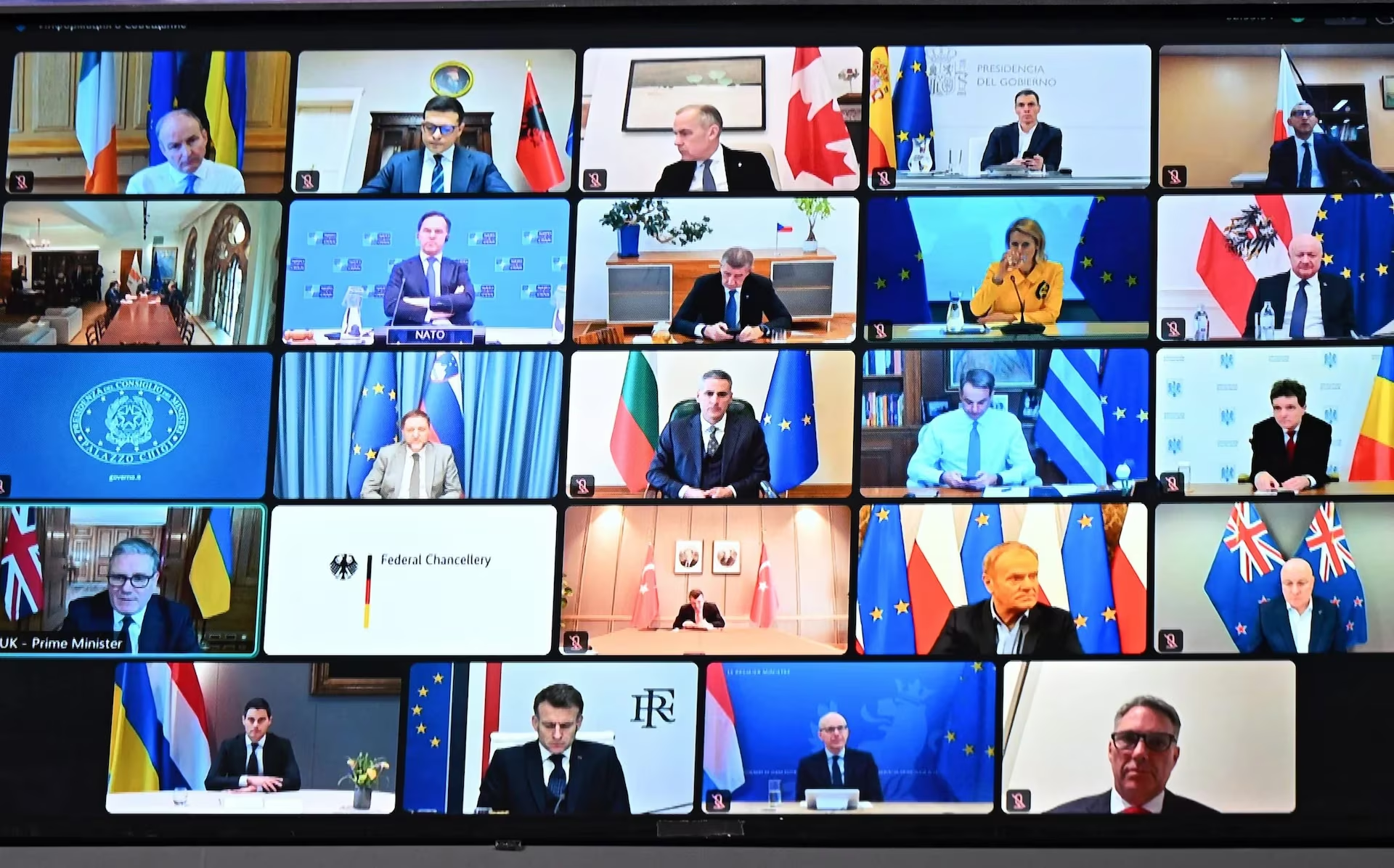
In the so-called “coalition of the willing,” resolve appears to be confined to the name alone. A growing number of its participants now concede that deploying peacekeeping forces to Ukraine is impossible without Moscow’s consent. Even the contingents themselves are increasingly viewed in European capitals not as a practical security tool, but as a symbolic gesture—a way to signal an international presence in the event of a ceasefire without altering the balance of power on the ground.
More and more members of the so-called “coalition of the willing” are concluding that sending peacekeeping forces to Ukraine is impossible without Moscow’s approval, writes The Telegraph, citing numerous sources. According to the paper’s interlocutors in diplomatic and defense circles, this means that the Anglo-French initiative to oversee a potential ceasefire could be blocked at any moment by a decision from the Kremlin.
European capitals fear that without Vladimir Putin’s approval, any foreign contingents would be treated by Russia as legitimate military targets. As a result, the very scenario of deploying peacekeepers under current conditions is described as “largely hypothetical.” One source explained that if Russia were to declare its opposition and designate such forces as targets, Western countries would be forced to adopt a fundamentally different form of military presence—making Moscow’s position decisive for the entire plan.
At the same time, peacekeeping forces themselves are seen in Western capitals not as a means of coercing or deterring Russia, but primarily as a political and symbolic mechanism—a way to formalize a ceasefire, demonstrate Europe’s engagement and create a minimal sense of international presence along the line of contact. Sources stress that this is not about security guarantees in the military sense, but about attempting to give a possible truce structure and the appearance of durability, even if the real impact of such contingents on conditions on the ground remains extremely limited.
The newspaper notes that internal divisions, exposed against the backdrop of the anniversary of Russia’s invasion, could seriously undermine the prospects for ending the war. Disputes over postwar security guarantees—which have yet to be agreed—remain another significant obstacle.