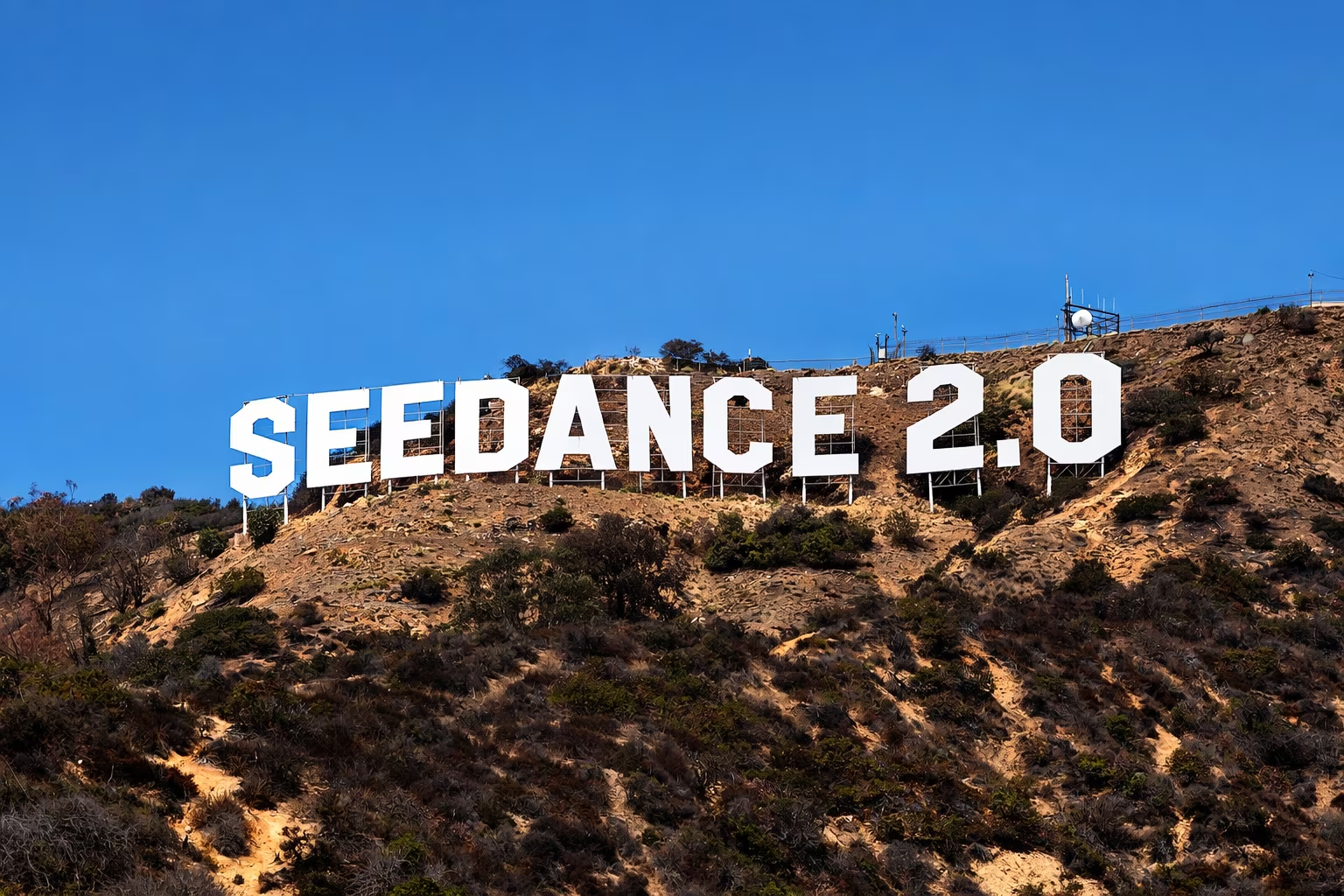
China’s relentless efforts to catch up with the United States in artificial intelligence appear to have produced their first visible casualty—Hollywood.
Technologies capable of unnerving even the most seasoned filmmakers have triggered a legal confrontation that amounts to little more than the opening salvo in a broader struggle over intellectual property and market dominance. Chinese AI models—cheaper, faster, and broader in scope than their American counterparts—pose an existential threat to capital-intensive and high-risk industries such as filmmaking. They also operate with far fewer safety constraints, particularly when it comes to copyright and image rights.
The immediate trigger was Seedance 2.0—a new video generator from ByteDance that produced a hyper-realistic clip depicting a fight between Tom Cruise and Brad Pitt, setting off alarm bells across Hollywood’s largest studios.
Netflix, Paramount, Warner Bros, and Disney have sent ByteDance cease-and-desist demands over the tool. The SAG-AFTRA union and the Motion Picture Association have also backed the pressure, arguing that Seedance infringes copyright and unlawfully exploits likenesses. ByteDance says it respects intellectual property and, under legal pressure, is adding safeguards to Seedance. It remains unclear whether these steps will translate into meaningful limits on the tool’s capabilities or distribution.
In the broader context, Hollywood is seeking to rein in Seedance through copyright law, but legal pressure has done little to slow the overall rise of Chinese AI models.
A telling data point—according to OpenRouter, Chinese open-source models rose from near-zero usage in mid-2024 to roughly a third of the entire AI market by the end of 2025.
As Vermillio chief executive Dan Neely notes, the release of Seedance “feels like another DeepSeek and Sora 2 moment—where the key question is not only what the model can do, but who gets to set the default standard.”
This suggests that a first-mover advantage could allow China to define the baseline rules for AI—particularly those governing intellectual property and copyright.
The outcome remains uncertain—it is unclear how long pressure from major American companies can restrain China’s ambitions in artificial intelligence.