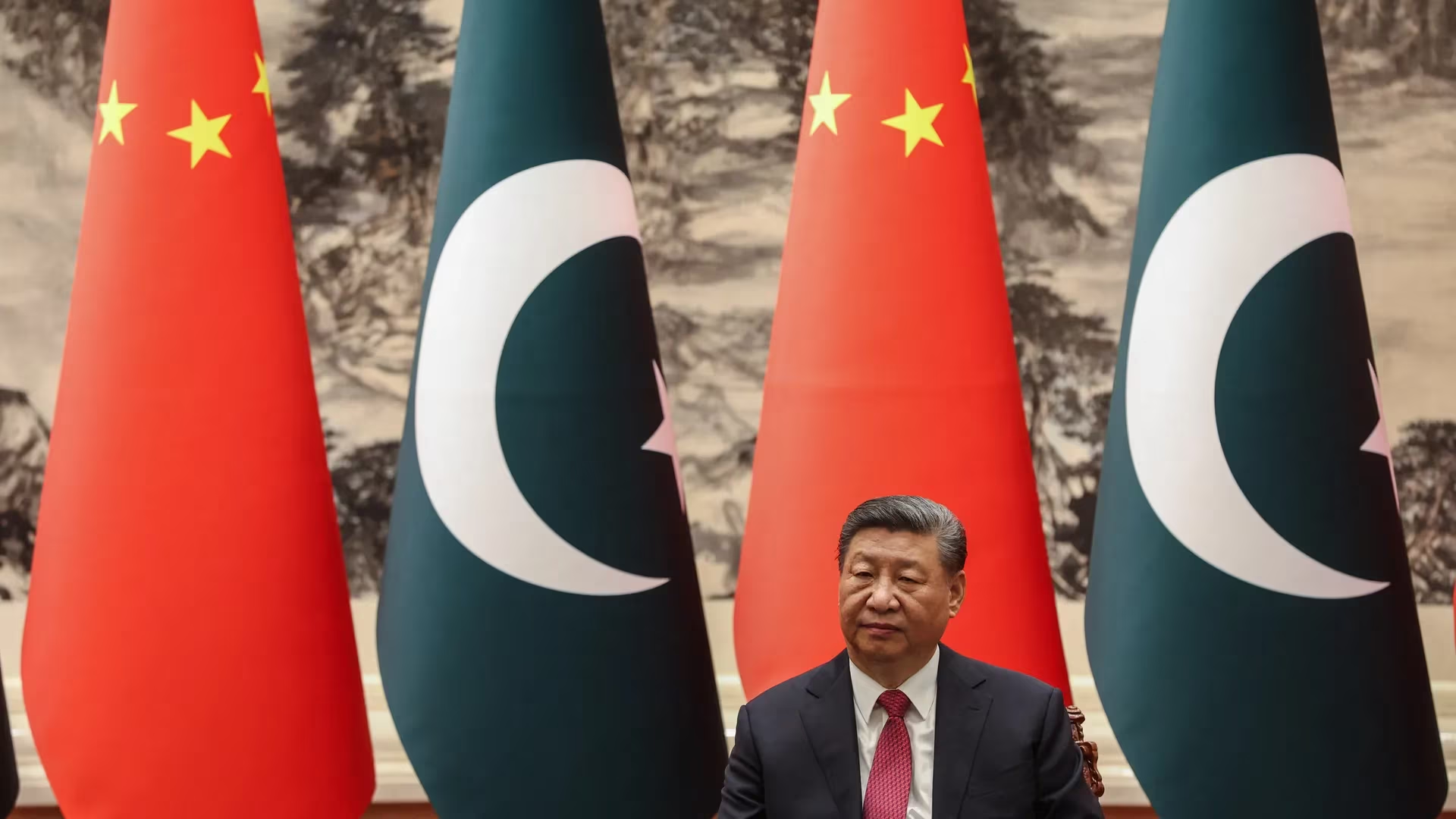
On Tuesday, March 31, China and Pakistan unveiled a new initiative aimed at ending the war with Iran, calling for an immediate ceasefire and the restoration of shipping through the Strait of Hormuz.
According to Pakistan’s foreign minister, the plan was agreed during his visit to Beijing on Tuesday. Asked whether he backed the initiative, Donald Trump declined to discuss its details, saying only that “talks with Iran are going well.”
It remains unclear whether Trump gave tacit approval, though a source familiar with the discussions said China had played a constructive role in efforts to reach an agreement. Even so, it appears unlikely that Pakistan—which has emerged as a key intermediary between the United States and Iran—would have advanced such an initiative alongside Beijing had Washington objected.
As Iran’s largest trading partner and the main buyer of its oil, China holds considerable leverage in Tehran and has a strong interest in bringing the conflict to a close as quickly as possible.
In Beijing on Tuesday, Pakistan’s foreign minister, Ishaq Dar, held talks with Chinese Foreign Minister Wang Yi, after which the two sides published a joint peace initiative. It calls for an immediate halt to hostilities with humanitarian access to all affected areas, the prompt launch of peace talks on the condition that the independence and security of Iran and the Gulf states are respected, and a commitment by all parties to refrain from the use—or threat—of force during the negotiating process.
The document also calls for an immediate halt to attacks on critical infrastructure, including energy facilities, desalination plants and power stations, as well as sites linked to the civilian nuclear program, including nuclear power plants. It separately underscores the need to ensure the safe and unhindered passage of civilian and commercial vessels and to restore normal navigation through the strait as quickly as possible.
The final element of the initiative is meant to be the conclusion of a comprehensive peace agreement based on the principles of the UN Charter and the norms of international law.
Dar stressed that the proposal emerged from his bilateral talks with Wang Yi. “This is clearly a balanced five-point initiative that both of us endorsed and that all sides could support,” he said.
Trump repeated that “talks with Iran are going well.” Asked specifically about the Pakistan-China initiative, he refrained from criticism and again limited himself to a broad assessment of the diplomatic track.
China’s intervention as a mediator in a conflict initiated by the United States could mark a notable geopolitical shift. Trump is planning to visit China in May—a trip that had previously been postponed because of the war. Since reaching a trade truce last year, he has moved toward closer relations with Beijing.