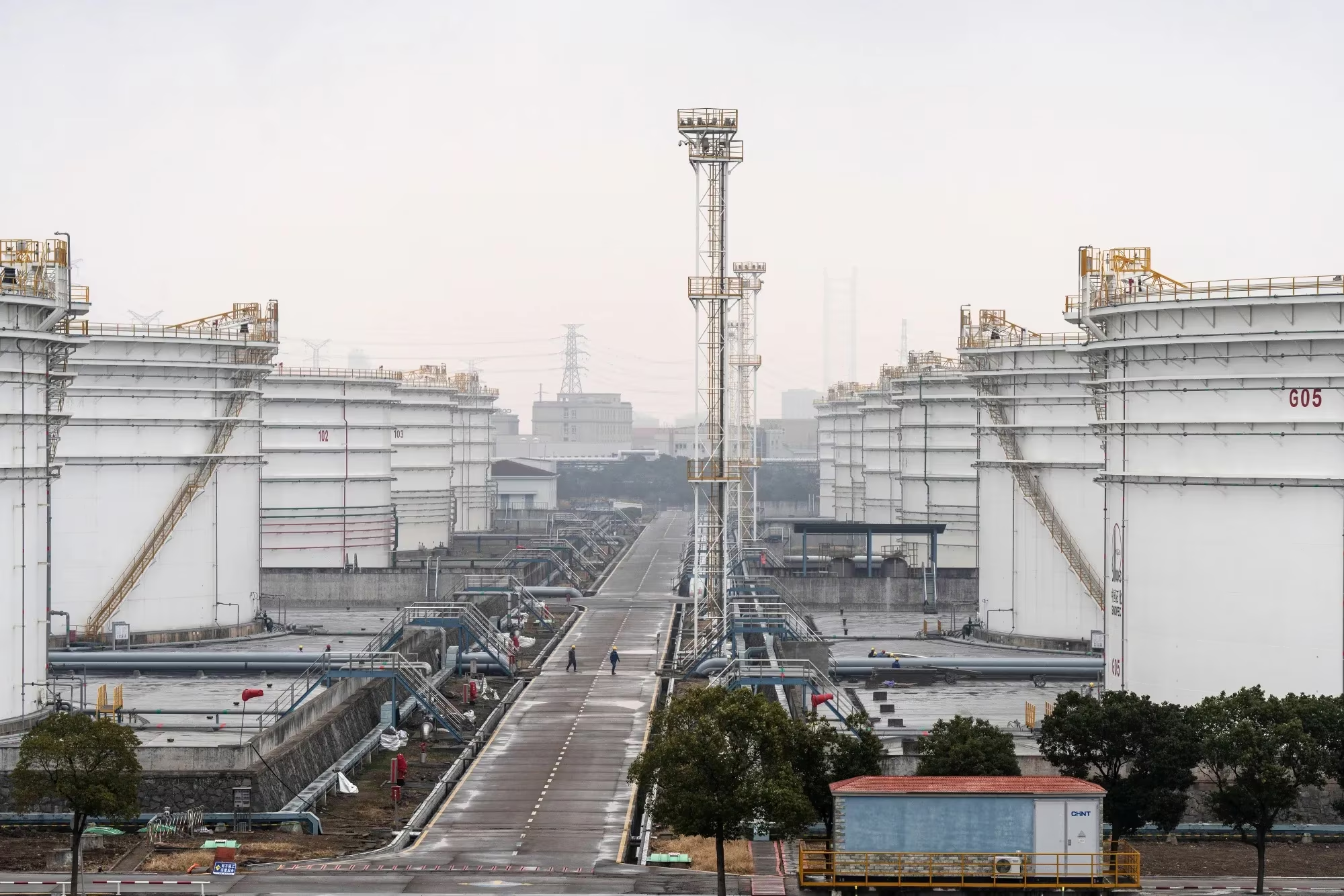
China—the world’s largest oil importer—may soon begin drawing on substantial commercial stockpiles as the prolonged conflict in the Middle East shows no sign of abating, according to FGE NexantECA.
The consultancy estimates that refiners could tap up to 1 million barrels a day over the next four to six weeks. Refining facilities—particularly in the country’s south—may be allowed to use commercial reserves to limit the scale of run cuts or avoid shutdowns altogether.
Such a move remains an available lever for Beijing. After more than a year of active stockpiling, total reserves have reached roughly 1.4 billion barrels—levels that could be deployed if the Strait of Hormuz were effectively blocked. Strategic reserves are likely to remain untouched, though even the use of commercial inventories requires multiple layers of domestic approval.
“Given shipping times, it is still too early for disruptions to supplies from the Persian Gulf to be felt in China,” said Antoine Halff, co-founder and chief analyst at Kayrros. According to him, China’s onshore oil inventories fell by about 7 million barrels between March 5 and March 16, though this may reflect only “normal short-term volatility.”
Earlier this month, Kayrros estimated China’s commercial onshore inventories at 851 million barrels, with strategic reserves at 413 million. Last week, Erica Downs, a senior research scholar at Columbia University’s Center on Global Energy Policy, said total reserves amount to around 1.4 billion barrels.
In the early days of the war, Beijing instructed its largest refiners to curb fuel exports, while Sinopec scaled back operations. Rystad Energy estimates that utilisation rates will fall by between 400,000 and 800,000 barrels a day in March and April, while FGE expects a decline of 1.5 million barrels a day starting this week.
Such measures are likely precautionary, according to GL Consulting. State refiners are expected to prioritise gasoline and diesel output, cutting back on petrochemical production to secure domestic supply. The main impact of supply disruptions, they estimate, will emerge gradually—from late March into early April.
State-owned refiners—more dependent on Middle Eastern supply—are likely to come under pressure first. Private processors, by contrast, may maintain utilisation rates in an effort to capitalise on rising domestic fuel prices. The so-called “teapots” have easier access to Iranian and Russian crude, though they face intensifying competition from India for Russian volumes.
At this stage, Beijing appears to be relying on export curbs and the use of inventories directly at refineries, Downs notes. “I expect China will avoid drawing on both commercial and strategic oil reserves for as long as possible,” she said.