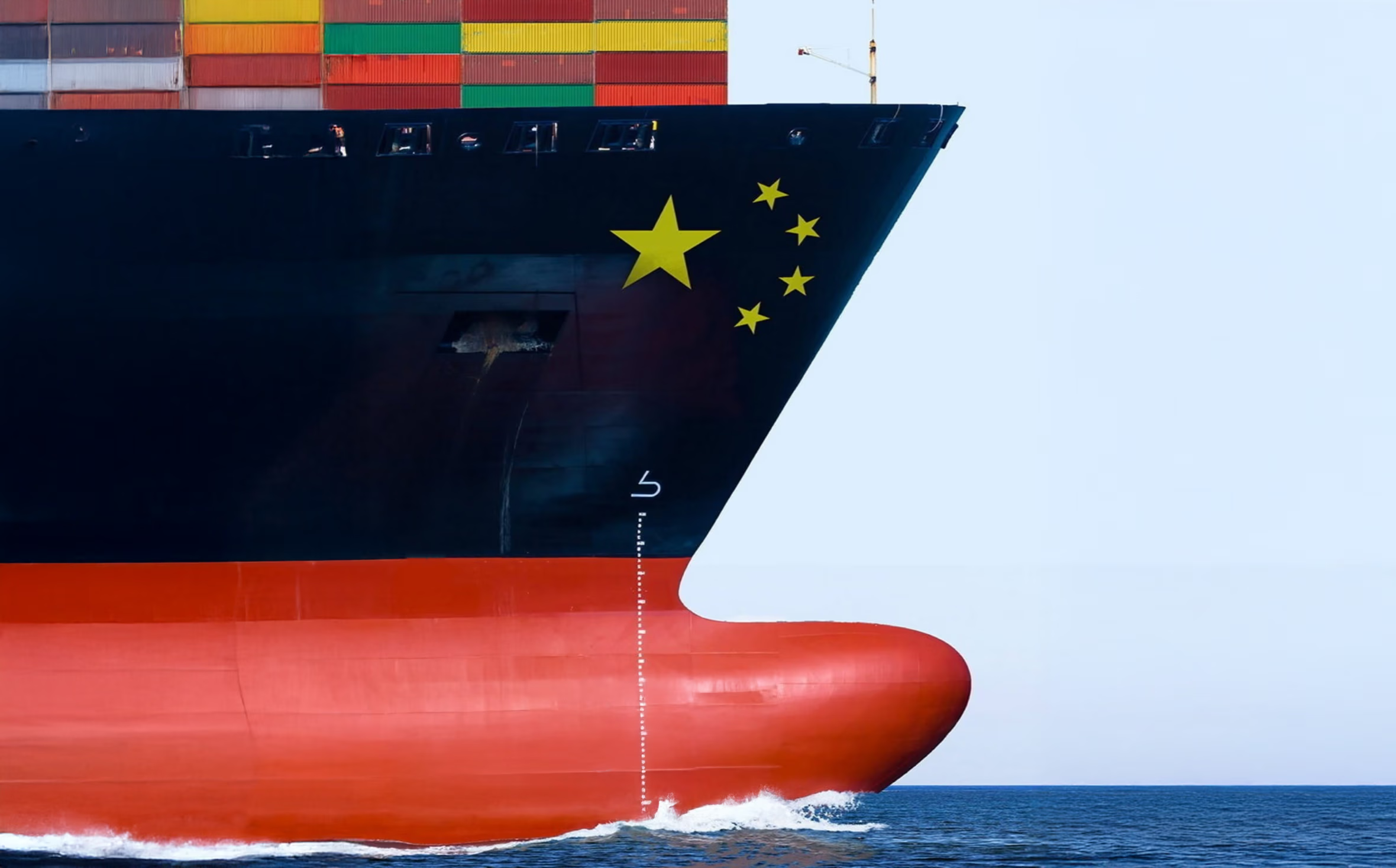
China is ending the year with an external trade surplus exceeding $1tn for the first time, casting doubt on the effectiveness of measures by advanced economies—above all President Donald Trump’s initiatives—aimed at curbing the flow of Chinese goods to global markets.
China’s General Administration of Customs said on Monday, December 8, that exports in the first 11 months of the year rose by 5.4 percent compared with the same period a year earlier, while imports slipped slightly. As a result, the global surplus reached $1.07tn, surpassing the 2024 figure of $990bn.
“Put simply, China’s price advantage is extraordinarily large,” said Xu Tiancheng, senior economist at the Economist Intelligence Unit in Beijing. According to him, “the main driver of further export growth is not the expansion of global markets but China’s increasing share within the existing structure of world trade.”
Shipments to the United States fell by 28 percent year-on-year in November—a steeper drop than October’s 25 percent decline.
The decrease followed an October meeting between Trump and China’s President Xi Jinping, during which the two sides extended their earlier trade truce. Trump reduced tariffs on imports from China, while Xi agreed to resume soybean purchases and delay by one year restrictions on rare-earth exports.
Xi signaled his willingness to visit the United States early next year, while Trump said he intended to travel to Beijing in April. Analysts believe both sides hope to have a more durable trade arrangement ready by then.
Experts say Xi approached the October talks with confidence—the tariff pressure applied by Trump has had little effect on China’s export-oriented economy despite its domestic challenges. The latest data indicate that this dynamic persists, despite a temporary setback in October.
Part of the growth appears to stem from China more actively rerouting goods through Southeast Asian countries, despite efforts by the Trump administration to prevent the practice. Data released on Monday show that shipments from China to the region rose by 8 percent year-on-year in the first 11 months of the year. Chinese products can undergo final assembly in Southeast Asia before being exported to the US market.
According to Xu Tiancheng, exports to Southeast Asia are growing particularly fast. “A significant share of these goods were likely originally intended for the United States but are now making a stop in the region,” he noted.

China’s Economy Loses Momentum Amid the Trade War with the U.S. and a Property Crisis
Weak Domestic Demand Pushes Beijing to Bet on Exports and Industry
Chinese Exports Accelerate Despite U.S. Tariffs
Rising Shipments to the EU and Southeast Asia Offset the Decline in Exports to the U.S.
Notably, the drop in exports to the United States has been offset by a surge in shipments to other global markets. The sharpest increase has been in the European Union—exports in November jumped 14.8 percent year-on-year.
French President Emmanuel Macron, returning from a state visit to China, threatened to impose tariffs if Beijing fails to address its sizeable surplus in trade with the EU. Last year China sold more than €300bn—around $350bn—worth of goods to the bloc above what it purchased in return.
“I told them that if they do not respond, we Europeans will be forced to take decisive action in the coming months,” Macron said in an interview with the business daily Les Echos published on Sunday. According to him, any tariffs could mirror the American approach.
For countries such as Germany, where the auto industry accounts for around 5 percent of GDP, the figures on Chinese car exports are especially troubling: shipments jumped 53 percent in November, following an already striking 34 percent annual increase in October.