New rules governing the funeral sector took effect in China on March 30, 2026, banning the use of residential property exclusively for storing the ashes of the deceased.
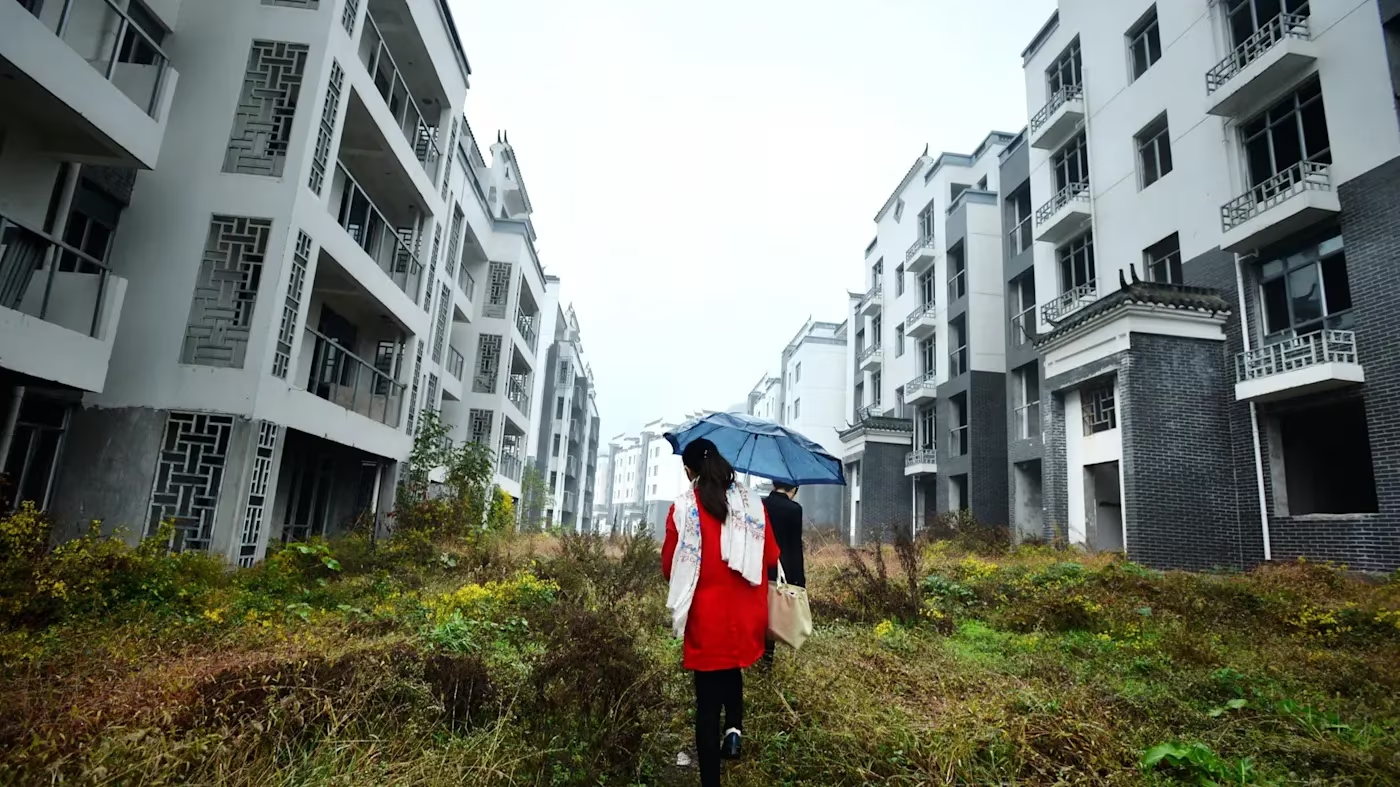
The authorities moved in after the spread in recent years of so-called columbarium apartments—ordinary flats in residential buildings purchased not for living, but for housing the urns of deceased relatives. The practice has expanded amid an aging population, a shortage of cemetery plots—especially in major cities—and the crisis in the property market.
The downturn that began in 2021 has left behind tens of millions of unsold apartments. Housing prices are falling even as burial costs rise. In 2023, a 0.6-square-meter plot at Shanghai’s Songheyuan Cemetery was selling for 342,000 yuan—about $50,000. On a per-unit-area basis, that exceeded the price of the city’s most expensive housing
The situation has drawn wide attention on Chinese social media. Yet even more affordable cemeteries remain out of reach for many. In 2024, a Beijing resident told Legal Daily that plots at “ordinary cemeteries” in remote parts of the capital cost about 100,000 yuan—nearly $15,000. She ultimately bought an apartment in Zhangjiakou, about 200 kilometers from Beijing, to store the ashes of her relatives there.
The price of such an apartment was 250,000 yuan. Although that is more expensive than a cemetery plot, families also see such a purchase as an investment, expecting to sell the property in the future if prices rise. “Many families view this kind of property as an asset that can be sold later, once prices in the real-estate market begin rising again,” Xinyi Wu, a graduate student at the University of California who studied the phenomenon of columbarium apartments, told the Financial Times.
Before the direct ban was introduced, the practice existed in a gray zone. Formally, using residential property for purposes other than those intended is prohibited, yet buyers generally did not disclose their intentions, and sellers asked few questions—selling an apartment on those terms was preferable to not selling it at all. Neighbors also gave no consent and often only suspected what such premises were being used for.
External signs often made it possible to draw conclusions. Such apartments are frequently located in smaller cities, in remote and sparsely populated areas. Their windows may be shuttered or bricked up, and funeral plaques and flowers sometimes appear on the doors, although owners often avoid such details so as not to attract attention. Visits usually take place once a year—on Qingming, the traditional early-April holiday for honoring the dead.
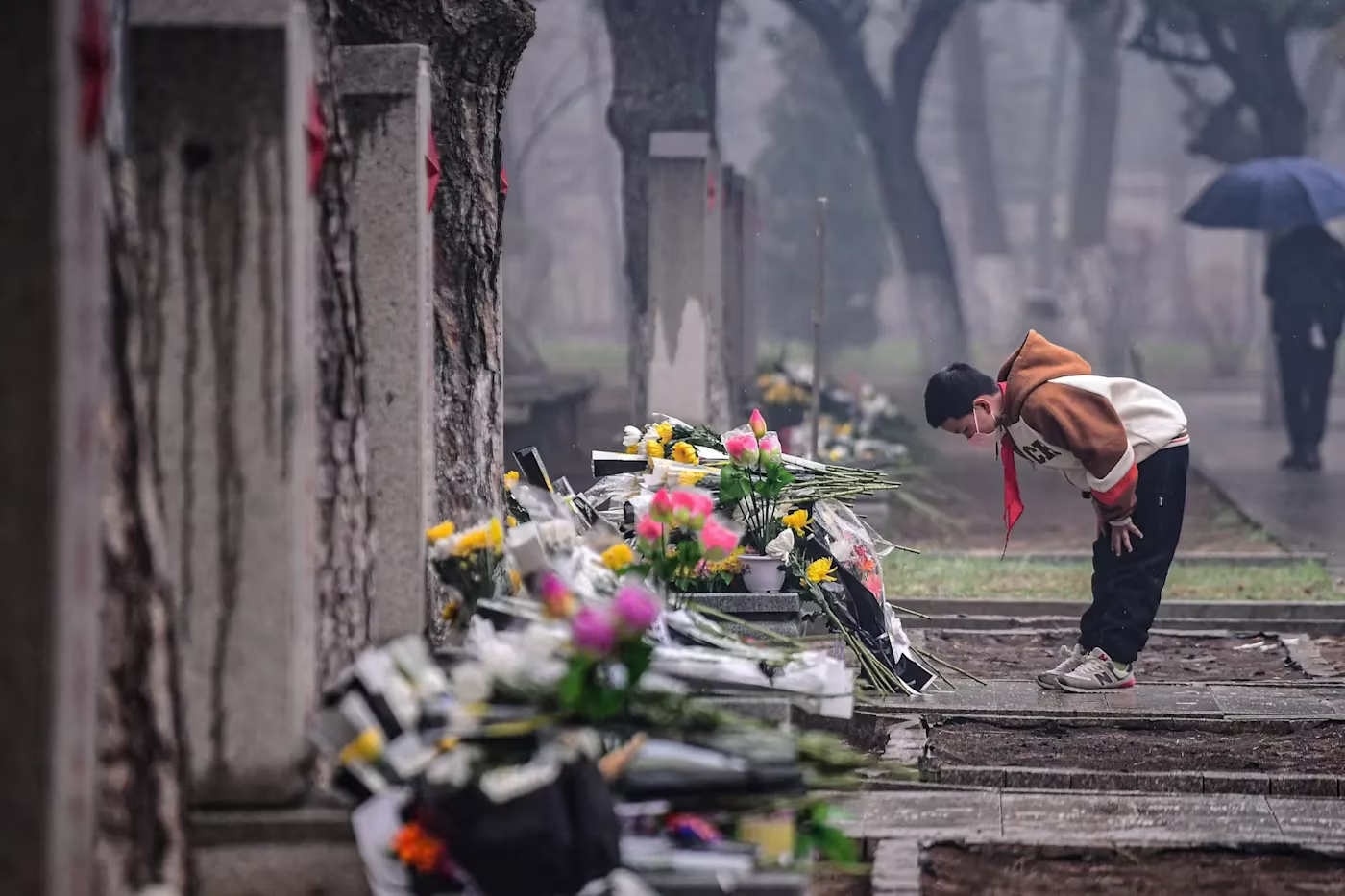
During the Qingming festival, Chinese families visit the graves of their ancestors and tend to them.
A resident of Nantong told Legal Daily that the apartment across the hall had long aroused his suspicions. One day, hearing noise, he looked through the peephole and saw a group of seven or eight people at the door. Opening his own door under the pretext of leaving, he noticed two candlesticks and a black-and-white portrait of the deceased inside the apartment. “My neighbor is not a living person,” he said, admitting that he did not know how to respond.
That ambiguity is typical for many neighbors of such apartments. According to Xinyi Wu’s research, nearly 30% of them experience fear and discomfort. Some are willing to tolerate the situation so long as there are no obvious funeral attributes, while others even see an advantage in it. “If having ghost neighbors lowers my rent, I’ll take it,” one comment cited in her study said.
Wu believes that even after the ban, the practice will not disappear entirely—existing columbarium apartments will continue to be used, and new ones may still emerge. The families most likely to resort to it are those that adhere to clan traditions and own multiple properties. “When space loses its value as a place to live, people find new value in it,” she told the Financial Times.