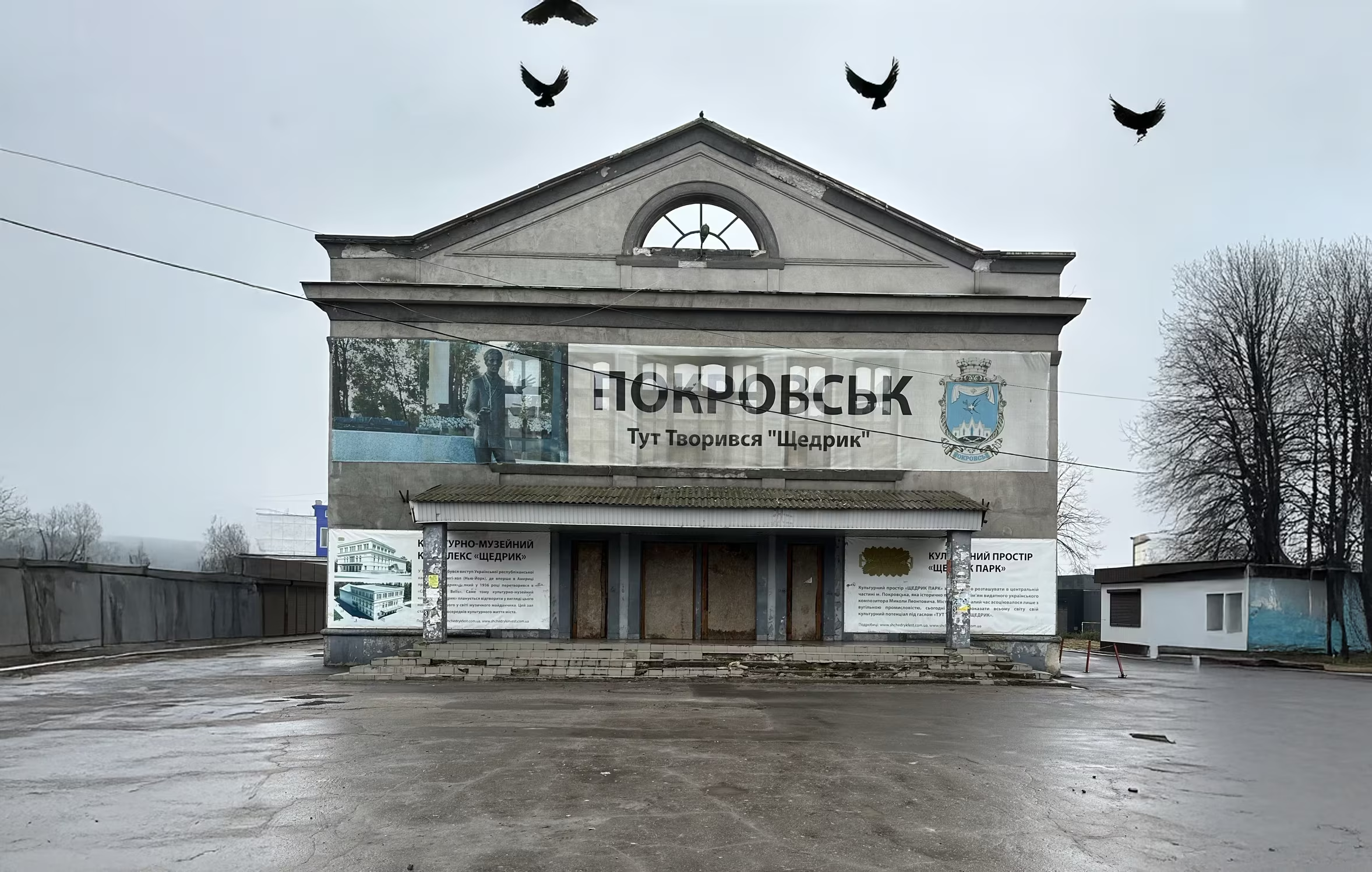
The melody that millions of people around the world recognize as the Christmas classic Carol of the Bells has a specific origin and a precise geography. It was written by the Ukrainian composer Mykola Leontovych and is closely linked to Pokrovsk—a city in eastern Ukraine where his work on “Shchedryk” took shape.
Today, that city has been almost completely destroyed by the Russian offensive, while the song itself has become not only part of global culture but also a reminder of war, lost homes, and the Ukrainian origins of what for a long time was treated as “beyond politics.”
A Ukrainian song with a history spanning more than a century—known to Americans as Carol of the Bells—was originally conceived for a layered choral sound capable of filling churches, concert halls, and city squares. War, however, has forced Ukrainians to seek new ways for familiar culture to survive.
For one choir forced to flee the city that many regard as the birthplace of this melody because of Russian shelling, this has meant a drastic reduction in numbers. This Christmas, the intricate choral score will be performed by just three singers instead of the customary thirty. The sound offers an exact sense of Ukraine after several years of war—exhausted but unbroken, preserving beauty despite profound loss.
The choir is linked to a historic music school in the occupied eastern city of Pokrovsk—an institution whose identity is inseparable from the original Ukrainian version of the song, “Shchedryk,” also known as “Shchedryi.” The school bears the name of its author, Mykola Leontovych.
“Wherever we went, we always sang this song,” says Alla Dekhtyar, 67, the choir’s director, who this month will be one of three performers in the school’s scaled-down holiday concert. “It was our calling card.”
Everything changed after Russia’s devastating assault on Pokrovsk, which forced most residents—including every member of the choir—to leave the city and seek refuge elsewhere in Ukraine or in Europe.
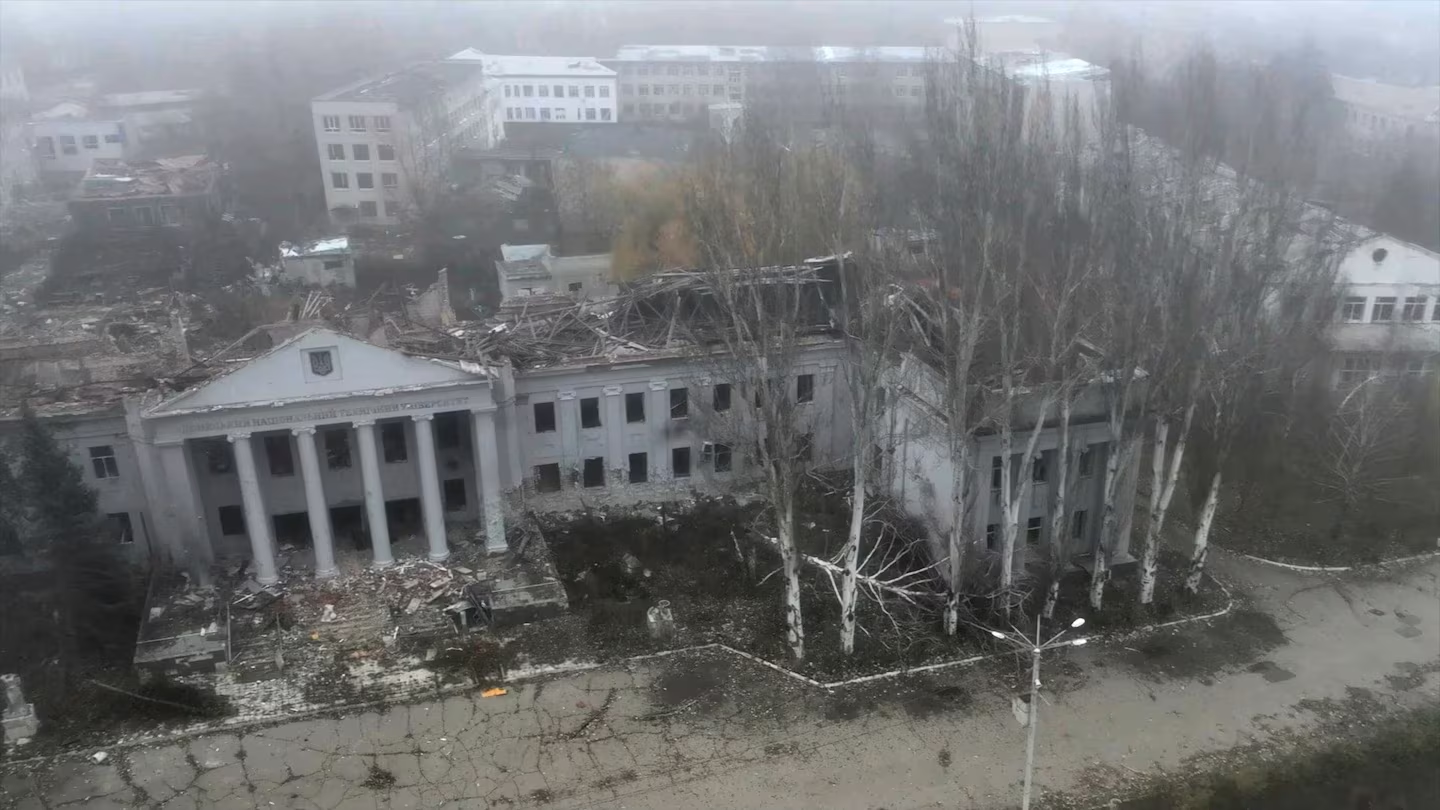
An aerial view of a damaged building at the National Technical University in Pokrovsk, Ukraine. December 2025.
In 2024, the Leontovych music school managed to evacuate its most valuable instruments. Drone footage shows that the school building has since been largely destroyed. Russian forces now control about 95 percent of what remains of the city, which has been subjected to intense shelling—like many other parts of Ukraine that Russia has sought to bring under its control.
Last year, the Leontovych school resumed its work in evacuation—in Dnipro, about 185 kilometers to the west. But with Pokrovsk’s residents scattered across different regions and countries, the choir that once performed regularly in the city and brought together dozens of voices has now been reduced to three people—two sopranos and an alto, including Dekhtyar.
Even so, the trio intends to perform an adapted version of “Shchedryk” this year. The option of choosing a different, simpler song for the upcoming holiday concert was never considered. Performing the piece in its original Ukrainian remains a form of resistance to Russian aggression—and a reminder of Ukraine’s contribution to the global cultural tradition.
For those from Pokrovsk, this carries particular weight. While the song is beloved across Ukraine, for this eastern city it holds a special meaning: many believe that Leontovych began working on it here, long before its premiere in Kyiv in 1916 and the 1922 performance at Carnegie Hall that made a lasting impression on American audiences.
“For everyone else, this melody means Christmas,” says Angelina Rozhkova, director of the Pokrovsk Historical Museum, who is also living in evacuation in Dnipro. “For us, this melody means home—a home we no longer have, a home that lies in ruins.” “For Russia,” she adds, “our home means territory they want to take from us.”
The story of “Shchedryk” and Mykola Leontovych.
Leontovych was the son of an Orthodox priest and an aspiring music teacher. In 1904, he and his young wife moved to the small eastern village of Hryshyne—a railway settlement built by workers involved in the expansion of the rail line, which later became Pokrovsk. Born in 1877 in Vinnytsia region in central Ukraine, he ended up so far east under circumstances that are still interpreted in different ways. According to one account, he learned of a music-teaching vacancy at a railway school directly from the workers themselves, Rozhkova said. According to another, he responded to a newspaper advertisement.
In his new post, Leontovych led several musical ensembles at once, including a railway workers’ choir. Their repertoire included songs with Ukrainian, Russian, and Jewish roots, but the composer’s own creative work was shaped by the melodies of his childhood. A committed supporter of an independent Ukrainian state, Leontovych, as his reputation grew, came to be seen—like many other Ukrainian intellectuals—as a threat to Russian influence over territory Moscow regarded as its own.
“He is connected to the culture of Donbas,” Rozhkova says, referring to the eastern region of Ukraine that includes Pokrovsk and has become the target of a Russian offensive. “He effectively carried the banner of Ukrainian culture, performing reimagined traditional Ukrainian songs with the choir.”
Historians believe that the opening notes of “Shchedryk”—the very ones now associated worldwide with the start of the Christmas season—trace back either to a folk melody he heard in childhood or were passed on to him by a member of the choir as part of a personal recollection.
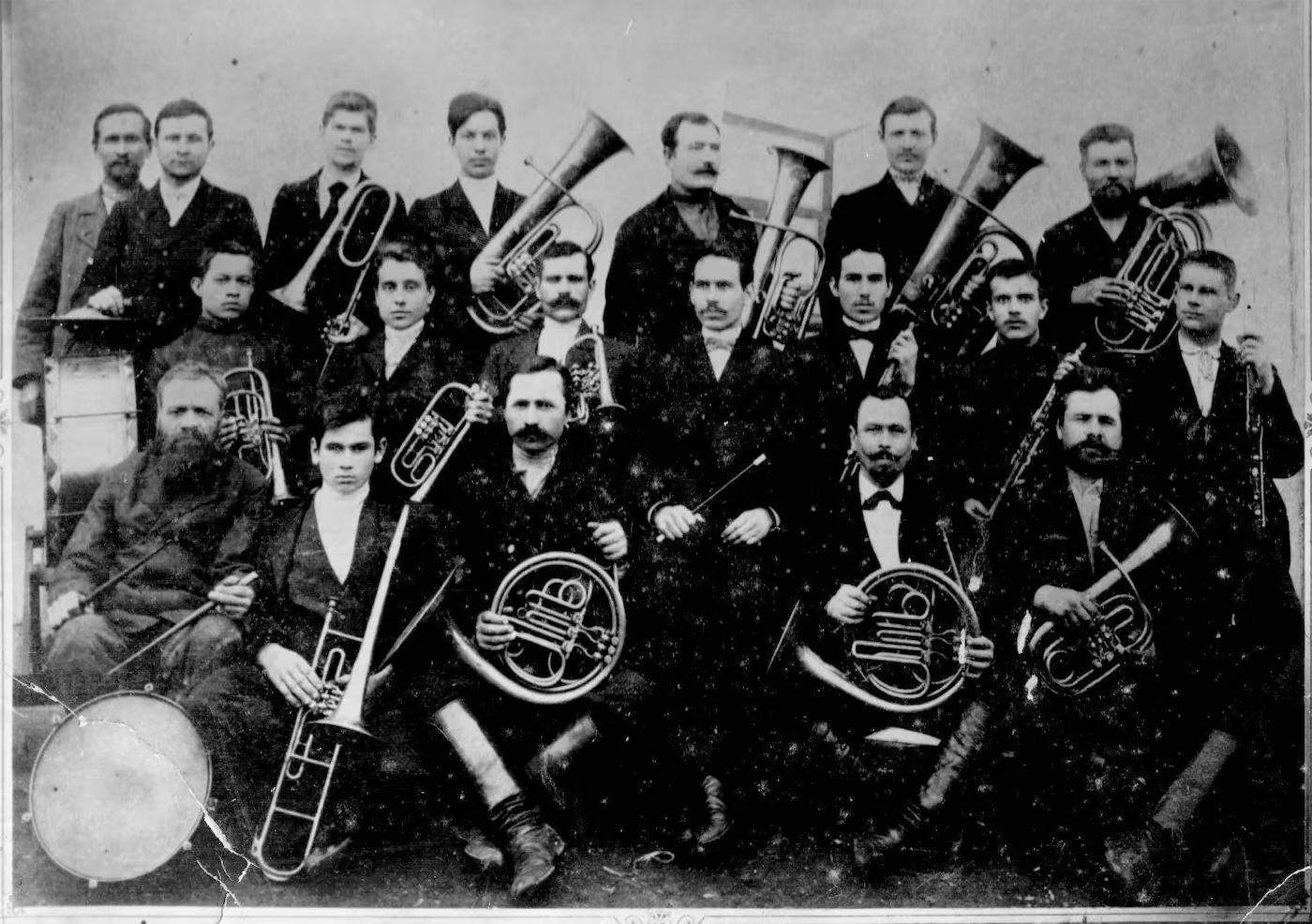
Composer Mykola Leontovych is pictured at the center with the ensemble he conducted in Pokrovsk. Early 20th century.
In the song’s original version—the one still sung in Ukraine—there are no “ding-dongs,” no silver bells, and no proclamation of Christmas’s arrival. Christmas is not mentioned at all. Instead, the voices tell of a swallow soaring in the sky, bringing news of a prosperous new year and urging the household’s master to rejoice in the birth of lambs and the promise of future abundance. That is why a swallow appears on Pokrovsk’s coat of arms—a motif rooted in the artistic work of Leontovych’s father.
Outside Ukraine, the song first made a major impact only in 1922—one year after Leontovych was killed by an officer of the Soviet security services for his nationalist views. That year, a Ukrainian choir promoting the idea of the country’s independence and its cultural heritage performed the piece at Carnegie Hall and received enthusiastic reviews, even as some American newspapers mistakenly described the music as Russian. Later, the Ukrainian-American composer Peter Wilhousky wrote an entirely different English text to the melody, turning it into a Christmas classic.
“When Leontovych was writing ‘Shchedryk,’ he did not realize he was creating a hit,” says Elmira Dzhabrailova-Kushnir, a 39-year-old cultural history specialist from Kyiv. “For him, it was an ethnographic study.”
He built the famous work around its distinctive opening notes, transforming them into a complex composition in which different voices and melodies are woven into a single sound. “He took three notes and, through his genius, turned them into this song,” Dekhtyar says.