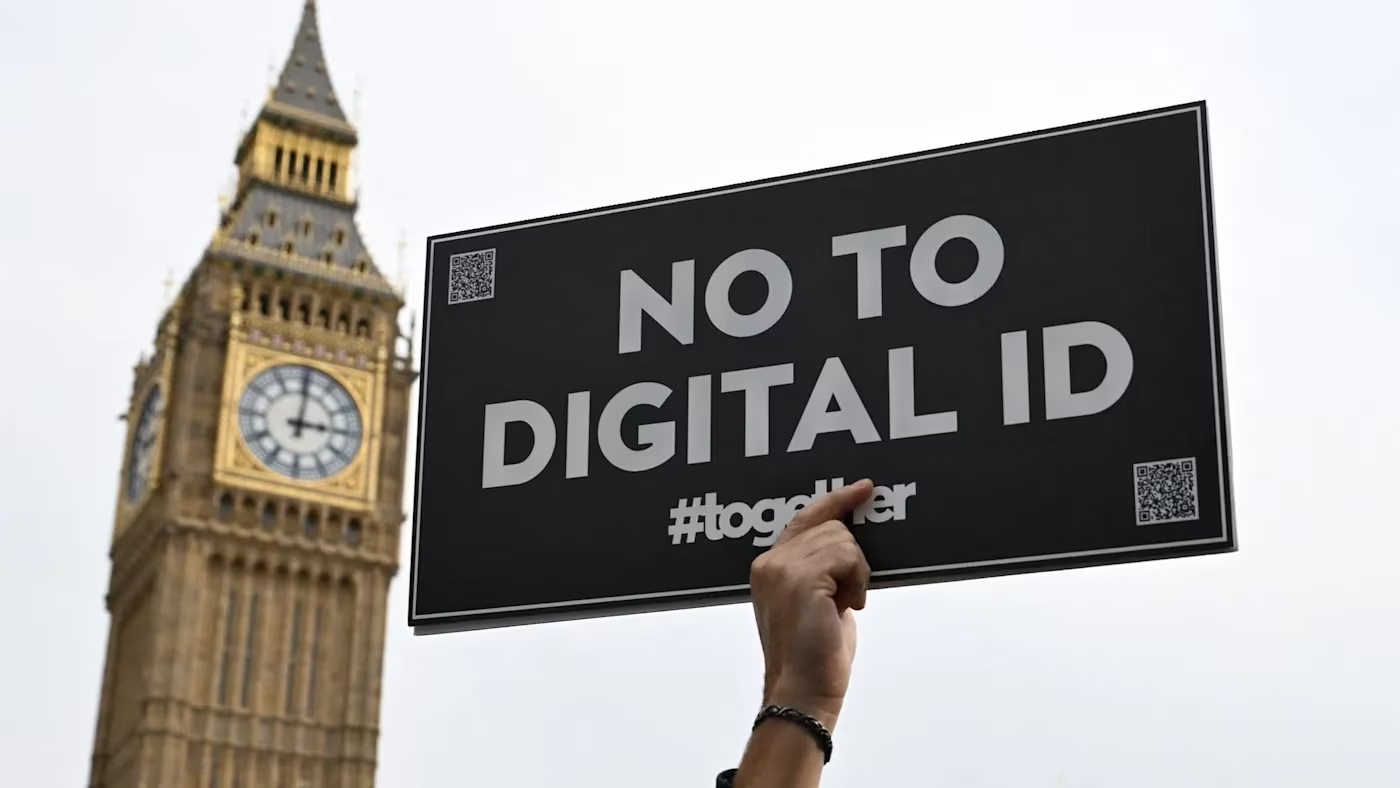
After taking office as prime minister on Monday, Andy Burnham will abandon plans to introduce a government-issued digital identity card for every British adult. The decision will form part of his announced “reset of priorities.”
Funds earmarked for the program will be redirected “to where they are needed most, such as helping people contend with the rising cost of living,” a spokesperson for the Labour leader said late Saturday.
Britain’s Office for Budget Responsibility estimated that the digital-ID system would cost £600 million ($807 million) a year. The program, approved by Keir Starmer’s government last year as a tool for combating illegal immigration, drew widespread criticism. A petition opposing it collected more than 3 million signatures.
The government subsequently abandoned mandatory registration. Under a public consultation launched in March, the digital ID was proposed as a means of verifying the right to work, but not as a requirement for accessing public services.
Canceling the project will be among the new prime minister’s first measures. Burnham is preparing a series of announcements intended to mark a departure from the previous government’s policies and strengthen the role of the regions.
“This government intends to return power to local communities, not concentrate it in Whitehall,” Burnham’s spokesperson said.
The Labour leader is also preparing to announce the resumption of oil and gas drilling in the North Sea and the transfer of Thames Water into public control.
Burnham’s team has instructed officials to prepare options for new energy and water policies. Measures under consideration include approving development of the Jackdaw gas field and the Rosebank oil field off the Scottish coast, as well as expanding drilling at and around existing sites.
The government is preparing to announce that Thames Water will be placed under public control. One possible scenario would put the company into special administration—a form of temporary nationalization.
“King of the North” Took Over Britain’s Labour Party
Britain Will Spend £1.8 Billion on a Digital Identity System That by the Election Will Work Only for Paying Vehicle Tax